

Source : THE AGE NEWS
More than 1000 jobs at Australia’s biggest aluminium smelter have been secured, the Prime Minister Anthony Albanese has declared, announcing a deal likely worth billions of dollars to prevent the plant’s imminent closure.
Tomago Aluminium’s owners, including Rio Tinto, had warned its future is threatened by a doubling of energy costs when the current electricity contract expires in 2028.
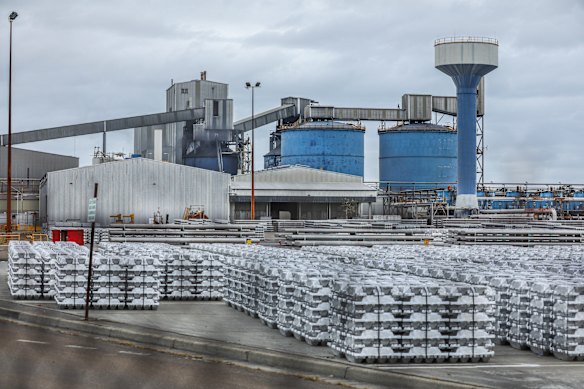
The Tomago smelter has been facing an uncertain future with its power supply deal with AGL running out in 2028.Credit: Chris Elfes
A senior government source said a deal, which was still under negotiation, would include a 10-year power purchasing agreement with discounted energy supplied to the smelter via a Commonwealth-owned entity like Snowy Hydro.
The power supply agreement would include generation from new wind, solar and battery storage projects. In return, the company would invest $1 billion in the future of the plant.
“I say to all the workers here, have a great Christmas in the knowledge that over the coming months, as a result of the decision that we have taken, we’ll be working on finalising these details to make sure that your future is as secure,” Albanese said.
“My government is working together with the NSW state government and Tomago Aluminium on a new energy agreement that will secure the future of the facility.”
Industry Minister Tim Ayres said the Albanese government was in negotiations with NSW government over funding arrangements.
“The fundamental premise of this is a long-term power purchasing agreement that delivers security [of supply] at the right price for Tomago, so they are internationally competitive,” Ayres said.
Tomago, which is majority owned by Rio Tinto, has been locked in make-or-break negotiations with state and federal governments for months to find “viable pathways” to keep the 40-year-old smelter in NSW open.
The energy-intensive plant accounts for 12 per cent of NSW’s electricity consumption, and has been on the brink of closure as it faces a doubling of its electricity costs from 2028, when its current electricity contract with AGL expires.
Rio Tinto chief executive Simon Trott thanked the federal and NSW governments on Friday for their commitment to explore a new pathway for “reliable, long-term and competitively priced energy beyond 2028”.
“This progress reflects years of collaborative work between Tomago and its joint venture partners including Rio Tinto, in addressing one of the most complex energy challenges facing Australian industry.”
Soaring energy prices are a test of the Albanese government’s ambitious goal to boost clean energy to deliver 82 per cent of electricity in the grid by 2030.
The opposition has sought to blame the federal government’s renewable energy agenda for rising energy prices, even though Tomago reported the offers it was receiving for coal-fired generation contracts had also risen dramatically.
If the taxpayer-funded support deal proceeds, it will mark the fourth time the Albanese government has intervened to prop up a struggling metals processor this year after it contributed to bailouts of Glencore’s Queensland copper smelter and refinery in October, Nyrstar’s smelters in Port Pirie and Hobart in August, and the collapsed Whyalla steelworks in February.
When asked if it was fair on taxpayers to spend public funds on private businesses, Albanese said his government was committed to supporting manufacturing as a strategically important sector.
“I tell you what’s not fair to the taxpayer … is to not have manufacturing in this country,” he said. “If Australia doesn’t produce aluminium, then the knock-on effect in other industries is significant because aluminium is increasingly a vital product.”
Australian Workers Union national secretary Paul Farrow said Tomago was crucial to the manufacturing sector.
“You can’t have the largest aluminium smelter in the country closing while talking up the future of local manufacturing.”
Tomago produces up to 590,000 tonnes a year of the metal, which is widely used in construction, cars, drink cans, foil packaging and electrical products. Aluminium is also increasingly in demand in the construction of solar panels and wind turbines.
Processing alumina into aluminium is highly energy-intensive. Tomago said its energy costs accounted for 40 per cent of the smelter’s expenses, and it needed internationally competitive price to remain commercially viable.
Cut through the noise of federal politics with news, views and expert analysis. Subscribers can sign up to our weekly Inside Politics newsletter.


