

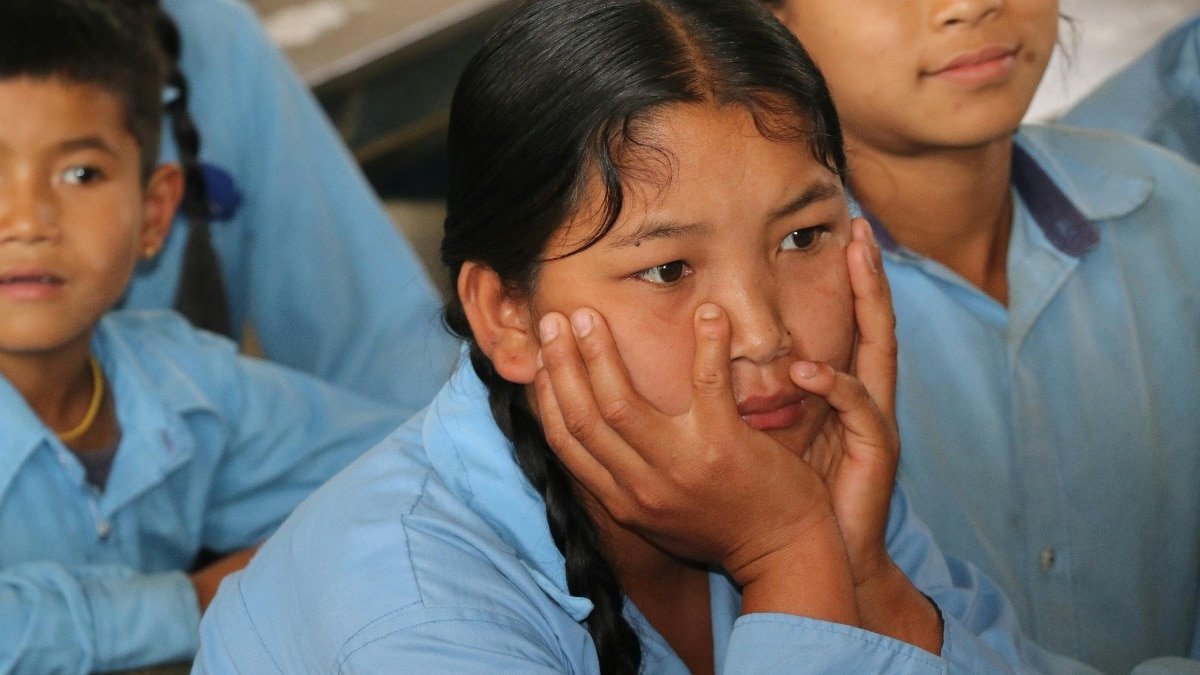
Source : INDIA TODAY NEWS
There is one thing missing from CBSE’s 2026 evaluation controversy — accountability.
Not the technical explanations or the assurances. Not the repeated statements saying systems are “secure” and glitches are being “resolved”.
But an actual admission that something went wrong.
That contrast has become even sharper because India saw a very different response during the NEET paper leak controversy. At the time, Education Minister Dharmendra Pradhan publicly acknowledged that there had been “breaches” and irregularities in the exam process.
advertisement
There was at least some visible acceptance that failures had happened somewhere within the system.
In the CBSE controversy, however, students have mostly seen denials, clarifications and shifting explanations even as new problems continue surfacing.
Over the last few weeks, India’s biggest school board has watched controversy after controversy explode around its new digital evaluation system.
Portals crashed, students complained of blurred answer sheets, re-evaluation deadlines kept getting extended. One student allegedly received someone else’s Physics answer sheet. Then another student flagged a similar issue, followed by two more.
Then came the biggest controversy yet: a 19-year-old claimed he hacked into parts of CBSE’s evaluation ecosystem within “30 minutes”.
And through all of it, students kept hearing variations of the same line from CBSE: the system is fine.
That is exactly why frustration is now boiling over online.
THIS WAS SUPPOSED TO BE CBSE’S BIG MODERNISATION PUSH
This year, CBSE rolled out its ambitious On-Screen Marking (OSM) system for Class 12 board exams.
Nearly 98.66 lakh answer sheets were digitally scanned and evaluated online by around 70,000 examiners across India. The idea sounded futuristic and efficient. It was all about faster checking, automated totalling, fewer human errors, and more transparency.
Instead, students experienced confusion, delays and distrust.
Soon after results were declared on May 13, social media flooded with students claiming their marks in subjects like Physics, Chemistry and Mathematics felt inexplicably low compared to expectations and coaching performance.
Initially, many dismissed it as routine post-result disappointment.
Then came the avalanche.
EVERY NEW FIX CREATED A NEW PROBLEM
Facing growing backlash, CBSE introduced a revised grievance mechanism allowing students to first access scanned copies of evaluated answer sheets before applying for verification or re-evaluation.
The move was supposed to rebuild trust.
Instead, it ended up exposing how little trust remained.
Applications for scanned copies surged massively, and the problems ballooned.
Students reported failed payments, frozen applications, repeated crashes and multiple deductions. One viral case allegedly showed fees running into lakhs for answer sheet access.
CBSE later acknowledged technical glitches and promised refunds. But the damage was already done. Students preparing for counselling and admissions spent nights refreshing malfunctioning pages.
To deal with this barrage of problems, CBSE ended up extending the deadline not once or twice but three times. And every extension only reinforced the feeling that the system itself was struggling.
By May 26, over 4 lakh students had applied for scanned answer sheets out of the 17 lakh students who had appeared for the CBSE Class 12 exam – that is nearly one in four students.
This suggests that the situation has moved from routine curiosity to students actively doubting the marking process itself.
THEN STUDENTS STARTED GETTING THE WRONG ANSWER SHEETS
The controversy escalated further when on May 23, a student named Vedant alleged that the Physics answer sheet uploaded under his roll number did not belong to him.
The issue exploded online, and later, CBSE admitted that an incorrect answer sheet had indeed been uploaded and shared the correct copy.
Soon after, more students began flagging similar issues.
That single admission from CBSE changed the nature of the controversy completely.
Because now the question was no longer whether checking was strict or unfair. Students began asking something much more fundamental.
What if the answer sheet itself is wrong?
For lakhs of students already anxious about marks, cutoffs and admissions, that possibility hit like a nightmare.
THEN A TEENAGER CLAIMED HE GOT INSIDE THE SYSTEM
Just when the outrage was peaking, another controversy detonated online.
A 19-year-old cybersecurity enthusiast, Nisarga Adhikary, published a detailed blog post alleging he discovered serious vulnerabilities in CBSE’s OSM portal back in February and reported them to CERT-In.
According to his claims, he allegedly found hardcoded passwords, OTP bypasses, password reset flaws and vulnerabilities that could allow impersonation of examiner accounts.
What unsettled people most was how simple he claimed the process was.
“The hardest part was reading a JavaScript file and editing a couple of values in DevTools,” he wrote.
In an interview with India Today TV, he claimed he hacked the system “in 30 minutes”, and could access and change marks, names and even bank-related details.
CBSE later denied that its live evaluation system had been breached and stated that only a testing environment with sample data was involved.
But for ordinary students watching this unfold, the distinction between “testing environment” and “live environment” barely mattered anymore.
What they saw was another headline suggesting instability inside the ecosystem deciding their future.
NOW QUESTIONS ARE BEING ASKED ABOUT THE COMPANY BEHIND THE SYSTEM
As the controversy deepened, scrutiny shifted towards Hyderabad-based Coempt EduTeck Pvt Ltd, the company linked to CBSE’s OnMark evaluation platform through official portals and evaluator manuals.
The issue gained further traction after social media posts claimed former IIT Madras professor S Sadagopan was linked to the company, while current IIT Madras director V Kamakoti was among experts expected to help examine concerns around the OSM glitches.
That triggered online questions about possible conflict of interest, though no evidence has emerged suggesting wrongdoing.
Coempt, formerly known as Globarena Technology Pvt Ltd, had also faced scrutiny during the 2019 Telangana Intermediate Board controversy after complaints over marks and evaluation issues.
At the same time, reports revealed that CBSE’s own governing body had reportedly suggested regional pilot projects before nationwide rollout of OSM. Instead, the system was introduced after a limited dry run involving around 100 teachers.
Cybersecurity experts have also questioned whether the infrastructure was properly stress-tested before deployment at this scale.
That is why students and parents are now asking a much bigger question: who approved the system, who built it, and who is finally responsible for what went wrong?
RAHUL GANDHI JOINS THE ACCOUNTABILITY DEBATE
The controversy has now entered political territory as well.
Leader of Opposition Rahul Gandhi accused the Centre of failing to take responsibility for the growing CBSE crisis.
In a post on X, Gandhi alleged there had been “massive tampering” in CBSE exam results and questioned why accountability had still not been fixed despite weeks of controversy.
“And Mr. Modi? As always, no answers, no accountability, no shame,” he wrote.
He also questioned why Coempt was allegedly entrusted with such a critical national examination process despite earlier controversies linked to its previous identity, Globarena.
“The future of 1.85 million children was handed over to such a company, and no one batted an eye,” he claimed.
Gandhi demanded a judicial inquiry and SIT probe into the entire controversy.
THE BIG QUESTION NOW IS: WHO IS RESPONSIBLE?
The CBSE controversy has now moved far beyond technical glitches.
Board exam marks in India are not just numbers. They shape admissions, scholarships, careers and, for many families, emotional survival itself. Even a single mark matters.
Students online are asking uncomfortable questions.
Who approved the rollout?
Who verified answer sheet mapping?
Who stress-tested systems handling lakhs of users?
Who audited cybersecurity protections?
And if something clearly went wrong at multiple levels, why does nobody appear willing to publicly own it?
That is the question haunting CBSE right now.
Because students are no longer reacting to isolated glitches. They are reacting to a growing collapse of trust.
And through all of it, they still have not heard a simple sentence many now desperately want from someone in authority:
Yes, mistakes were made.
– Ends
SOURCE :- TIMES OF INDIA