

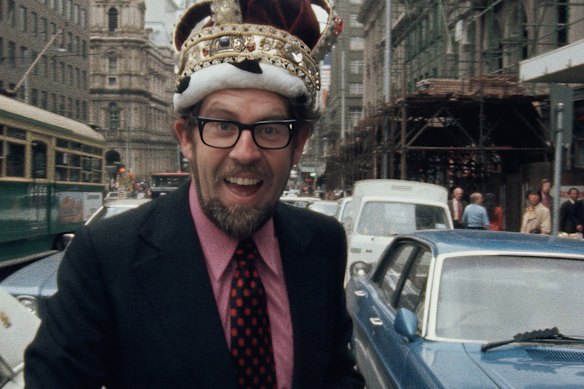
Source : the age
“You have shown no remorse for your crimes at all. Your reputation now lies in ruins, you have been stripped of your honours but you have no one to blame but yourself.”
With those damning words, a British judge in 2014 sentenced Rolf Harris on 12 counts of indecent assault. The offences were committed against four women between 1969 and 1986. The victims were between eight and 19 years of age.
Before his spectacular fall, Harris was one of the most renowned, popular and successful entertainers to grace the stage, TVs and music business in both his native Australia and adopted homeland, England.
One of the four complainants at Harris’ trial, Tonya Lee, was a 14-year-old Australian touring London with a theatre troupe when she was assaulted by Harris in 1986. But the claims of many of Harris’ victims never went to trial. He was never charged in Australia, despite many of the offences, including those of the principal complainant in the British trial (who remains known only as victim “C”), having taken place here. Since his death in 2023, more victims have come forward.
“Here in Australia, the women never really had their day,” says Karina Holden, executive producer of the new two-part ABC documentary Rolf Harris: Primetime Predator.
Now in their 50s and 60s, these women grew up with guilt, shame and broken trust.
“To bring them back into the room again to talk about that inciting incident, you can’t take that lightly,” Holden says. “There has to be a sense of catharsis, of healing. Hopefully, when you’re talking about people who haven’t necessarily had their day in court and haven’t had their crimes against them acknowledged, hopefully there is that sense of healing that comes from at least telling their story in a respectful way, and giving them the space to do so.”
Surrounded at the time by adults, the women experienced the ultimate betrayal. “I think that for young people who haven’t formed their own sexual identity and sense of relationships, there’s also the question of, ‘What did I do to bring this on myself?’” Holden says. “Some of the women tried to tell people around them, [but] they weren’t believed. I think that this is just far too common, that abuse happens to young people and children who haven’t learnt about standing up for themselves.”
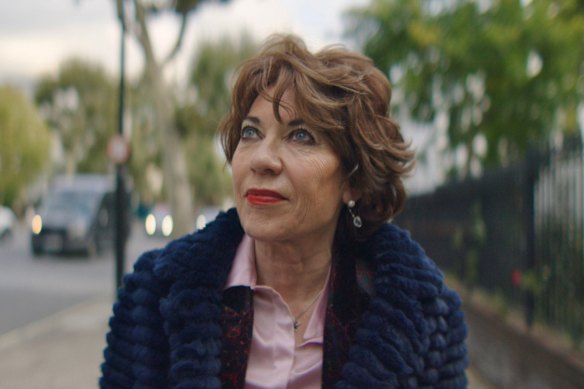
As well as giving voice to victims, the documentary paints a chilling picture of how Harris used his celebrity – a combination of eccentric stage routines, silly songs, larrikinism, folksiness and fawning reverence for the British establishment – to mask his crimes all the while in full public view.
Some of the most incriminating evidence that would be used in court came from Harris himself. In Primetime Predator, archival footage of Harris is reframed to draw attention to the striking contradiction between his public persona and what was happening only barely off-stage. In one of many cringe-inducing and re-contextualised clips that we see here, Harris is on-stage with a group of children when he makes a throwaway remark commending a young girl’s lipstick.
“It’s all there in plain sight in the archive, and even the way that he tells his own story,” Holden says. (Hiding in Plain Sight is the title of a 2024 ITV documentary about Harris.)
And then there is the public awareness campaign for child protection that Harris fronted (yes, you read that right) in the 1980s.
“At the same time as he was actively abusing children, he was the public face of child protection campaigns in the Antipodes,” Holden says. “It was just ridiculous to think that he’s telling children how to say no and is actually taking advantage of [them]. It’s shocking, and I think that spoke very powerfully to why this particular person made it a worthy documentary subject to really look at.”
Holden’s involvement in the documentary began about four years ago, shortly before Harris’ death. Even then, the project was risky, as under Australian law a person can sue for defamation even if they’ve been committed of similar crimes.
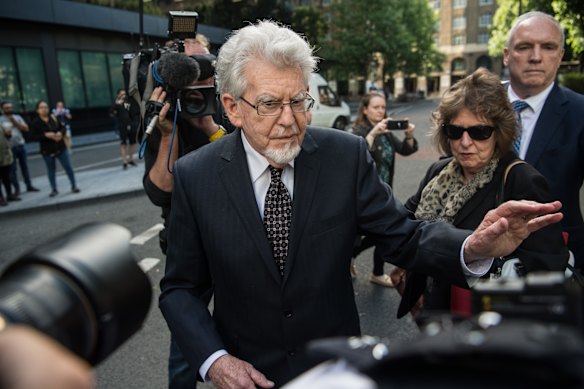
After his death, there were still tricky legal issues to deal with, such as implications of complicity or people not wanting their footage to be used because of the association that can be made.
Holden believes that following the #MeToo and Believe Women movements, the entertainment industry is bound by more stringent rules, child protection laws and greater awareness of unacceptable behaviour.
“I do think, while telling the story of one celebrity doesn’t address a larger problem within society, it still draws attention that perhaps when we look at this it will remind us, it will teach us, it will make us reflect, and it will make us more vigilant to keep these situations out of our schools, out of our homes, out of the more plain places that people may exist today, where they may be taken advantage of, and children may be unsafe.”
But Holden admits that she struggles to understand the contradictory way in which Harris implicated himself in his own wrongdoing.
“Here’s this man who is in a position of power, who is playing with young people who have this trust in him, acting as if he’s some kind of trusting avuncular character,” she says. “It’s a very uncomfortable set of circumstances for these women who are stepping forward and feeling like they’re with someone who they look up to, who then takes them into a dark place.
“He’s doing that because he thinks it’s funny, or he thinks he’s powerful, I can’t explain the psychology of that. I think that comes from a place that I could never understand. All I can do is think about what that must feel like for those women who are especially young and feeling vulnerable in that moment.”
Rolf Harris: Primetime Predator airs at 8.30pm on Tuesday, June 9 on ABC and ABC iview.
Support is available from the National Sexual Assault, Domestic Family Violence Counselling Service at 1800RESPECT (1800 737 732).