


SOURCE :- SIASAT NEWS
US President Donald Trump said negotiations with Iran were continuing but stressed that Washington remained dissatisfied with the current state of talks, as military tensions intensified in southern Lebanon and disputes over the Strait of Hormuz continued to dominate regional diplomacy.
On Wednesday, May 27, Trump told a Cabinet meeting at the White House that Iran was eager to reach an agreement with the United States but warned that Washington was prepared to escalate if diplomacy failed.
“Iran wants very much to make a deal,” Trump said. “So far they haven’t gotten there. We’re not satisfied with it, but we will be. We will either have that or we’ll have to finish the job.”

Trump reiterated that Iran would not be allowed to obtain a nuclear weapon under his administration and ruled out sanctions relief in exchange for Tehran surrendering highly enriched uranium.
He also said he was uncomfortable with Russia or China taking control of Iran’s uranium stockpile and insisted Washington would not discuss easing sanctions or releasing frozen Iranian funds until Tehran complied with US demands.
“We’re not talking about any easing of sanctions or giving money,” Trump said.

The US president further signalled that he would not rush into an agreement for domestic political reasons, saying he did not “care about the midterms”.
Trump additionally suggested that broader negotiations could involve more Middle Eastern countries joining the Abraham Accords aimed at normalising ties with Israel.
Rubio says diplomacy remains preferred option
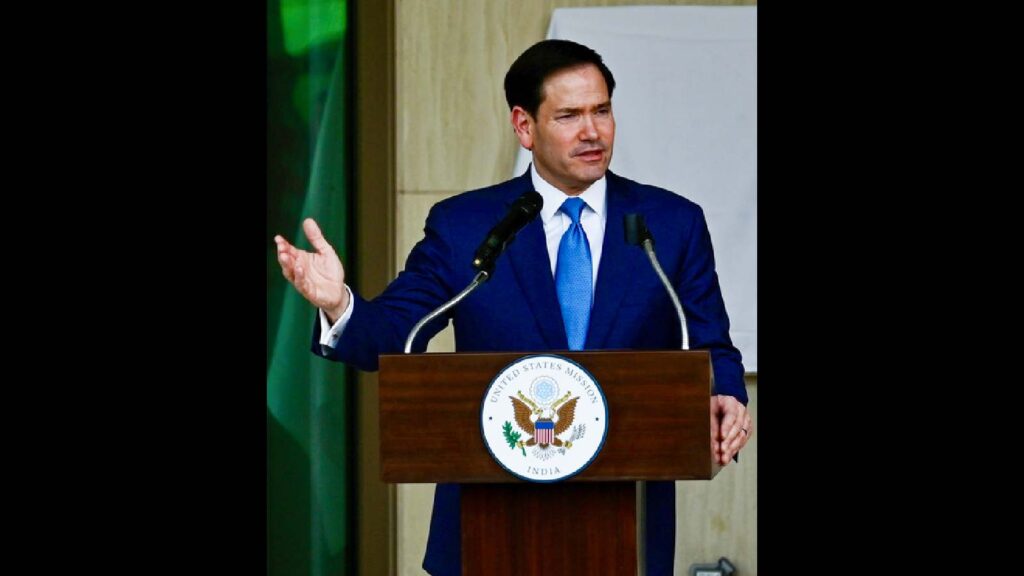
US Secretary of State Marco Rubio said diplomacy remained Washington’s preferred path, although military options remained available if negotiations collapsed.
“Diplomacy is our first choice, but there are other options with Iran,” Rubio said.
He added that progress had been achieved in talks and stressed that Iran would not acquire a nuclear weapon during Trump’s presidency.
The White House later confirmed to Al Jazeera that Trump would only accept an agreement guaranteeing Iran could never possess nuclear weapons and said negotiations were “going well”.
Iran outlines conditions for agreement
Iranian officials said Tehran had established clear conditions for any future agreement with Washington while warning that Iranian forces remained prepared for any potential confrontation.
Ali Akbar Velayati, adviser on international affairs to Iran’s Supreme Leader, said Tehran’s “red line” remained unchanged.
“Documents and signatures alone are not enough to guarantee any agreement,” Velayati said, adding that “the real guarantor of any agreement with the United States is the Strait of Hormuz”.
Iranian television quoted Brigadier General Amir Hayat Moghaddam as saying Tehran’s conditions included compensation payments, the release of frozen Iranian assets, lifting sanctions, a ceasefire across all fronts and recognition of Iranian sovereignty over the Strait of Hormuz.
An adviser to Iran’s Supreme National Security Council also said Tehran and Washington had not yet reached an understanding regarding reopening the Strait of Hormuz and added that Iran was negotiating with Oman over a new maritime transit mechanism through the waterway.
Tehran says agreement must respect Iranian interests
Alaeddin Boroujerdi, a member of Iran’s parliamentary National Security and Foreign Policy Committee, said any final agreement with the United States would be signed solely on the basis of Iranian national interests.
Boroujerdi said a draft preliminary agreement reportedly included a 60-day comprehensive ceasefire across battlefronts, particularly in Lebanese territory, alongside the release of frozen Iranian assets and an end to the naval blockade imposed on Iran.
He stressed that Tehran’s diplomatic decisions were not based on statements or social media posts by Trump, but on the final outcome of negotiations.
Russia offers uranium transfer proposal
Russian Deputy Foreign Minister Sergei Ryabkov said Moscow had informed Washington that it remained ready to transfer enriched uranium from Iran if required.
Ryabkov added that the Russian proposal remained on the table as negotiations continued.
Vance optimistic about nuclear agreement
US Vice President J D Vance said he was optimistic Iran could eventually agree not to develop nuclear weapons.
However, Vance said the key issue remained whether Tehran would accept a strict enforcement and monitoring mechanism capable of assuring Washington that Iran would not violate the agreement in future.
Hegseth says military action remains possible
US Defence Secretary Pete Hegseth said Iran’s economy was suffering severe losses, pushing Tehran towards negotiations.
He warned that military action remained an option if guarantees preventing Iran from obtaining nuclear weapons were not secured.
During the Cabinet meeting, Trump jokingly referred to Hegseth as the “secretary of war”, saying he “loves war”, comments that came amid heightened scrutiny over the administration’s handling of the Iran conflict.
Pakistan calls for peace agreement
According to Reuters, Pakistani Prime Minister Shehbaz Sharif received a phone call from Iranian President Masoud Pezeshkian.
Sharif reportedly expressed hope that a peace agreement between Tehran and Washington would soon be finalised.
Hezbollah claims attacks on Israeli forces
Hezbollah announced multiple attacks targeting Israeli forces in southern Lebanon.
The group said it launched missile strikes against Israeli troop gatherings near Al-Adisa and Zawtar al-Sharqiya, targeted a Merkava tank using a drone and struck Israeli military vehicles and soldiers with two armed drones.
Israeli attacks intensify in southern Lebanon
Israeli artillery shelling struck Kfar Rumman in Nabatieh district, while Israeli air raids targeted the Ali al-Taher heights and a drone attack hit Qaqaiyat al-Jisr in southern Lebanon.
Lebanese media also reported that Israel continued to violate the ceasefire agreement reached with Hezbollah in April after issuing evacuation orders for 19 towns and villages south of the Zahrani River, including Nabatieh.
The city has repeatedly come under Israeli raids and military strikes since the outbreak of the Israel-Hezbollah war on March 2.
Israeli Channel 12 quoted sources as saying American military aircraft stationed at Ben Gurion Airport would be relocated to bases in Europe within 72 hours if a US-Iran agreement was signed, while remaining ready to return if fighting resumed.
The escalation came as Israel launched more than 120 airstrikes across Lebanon in one day amid growing pressure on the fragile ceasefire arrangement.
Drone alerts expand across northern Israel
The Israeli Home Front Command expanded drone infiltration alerts across northern Israel to areas including Ibn Menachem, Zar’it, Shomera and Shtula amid fears of incoming drones.
Strait of Hormuz remains key flashpoint
The Strait of Hormuz continued to dominate negotiations and regional security concerns.
Iranian news agency ISNA quoted the Revolutionary Guard Navy as saying ships from “hostile countries” remained prohibited from passing through the strategic waterway.
US Central Command (CENTCOM) meanwhile announced that 109 commercial vessels had been diverted since the start of the naval blockade imposed on Iran.
Iranian media reports also claimed that a draft memorandum of understanding under discussion between Tehran and Washington included the withdrawal of US military forces from Iran’s vicinity and the lifting of the blockade in exchange for restoring shipping traffic through the Strait of Hormuz to pre-war levels.
The White House, however, dismissed the reported memorandum as “not true” and described it as fabricated.
Fire breaks out at Tehran airport customs building
Mehr News Agency reported that a fire broke out in an administrative building belonging to the customs department at Imam Khomeini Airport in Tehran.
Authorities said the cause of the fire remained unknown.
US extends protections for Lebanese nationals
The Trump administration announced a six-month extension of Temporary Protected Status (TPS) and work permits for Lebanese nationals living in the United States.
According to a notice published in the Federal Register, around 11,000 Lebanese nationals covered under TPS would now be allowed to remain and work legally in the US until November 27.
The Department of Homeland Security said the extension was automatically renewed because Homeland Security Secretary Markwayne Mullin had not yet completed a review of Lebanon’s designation status.
Created by Congress in 1990, TPS provides temporary deportation relief and work permits for nationals of countries affected by armed conflict, natural disasters or extraordinary conditions.
SOURCE : SIASAT