
Source :- PERTH NOW NEWS
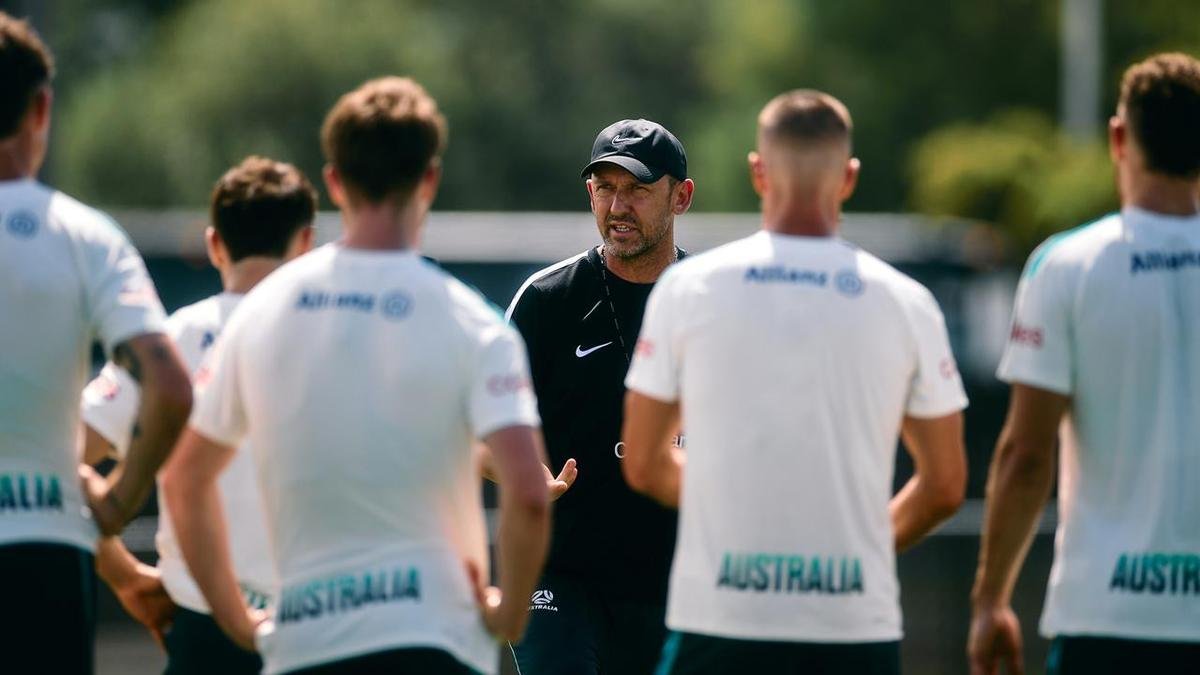
Football Australia isn’t relying on a deep World Cup run from the Socceroos for a bailout from last year’s record $15.3 million loss.
Undergoing an overhaul, FA has been forced to cut 20 per cent of its workforce after reporting an unprecedented loss at Thursday’s annual meeting in Sydney.
It comes after football’s national governing body reported a loss of $8.5 million in 2024.
While FA hasn’t revealed the financial burden of participating in next month’s FIFA World Cup in North America, costs have skyrocketed during the US-Israel war with Iran.
Should the Socceroos reach the round of 16, they will net FA $US15 million ($A21m) in prize money.
Reaching the quarter-finals will earn $US19 million ($A26.6m), while a group-stage finish will be awarded $US11 million ($A15.4m).
Every team receives $US1.5 million ($A2.1m) for initial preparation and travel costs.
Chief financial officer Adam Santo says FA is in a “very healthy cash position” regardless of the Socceroos’ performance at the World Cup, with the governing body expecting to break even in 2027.
“We have presented a budget to the members today at the AGM, and it did include factoring in our performance at the World Cup coming up,” Santo said.
“We’re certainly not reliant on the team progressing deeper into the tournament.
“We’ve been very conservative with how we’ve budgeted for the World Cup.
“The performance is not going to matter to our budget.”
The topic of FA taking out a bank facility was brought up by member federations during the AGM, but Santo and FA chair Antar Isaac empathetically shot down the suggestion.
Isaac viewed the $15.3 million loss as short-term pain for long-term gain.
Up to $12.1 million of that loss consisted of one-off non-recurring items, such as kickstarting the Australian Championships, leaving the actual operating result at a $3.2 million deficit.
“I know it’s easy to reflect on this period as somewhat looking like instability,” Isaac said.
“But there has been a very deliberate strategic investment in our organisation and positioning it for the next broadcast and competition cycle.”
As well as a workforce restructure, FA is also introducing reforms to better align the governing body alongside member federations and leagues.
“There’ll be 12 reform working groups,” Isaac said.
“We will intend for them to map out and design and create the architecture of what good looks like and how we can achieve it.
“We need to have competition alignment including, calendar alignment right across the country, and for that to be at least a four-year calendar.
“But there are other reforms – one of them is the ecosystem and enterprise technology.
“Another one is mapping and identifying the commercial ecosystem that’s available to Football Australia, our member federations, our A-League clubs, all the way to grassroots.
“We are going to continue on this journey of deep self-reflection that we undertook at Football Australia last year.”
Sports administrator Paul Bittar – backed by Adelaide United – was elected to the board as a director, while fellow Australian Professional Leagues representatives Mark Goodrick and Jon Sutton withdrew from the election.
Isaac was re-elected as chair, while Rachel Wiseman was elected deputy chair following changes to FA’s constitution to be compliant with the Australian Sports Commission’s governance requirements.