

SOURCE :- THE AGE NEWS
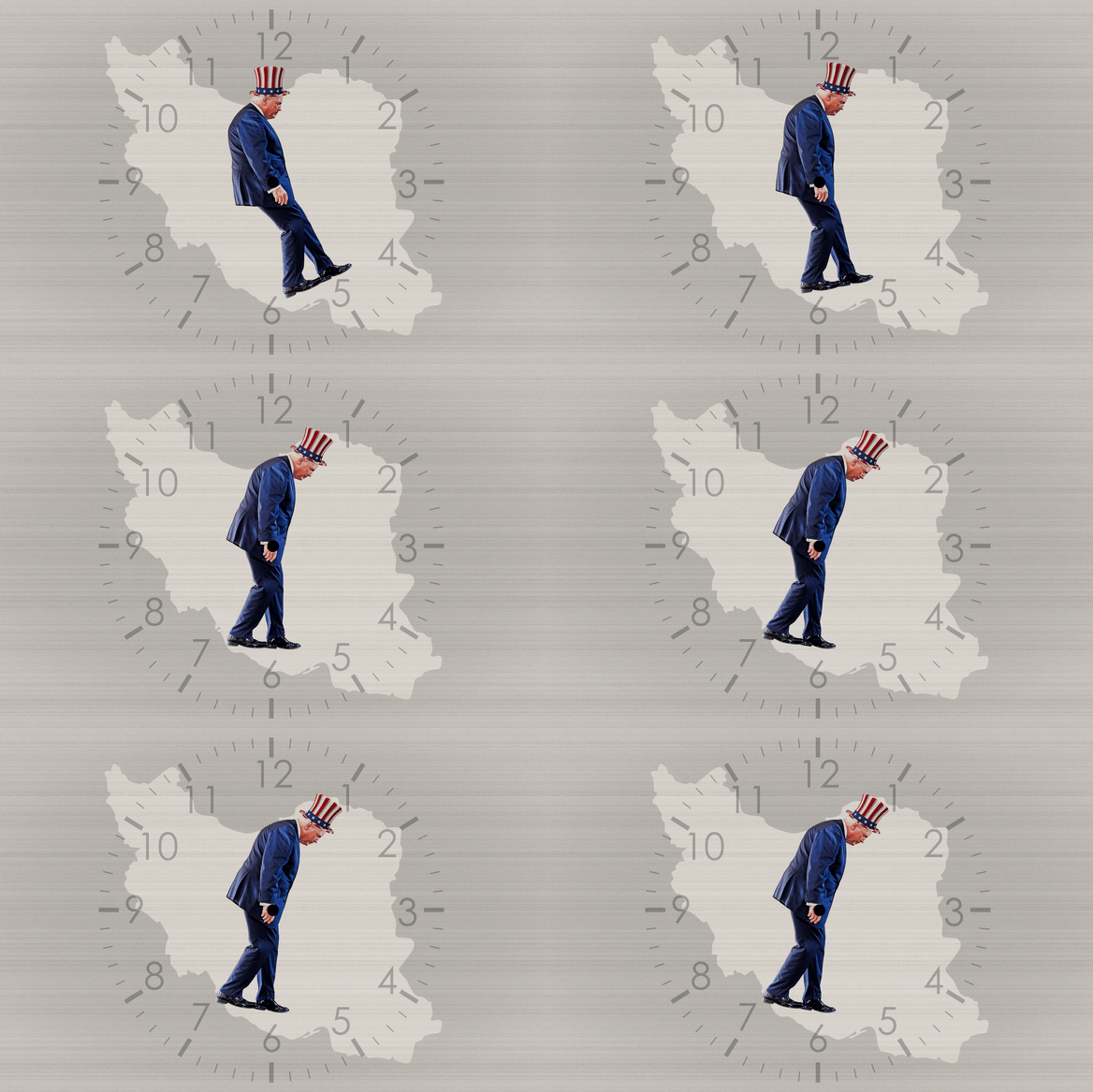
Last weekend, as America and its Gulf partners appeared to close in behind an interim deal that would end the US-Israeli war against Iran, Donald Trump threw a curveball.
Gulf countries, particularly Saudi Arabia and Qatar, should normalise relations with Israel as part of the deal, he said. Trump’s suggestion was really a demand. He said he was “mandatorily requesting” that these nations join the Abraham Accords, and anyone who failed to do so shouldn’t be a party to the Iran deal.
The US president lobbed the idea into a phone hook-up with eight world leaders – where it was reportedly met with stunned silence – and then repeated it on social media. It has gained next to no traction since.
This may be the last we hear of it. But Trump’s attempt to shift the goalposts, and his lashing out at America’s regional allies (including Oman, which on Wednesday he casually threatened to bomb), underscores his failure to find an off-ramp to the war.
America’s Operation Epic Fury and Israel’s Roaring Lion began three months ago today, and were militarily successful, even if the full extent of the damage is unclear or overstated by top Trump administration officials. The political dimension – securing a settlement, a peace deal, even just a framework agreement – has been less of a triumph.
The US government is “clearly struggling to figure out a way ahead”, Washington Institute for Near East Policy research director Dana Stroul says. “Military instruments and military force can accomplish some objectives, but cannot deliver politically sustainable outcomes on the other side.”
Asif Durrani, a former Pakistani ambassador to Iran and the United Arab Emirates, says Trump’s rhetoric and threats reflect “growing frustration in Washington over the inability to impose terms on Iran”.
Even a brief, possibly one-page, agreement to extend the ceasefire and begin proper negotiations has proven elusive.
As speculation about renewed air strikes intensified last weekend, and his Gulf allies reeled from his Abraham Accords proposal, Trump heralded a diplomatic breakthrough, saying the Iran deal had been “largely negotiated” and was on the cusp of being signed.
It was at least the second time he had cried “deal”, after prematurely announcing the reopening of the Strait of Hormuz on April 17.
And once again, Trump walked back his own claims, saying that, in fact, the deal was not fully negotiated and he was in no rush.
By Friday, US news website Axios was reporting that the US and Iran had agreed to a memorandum of understanding that would extend the ceasefire by another 60 days, but that Trump had yet to sign off on it.
Reuters confirmed the report, adding that within the first 30 days, Iran would have to remove all mines from the strait and could not impose tolls. The US would begin to wind back its blockade of Iranian ports.
Stroul, who served as deputy assistant defence secretary for the Middle East in the Biden administration, says the deal under consideration looks like “an agreement to continue to negotiate”.
“For Trump, I think it’s a way out of this current, hurting stalemate,” she told an event this week hosted by the International Crisis Group. “It is hurting for the Iranian regime … but it’s also very bad here [in the US] in terms of oil prices, gas prices, fertiliser.”
Aaron David Miller, a former Middle East analyst and negotiator with the US State Department, says of the purported deal: “What we have here is a ticket to a negotiation – a letter of intent, if you will. Get ready for painful negotiations that will feel like daily root canals and migraine headaches.”
Speaking to this masthead shortly after Trump first trumpeted the new deal, Miller notes the language used to describe it – a framework agreement that would set the guardrails for future talks – has its own connotations.
“We used the term framework agreement when it was absolutely clear we could not get an immediate resolution on some of the core issues,” he says.
“What about the American blockade? What about frozen assets? Sanctions relief? It’s a universe of complexity. We’re a long way away from what I would consider to be anything that remotely resembles a formal agreement on any of the issues.
“The other obvious issue is there’s no trust or confidence here, and you have a hardline regime [in Tehran] that basically believes it’s winning.”
But some analysts point out that ending the war must start somewhere, and argue that even a brief, vague agreement is better than the status quo, where the Strait of Hormuz is effectively closed, and the war could restart at any moment.
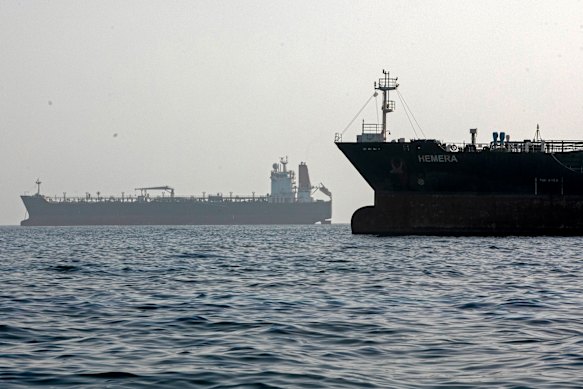
“Anything that ends this lose-lose dynamic I do believe is a good thing,” the International Crisis Group’s Iran project director, Ali Vaez, says. “The memorandum of understanding is the best kind of off-ramp that one can imagine from a road that should not have been taken to begin with.
“I am pretty cynical of both sides’ ability to cross the finish line. But if you compare it to the alternative … I think this is a good way forward.”
Vaez says the agreement is pursuing the urgent – end the war, reopen the strait – over the important, which are the fate of Iran’s stockpiles of highly enriched uranium and the future of its nuclear program.
He notes there are several complicating factors, including Iran’s insistence that the deal includes Lebanon. That hands Israeli Prime Minister Benjamin Netanyahu the capacity to undermine the truce in the weeks or months after it is signed – or before.
Israel is ramping up its attacks on Hezbollah targets in Lebanon despite the US-brokered ceasefire. It has ordered thousands of people to evacuate their homes and pounded southern Lebanon with air strikes, killing hundreds since the notional ceasefire began, according to Lebanese authorities.
On a single day this week, the Israel Defence Forces said it struck 70 Hezbollah infrastructure sites across Lebanon, 10 command centres and weapons storage facilities, and “eliminated” Hezbollah terrorists on their motorcycles. Hezbollah has also attacked Israel with drones, this week killing a 20-year-old Israeli soldier, Rotem Yanai.
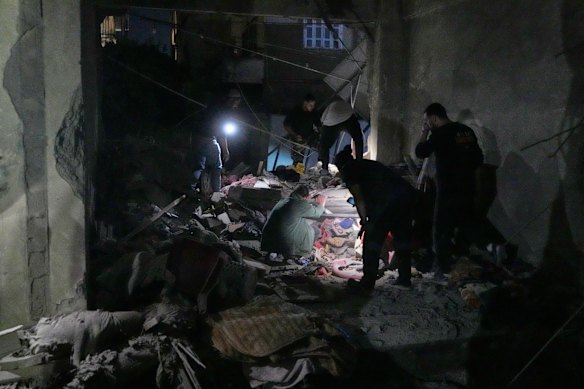
Netanyahu boasted this week that Israel had eliminated 700 Hezbollah terrorists “during the ceasefire alone”. He added: “Against Hezbollah, we do not stop fighting for a moment, and there’s more to come.”
Miller says that for the Israeli PM, who faces national elections by October, Trump’s framework agreement with Iran is disastrous, whatever he might say publicly about his close relationship with the US president.
Both men overpromised what the war could achieve – Trump suggested regime change would follow when the Iranian people deposed their weakened government – but the stakes are much higher for the Israeli leader.
“Netanyahu has to be apoplectic about this because he wanted so much more,” Miller says. “The regime is more hardline than when it started. For Israel, I think it’s a disaster. For Netanyahu, who has made it his life’s work to free Israel from the shadow of an Iranian bomb, it’s a disaster.”
The US and Iran also flirted with breaches of the ceasefire this week; US Central Command said it conducted defensive strikes to take out Iranian drones and a ground control station after Iran launched the drones in and around the Strait of Hormuz. Iran later fired a ballistic missile towards Kuwait, which was intercepted, the US said.
Trump previously described similar skirmishes as a “love tap”. He has so far resisted repeated, public calls from hawkish Republican allies in Congress to abandon diplomacy and resume offensive strikes against Iran.
Where does that leave the prospects of a deal, however minimal? US Treasury Secretary Scott Bessent, speaking at the White House press briefing room on Thursday (Washington time), said he wouldn’t get ahead of his boss or “preview the deal”. But he confirmed that a “multi-faceted agreement” was in the works.
“Everything depends on what the president wants to do. President Trump is not going to make a bad deal for the American people, for the US,” he said.
Trump’s red lines were clear, Bessent added. “Nothing is going to be on the table until we see the Strait of Hormuz open and the Iranians agree that they have to turn over the highly enriched uranium, and that they can’t have a nuclear program.”
Richard Fontaine, chief executive of the Centre for a New American Security, and a former foreign policy adviser to the late Republican presidential hopeful John McCain, says a narrow deal is still the most likely outcome.
Iran would be left “broken and militarily weak, with damaged proxies and destroyed nuclear sites”, but still in possession of enough weapons to threaten the strait and regional energy infrastructure.
“Long and possibly unproductive negotiations will then follow,” he said on X. “The cold war will resume. And the US and Iran will await a new round of fighting on another day.”
Get a note directly from our foreign correspondents on what’s making headlines around the world. Sign up for our weekly What in the World newsletter.