

Source : INDIA TODAY NEWS
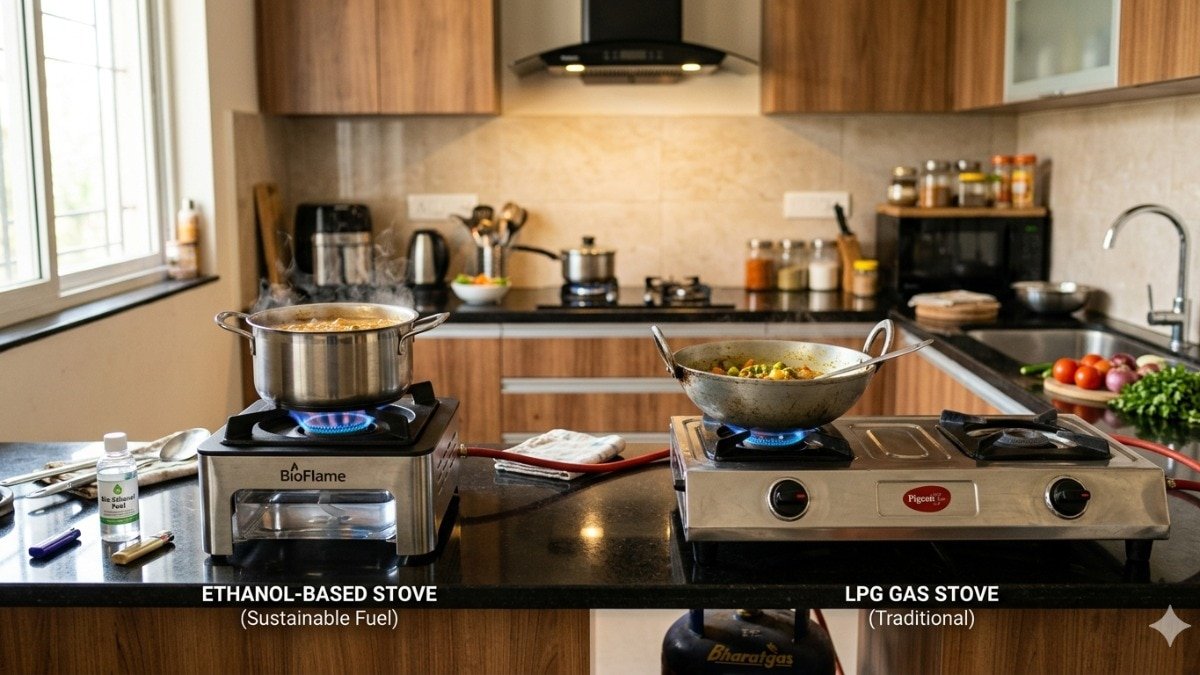
For decades, Liquefied Petroleum Gas (LPG) has been the primary cooking fuel in Indian households. However, recent discussions around ethanol-based cooking stoves have sparked interest in alternative fuel options. With growing emphasis on cleaner energy and reducing dependence on imported fuels, ethanol is emerging as a potential contender in the cooking fuel space.
But how does ethanol compare with LPG, and could it become a viable option for households?
Also read: LPG cylinder rules change from May 1? Booking, OTP delivery and prices explained
advertisement
WHAT IS LPG?
LPG, or Liquefied Petroleum Gas, is a mixture of hydrocarbon gases, primarily propane and butane. It is widely used for cooking because it burns efficiently, produces a high heat output and is supported by an extensive distribution network across India.
Millions of households rely on LPG cylinders for daily cooking needs.
WHAT IS ETHANOL?
Ethanol is a renewable biofuel typically produced from sugarcane, corn and other agricultural feedstocks. It is already used in fuel blending programmes for vehicles and is now being explored as a cooking fuel through specially designed ethanol-based stoves.
Unlike LPG, ethanol is derived from biological sources, making it a renewable energy option.
COST COMPARISON
One of the biggest factors influencing fuel choice is cost.
Supporters of ethanol-based stoves claim they could offer lower cooking costs compared to conventional LPG in certain situations. However, actual savings will depend on fuel pricing, availability and distribution infrastructure.
LPG currently benefits from a well-established supply chain and government support mechanisms, making it accessible to a large section of consumers.
ENVIRONMENTAL IMPACT
LPG
-
Burns cleaner than traditional fuels such as wood and coal.
-
Produces lower levels of indoor air pollution.
-
Is still a fossil-fuel-based energy source.
ETHANOL
-
Produced from renewable agricultural sources.
-
Has the potential to reduce dependence on fossil fuels.
-
Can contribute to lower net carbon emissions when sustainably produced.
As countries seek greener energy solutions, ethanol is often viewed as a more sustainable long-term option.
AVAILABILITY AND INFRASTRUCTURE
LPG currently has a major advantage when it comes to infrastructure.
India has an extensive LPG distribution network that reaches urban and rural households alike. Cylinders can be booked and delivered through established channels.
Ethanol-based cooking systems, on the other hand, are still at an early stage. Large-scale adoption would require dedicated fuel distribution, storage systems and consumer awareness.
COOKING PERFORMANCE
For most households, cooking performance is a crucial consideration.
LPG offers:
-
Consistent flame control
-
High heat output
-
Fast cooking times
-
Proven reliability
Ethanol stoves are still being evaluated for large-scale household use. Their long-term efficiency, fuel consumption patterns and performance under different cooking conditions will need further testing.
SAFETY CONSIDERATIONS
Both LPG and ethanol are flammable fuels and require proper handling.
LPG safety standards are well-established, and users are familiar with cylinder-based systems.
Ethanol-based cooking technology will need robust safety certifications, storage guidelines and public awareness campaigns before widespread adoption.
SUPPORT FOR FARMERS
One unique advantage of ethanol is its connection to agriculture.
Since ethanol can be produced from crops such as sugarcane and maize, increased demand could support rural economies and create additional revenue opportunities for farmers and biofuel producers.
This aligns with India’s broader efforts to promote biofuels and agricultural value chains.
CAN ETHANOL REPLACE LPG?
At present, ethanol is unlikely to replace LPG completely in the near future.
LPG’s widespread availability, established infrastructure, and consumer familiarity make it the dominant cooking fuel. However, ethanol-based stoves could emerge as a complementary option, especially if they prove cost-effective, safe and easy to access.
Future adoption will depend on factors such as fuel pricing, government policies, technological improvements, and consumer acceptance.
The comparison between ethanol and LPG highlights a broader shift towards exploring cleaner and more sustainable energy sources. While LPG remains the preferred cooking fuel for most Indian households, ethanol-based stoves represent an innovative alternative that could play a role in the country’s future energy landscape.
Whether ethanol becomes a mainstream cooking fuel will depend on how successfully the technology can address issues related to cost, safety, convenience and infrastructure.
– Ends
SOURCE :- TIMES OF INDIA