

Source : THE AGE NEWS
It’s rush hour. Diners are seated, and more are streaming through the door. Plates are piling up on the pass. Two new UberEats orders have just pinged through the delivery tablet. The phone has started ringing, but there’s no one around to pick it up.
“Hello Jessica! Thanks for calling this restaurant. You’re speaking with Buddy. What can I do for you today?”
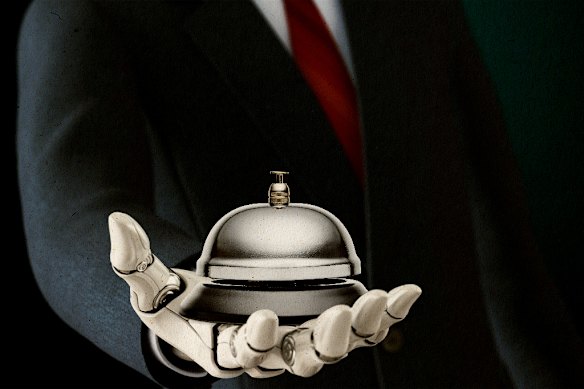
Your hunch, of course, is right. It’s not a human at the other end, but an AI phone concierge that might be picking up the phone at a restaurant near you – or that, for over a thousand hospitality operators across the country, already is.
Every year, Australian restaurants receive 77 million phone calls, about a third of which go unanswered. At peak hours, like midday and at 7pm, about one in two calls are missed. These are some of the facts and figures that serial entrepreneur Stevan Premutico learned when he emerged from a year’s worth of research to build Hey Buddy, a phone concierge that layers five different types of AI platforms to respond to calls and requests in real time, any time.
In a world where AI has disrupted the way we look at menus, order and pay for food, not to mention the countless other ways it has intercepted our lives, the phone call has remained oddly analogue. When we want answers quickly, we are still picking up the phone, even though it has evolved from landlines to iPhones: what are your opening hours? Do you cater for vegans? Are you showing the footy final this weekend? Can I bring my dog? And then, of course, there are the reservations that need to be modified, cancelled or rescheduled, which make up about 50 per cent of calls.
They’re not complex questions, but we want answers immediately. Premutico says the AI phone concierge can handle most of the questions listed above, and when it can’t, it will escalate the call to a member of staff.
“Unlike online bookings, where the industry knows conversion rates, success rates, cancellations and all that stuff, phone calls have been a complete black art for the entire industry,” said Premutico.
“The phone is the last of the hospitality experience that hasn’t evolved. Frankly, it’s been forgotten about because it’s complex, and the technology just wasn’t there.”
To answer questions like “how’s the parking” or “What beers do you have on tap”, it dips into a “knowledge base”; it won’t try to guess the answer; and the question will be flagged in the system. Customers will receive a text when the booking is made, and errant details like misspelled names can be corrected.
Premutico is a well-known face in the hospitality industry. Hey Buddy is his latest, and now third, start-up venture in hospitality tech. He founded restaurant booking platform Dimmi in 2009 (now rebranded as TheFork); and the tap-order-pay app me&u in 2018, which eventually merged with its biggest competitor. Most of the me&u team have returned to build Hey Buddy, and it counts chef Shannon Bennett and Google Australia managing director Mel Silva as investors. It has been built with hospitality operators such as Australian Venue Co. Premutico declined to comment about the company’s ownership structure or its valuation target, saying he was “genuinely not thinking about” an exit.
He is cognisant of criticisms that AI removes the human touch from hospitality, but he says low-level work is being removed from the process to free staff up to take care of diners on the floor.
“Hospitality is such an incredibly, deeply human industry,” said Premutico. “The role of AI in our industry is to remove the grunt, the menial, the repetitive, remove the stuff that doesn’t add the value, so we can free up the teams and just focus on the stuff that truly matters.”
The platform certainly isn’t perfect: voice AI still doesn’t know how to deal with general chaos (an upset customer, someone with two kids screaming in the back seat, a VIP client demanding a table at peak hour) the way a human can. This type of technology is improving quickly, says Premutico, but it is still “incredibly early in its evolution”.
The team spent some time introducing Australian slang and our pronunciation of words (“You know, like the way Australians will say ‘beer’, as opposed to Americans”) into the AI platform, which uses technology originally built in the US. Premutico declined to reveal which five AI platforms underlie the start-up’s technology.
The problem of missed phone calls is one that Premutico had attempted to solve in his Dimmi days, but the technology didn’t exist then. Now, people are much more comfortable engaging with and talking to AI, which is transforming cafes and restaurants around the world by personalising menus, riffing off viral trends and designing recipes.
But most operators are grappling with profit margins in the single digits. Food and beverage businesses have the highest business collapse rates and they have also had the biggest rises in payment defaults, CreditorWatch data show. Australian minimum wages are the highest in the world, tied with Luxembourg. Tech costs are mounting. Hey Buddy is $399 a month for smaller venues and larger chains can pay up to $800 a month.
The risk of a delicate call from an upset customer going badly is one that operators must consider, said retail consultant Trent Rigby. “I know a lot of cafes don’t necessarily have the resources, so I can see the gap it fills, but you’ve got to be very, very careful,” he said. Although AI use has become mainstream – 10.5 million Australians use ChatGPT, according to fresh Roy Morgan statistics – high engagement doesn’t mean we trust it, Rigby said.
“It only takes one thing, one customer interaction of hundreds of thousands for it to go wrong, and it to become public,” said Rigby. “Once that trust goes, it’s really, really hard to get back.”
The Business Briefing newsletter delivers major stories, exclusive coverage and expert opinion. Get it every weekday morning.
 Jessica Yun is a business reporter covering retail and food for The Sydney Morning Herald and The Age.Connect via X or email.