
Source : INDIA TODAY NEWS
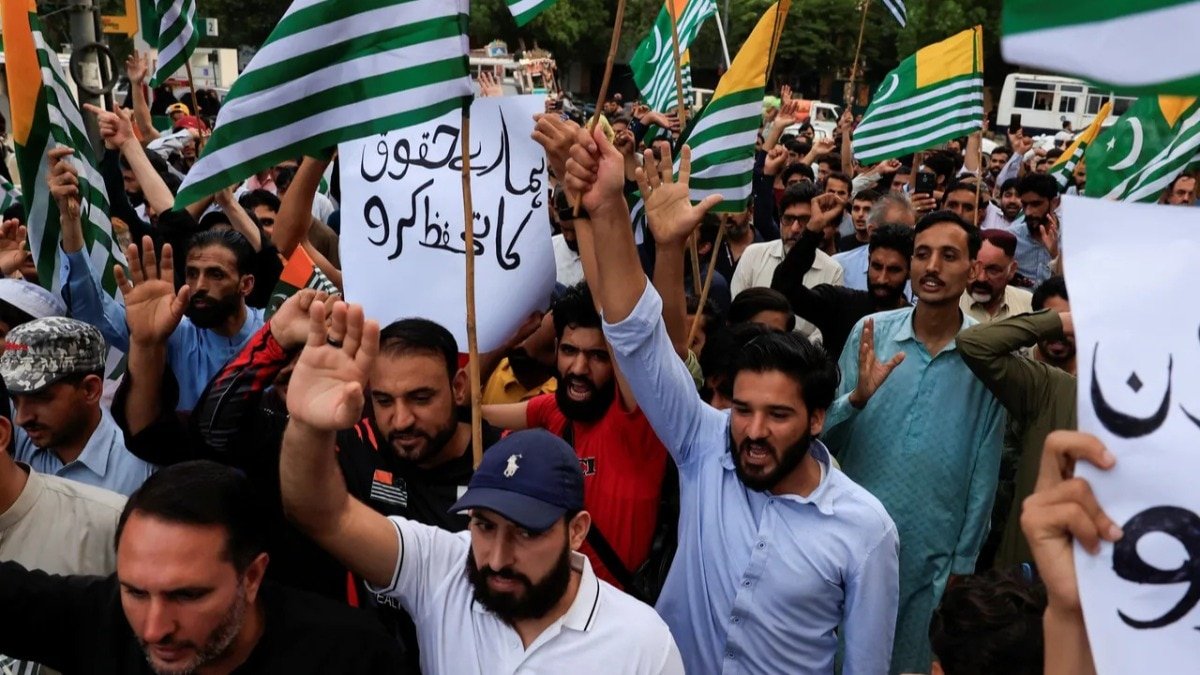
A fresh wave of unrest has swept through Pakistan-occupied Kashmir (POK) after the government banned the Joint Awami Action Committee (JAAC), a civil society alliance that has led several protests over economic and political issues in recent years.
At least 11 people were killed and more than 70 injured during clashes between protesters and security forces in Rawalakot ahead of a region-wide shutdown planned for June 9, according to news agency Reuters. The violence erupted as supporters of the JAAC gathered outside a hospital morgue where the body of a fellow activist had been taken following an earlier shooting incident.
advertisement
According to Reuters, police and paramilitary forces moved to disperse protesters linked to the JAAC, which was declared a banned organisation by the regional administration last week under anti-terrorism legislation.
Sardar Waheed Khan, commissioner of the Poonch sector, said four police officers and a passerby were killed during the violence.
“Four police officers and a passerby died after miscreants shot at them,” Khan told Reuters.
He added, “As the result of the law enforcers’ response, six protesters were killed.”
Police chief Liaqat Malik said 23 security personnel and around 50 protesters were injured. Authorities also confirmed multiple arrests during the operation. However, local residents and JAAC supporters disputed the official account and claimed the number of civilian casualties could be higher.
WHY ARE PEOPLE PROTESTING IN POK?
The latest demonstrations were triggered by the decision to reserve 12 seats in the 45-member legislative assembly for refugees who live outside Kashmir but elsewhere in Pakistan.
The JAAC argues that these seats undermine local representation and has demanded that the arrangement be scrapped.
The alliance has also raised concerns about inflation, electricity shortages, unemployment, governance issues and what it describes as political marginalisation of the region. For the past two years, the group has organised large demonstrations over rising flour and electricity prices. Several of those protests also ended in clashes with security forces.
The planned shutdown on June 9 was called not only to oppose the reserved seats but also to protest the banning of the organisation, internet restrictions and the killing of one of its leaders.
The Human Rights Commission of Pakistan (HRCP) said it was “deeply alarmed” by the violence and questioned the decision to outlaw the JAAC under anti-terror laws.
“While dialogue is essential, it cannot be meaningful amid the continued political disenfranchisement of the region’s people. The right to peaceful protest must be upheld, and grievances addressed transparently,” the commission said. The HRCP urged both the federal and regional governments to avoid further escalation and begin meaningful talks with protesters. It also announced plans to send a fact-finding mission to assess the situation.
Meanwhile, JAAC leaders have vowed to continue their campaign despite the ban.
“The state has begun a massacre of our people in Rawalakot,” JAAC leader Shaukat Nawaz Mir said in a video message on X.
Authorities have tightened security across the region ahead of elections scheduled for July 27. Mobile data services have been disrupted in several areas, large gatherings have been restricted and the JAAC’s central office has reportedly been sealed.
The worsening security situation has also prompted travel advisories from countries including the United Kingdom, Australia and Canada.
UK, AUSTRALIA AND CANADA SOUND ALARM
The unrest has begun drawing international attention. The United Kingdom, Australia and Canada have updated their travel advisories for Pakistan-occupied Kashmir, citing the worsening security situation. The advisories warned of possible road closures, heavy security deployments, communication blackouts and disruptions to movement as tensions continue to rise.
Foreign nationals in the region were urged to stay away from protests, monitor local media and follow directions from local authorities as fears grow that the crisis could deepen in the run-up to the July elections.
– Ends
SOURCE :- TIMES OF INDIA