

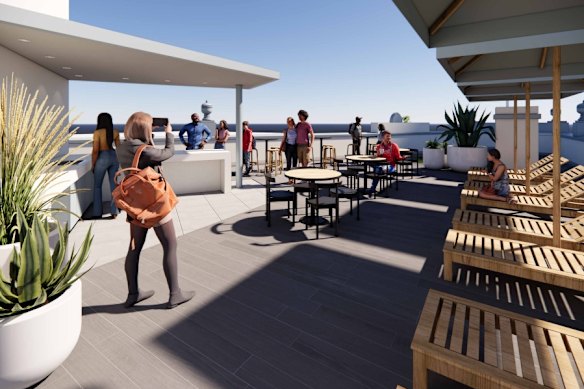
source : the age
A plan to turn the rooftop of a CBD backpackers hostel into an outdoor recreational space for its guests has sparked community backlash and exposed fresh tensions between Sydney’s nighttime economy and the expectations of inner-city residents.
A City of Sydney planning panel has unanimously rejected plans by Pacific House Hostel in Woolloomooloo to convert its rooftop into an open-air communal area after the proposal sparked more than 150 pages of written objections from neighbouring apartment owners.
The 224-bed hostel, operating from the former Sydney Eye Hospital building, proposed a landscaped rooftop space complete with daybeds, yoga areas and dining facilities overlooking the CBD. Under the proposal, up to 50 guests would have been able to access the rooftop daily between 7am and 8pm, with a trial extension to 9pm.
But residents of nearby apartment towers, including the Luxe and Domain complexes, argued that the development would worsen antisocial behaviour they say has been linked to the hostel for years, bringing noise, cigarette smoke and disruption closer to their bedroom windows and balconies.
Luxe strata committee chair Nikki Britt told a council planning meeting that residents had spent years documenting CCTV footage of late-night antisocial behaviour near their building entrances.
“We keep records of all of these things — the defecation on our steps, the urination, the sexual activity that happens as a result of the partying next door,” she said.
“As females coming home at night, feeling quite unsafe and having to walk through that kind of environment is very intimidating.”
Western Sydney University chancellor Jennifer Westacott and her partner, Tess Shannon, also opposed the plan, describing the hostel as a “difficult neighbour” for more than a decade.
“The clientele are young travelling people who naturally want to have a good time,” their submission stated.
“But this comes at the expense of our safety and security.”
Hostel operators rejected claims that the venue was an uncontrolled party destination, noting Pacific House had operated since 2002 and was recently named the best hostel in Oceania.
Kristy Hodgkinson of Hamptons Property Services, representing the hostel, said it was located on a busy CBD transport corridor rather than a quiet residential street.
“Despite residents’ concerns, the hostel has been subject to only 23 complaints in three years, and no compliance action has been taken,” Hodgkinson said.
“The rooftop is not intended to be party central. It is designed as a controlled environment for interaction between guests.”
Management argued that the rooftop would provide a supervised gathering space which could reduce disturbances at street level. Proposed mitigation measures included rooftop security staff, CCTV monitoring, a ban on amplified music, a 2.1-metre acoustic sound wall and fixed furniture to discourage large gatherings.
The panel was unconvinced, rejecting the application due to concerns about “unreasonable noise and amenity impacts” and uncertainty about whether management controls were adequate.
Panel members also raised concerns that the rooftop acoustic wall could compromise the architectural significance of the 1895 Thomas Rowe-designed building, one of Woolloomooloo’s notable heritage landmarks.
The decision comes as the NSW government seeks to encourage nighttime activity and expand rooftop dining and bar opportunities in special entertainment precincts.
NSW Night-time Economy Minister John Graham said: “What we require is the support of local councils to drive these changes as they deal with the ordinary neighbourhood concerns.
“Woolloomooloo has always been a lively nighttime destination, and a request to use a rooftop space until 9pm doesn’t seem out of kilter with that.”
Speaking after the meeting, residents welcomed the decision.
“We’re very relieved with the outcome,” Nikki Britt said.
“We’re not against nightlife – there are lots of rooftops in the area – but if something isn’t working already, then adding to it would only leave residents in a worse position.”
The Morning Edition newsletter is our guide to the day’s most important and interesting stories, analysis and insights. Sign up here.
 David Barwell is an urban affairs reporter for The Sydney Morning HeraldConnect via email.


