
Source : the age
After five years, the Powerhouse Museum is axing a highly contentious $2.6 million artistic consultants’ program amid criticism that the institution was “outsourcing by stealth” and calls by a parliamentary inquiry for greater transparency and accountability.
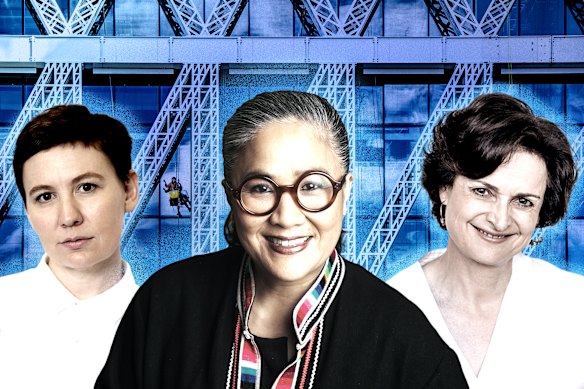
Artist Agatha Gothe-Snape, chef Kylie Kwong, photographer Zan Wimberley and former book publisher Julie Gibbs are among nine creatives hired as artistic associates to collaborate with the Powerhouse’s curatorial, collections, writing, exhibitions and public programming teams over the lifespan of the initiative.
The museum confirmed the remaining two roles will cease ahead of the opening of its new $1.1 billion-plus headquarters later this year.
Since 2020, the program has been a source of deep internal tension with the Public Service Association (PSA). The union told a recent parliamentary inquiry that its members believed the associates were performing the duties of public servants, including those of in-house, professionally accredited curators.
The inquiry into arts funding recommended the museum restore and retain specialised in-house curatorial expertise and positions consistent with the museum’s legislative purpose.
It called for the museum to publish the cost, purpose, duration, selection process and “deliverables of artistic associate and similar externally engaged roles, and ensure such roles supplement rather than replace core curatorial functions”.
The associates were granted access to Powerhouse facilities – including workspaces, digital studios, the Powerhouse Collection and the Research Library and Archives – while working alongside museum staff to develop exhibitions and programs.
“This has clearly been outsourcing by stealth,” PSA assistant secretary Troy Wright told the parliamentary hearing into arts funding in December. “It is also clear that the cost of these roles is a major concern. In the course of the past four years, spending on these roles has skyrocketed.”
In its first year (the 2021-22 financial year), four artistic associates cost the museum $142,000. At its peak last financial year, the museum spent $871,226 on six associates: Gothe-Snape, Wimberley, Kwong, Gibbs, writer Ceridwen Dovey and architecture academic Ainslie Murray.
The museum told the Herald this financial year it would spend $362,823 on Dovey and Kwong – the latter joining the museum shortly after closing her Eveleigh restaurant, Lucky Kwong, in 2024. Inclusive of licensing fees, this brings payments to a total of $2.6 million.
The museum has refused the Herald’s application under freedom-of-information laws for full disclosure of total payments to Kwong, Gothe-Snape and Wimberley.
The NSW Audit Office has previously been critical of spending on consultants, estimating that government agencies spent $1 billion on consultancies from 2017-18 to 2021-22. However, these figures do not always capture fees, expenses, travel and contractual add-ons.
Citing prejudicial business interests, private information and commercial-in-confidence in its determination, the museum rejected the public interest argument for a full breakdown of the trio’s remuneration. That decision is now under appeal. The museum also stated disclosure would expose them to the “risk of harm or of serious harassment or serious intimidation”.
In a sector where hundreds of artists compete for small grants, “it is simply not acceptable for large payments to consultants to be kept secret, particularly when the public is being asked to trust that this money delivers cultural value”, inquiry chair and Greens MP Cate Faehrmann said.
“Unfortunately, though, this reflects a growing trend by the Minns government to avoid scrutiny of its decisions by preventing citizens and members of parliament from accessing documents they should ordinarily be entitled to receive, and which are in the public interest to be released.”
Conflict-of-interest documents that were released show chief executive Lisa Havilah declared prior and current professional relationships with Wimberley, Gothe-Snape and two other associates in January 2022 as part of the expression-of-interest process. Before 2025, the museum said such declarations were covered by the institution’s standard code of conduct supplemented by annual disclosures.
Havilah said that during the associates’ program, the museum’s curatorial team expanded from 20 to 32 full-time curators, employed in more generalist roles focused on exhibition making and collection development. The union says many of these new roles went to those without professional curatorial academic qualifications.
“The strategic intention of artistic associates is to bring together industry leaders to connect the museum nationally and internationally and to work across teams on the museum’s renewal, and was implemented specifically to navigate a period of unprecedented change,” Havilah said. “The end of the program is unrelated to the parliamentary inquiry. Now that the infrastructure programs are close to completion at Parramatta, we are ready to open.”
The museum stated that the associates had worked on the Powerhouse Parramatta Time Capsule; research and curatorial frameworks for the five inaugural exhibitions; documentation of the construction for its collection and archives; a residency program developed in collaboration with the Cité Internationale des Arts in Paris; a partnership with the Stephanie Alexander Kitchen Garden Foundation; and a First Nations applied arts and sciences exhibition presented at the Museo de Arte.
A union spokesperson said it was glad to see the program end: “The program was a consultancy exercise, and our members were directed to report to the associates, despite them not being employees. The associates appear to have been among the better-paid consultants in the NSW government, and the PSA would much rather see that funding go toward employing people permanently in professional museum roles.”
Meanwhile, and separately from the external consultancy program, the NSW Department of Creative Industries has defended delays to an investigation launched into allegations of serious “wrongdoing” at the Powerhouse Museum.
It has been more than seven months since a staff whistleblower made a protected complaint – believed to be the second made under the Public Interest Disclosures Act, which shields complainants from retribution.
“Matters under consideration are complex and involve multiple lines of inquiry. The department has a responsibility to address these matters with due diligence and procedural fairness,” a spokesperson said. “As the investigation is ongoing, it would not be appropriate for the department to provide further comment at this stage.”
Want more arts coverage? We’ve got you.
The Booklist is a weekly newsletter for book lovers from Jason Steger. Get it delivered every Friday.