

Source : THE AGE NEWS
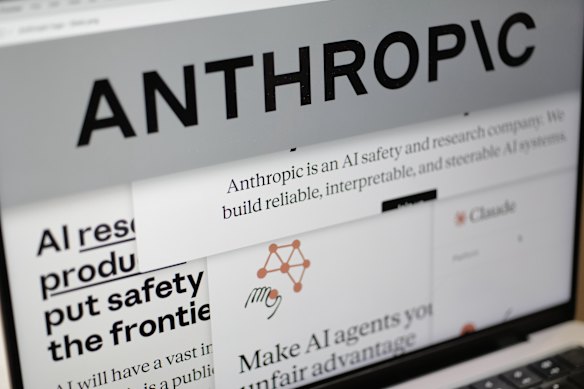
The Trump administration’s already confused approach towards regulation of artificial intelligence has become even less coherent. Its heavy-handed decision to impose export controls on Anthropic’s latest frontier AI models now threatens America’s dominance of AI development.
The US government’s actions, which forced Anthropic to immediately cut off global access to its Mythos and Fable 5 models, also create the impression that an administration which has made it clear it dislikes Anthropic because of its perceived “wokeness” is targeting the company for reasons other than the national security interests cited.
Last Friday, US Commerce Secretary Howard Lutnick wrote to Anthropic, informing the tech company that it now requires a license to export its AI models to all destinations worldwide and to all foreign persons, whether outside the US or within – effectively meaning that they couldn’t even be accessed by Anthropic employees who aren’t US citizens.
The directive, which gave Anthropic only 90 minutes to comply, came after Amazon’s Andy Jassy told the White House his researchers had identified a potential “jailbreak” (a way to circumvent the safety guardrails built into Anthropic’s models) in Fable 5 – which was supposed to be a safe version of the Mythos model that alarmed the world with its potential to exploit security flaws in most of the world’s software.
Anthropic has said it received explicit approval to release the model after the Commerce Department reviewed Fable 5 – and presumably either didn’t identify the jailbreak, or didn’t find it serious. The risk of a jailbreak has been overstated, and the administration has overreacted, it said.
The AI company, along with AI experts, also says that no model yet exists that doesn’t have potential jailbreaks, and that competitors like OpenAI and Google have vulnerabilities in their AI models that are similar to those that prompted the shutdown of global access to Fable 5.
The Trump team has introduced, without much thought, a de facto licensing scheme for AI exports while also reshaping, and potentially down-skilling, America’s AI workforce
The Trump administration has had an erratic approach to regulating AI.
One of the first actions Donald Trump took when regaining the White House – at the urging of the Silicon Valley billionaires that had helped fund his campaign – was to tear up the relatively light-handed regulatory framework the Biden administration had created for reviewing AI models before their release.
Last month, however, the administration announced an agreement with the leading AI developers to have new AI models evaluated 90 days before their release, only to backtrack and abandon that plan after pushback from some within the sector, and then subsequently reinstate it with a 30-day timeline.
Now the government has taken the unprecedented step of using its export licensing regime, and the threat of criminal and civil penalties that could apply both to Anthropic as a corporate entity and/or its executives, to prevent the export of arguably the world’s leading AI model.
By stating that even non-US nationals within the US can’t have access to the models, the directive is an existential threat to Anthropic which, like all AI developers, has a significant amount of foreign talent within its workforce.
Freezing the distribution of Anthropic’s latest models and generating that question mark over its ability to use non-US personnel to develop AI, the Trump administration has unwittingly created a threat to America’s entire AI sector and its ability to maintain its global leadership.
It’s also told the rest of the world not to rely on American AI models.
If the Trump administration can cut off access to the latest models without any real notice, building those models into companies and governments’ IT infrastructure and business processes would create unacceptable risks. China’s open-source AI products would start to look more appealing.
The message to the rest of the world is that, while the US might lead the world in AI development, it isn’t a reliable partner. With this administration, there’s also the risk that it might try to weaponise even its closest allies and trading partners’ reliance on US-developed AI.
It is more than conceivable, given the nature of Trump’s second administration, that the US government didn’t think through the implications of imposing export controls on Anthropic and what that might mean for other AI companies and the nation’s dominance of AI.
The Trump team has introduced, without much thought, a de facto licensing scheme for AI exports while also reshaping, and potentially down-skilling, America’s AI workforce.
It’s conceivable that the concerns about the potential for a jailbreak in Fable 5 are just a pretext for continuing the feud with a company Trump has labelled “radical left” and its executives “leftwing nutjobs.”
Earlier this year, Trump directed government agencies to immediately cease all use of Anthropic’s AI tools because the company was insisting that its models couldn’t be used to conduct mass surveillance of Americans or control autonomous weapons without human oversight.
Pete Hegseth’s Department of War, however, insisted that its use of the tools shouldn’t be limited by private contractors (even though both the applications Anthropic was concerned about would be illegal under US law).
Hegseth said “diversity, equity and inclusion and social ideology” had no place in his department and ordered it to cease using Anthropic’s tools, while declaring the company a “supply chain risk” and saying no supplier to the US military was allowed to conduct any commercial activity with Anthropic. (There seems to be a bit of huffing and puffing because Claude still appears to be embedded within the US military and was used to wage the war in the Middle East).
The action against Anthropic comes at a critical moment for the company and the sector.
Elon Musk’s SpaceX has just made a spectacular debut on the sharemarket, raising more than $US85 billion ($120 billion) on the basis of its AI ambitions (even though it significantly lags the leading edge of AI development).
Anthropic has filed a draft prospectus for its own initial public offering, as has OpenAI. Both would be valued at more than $US1 trillion, potentially a lot more if the SpaceX float is any guide.
They both need more access to capital, given the rate at which AI developers burn cash developing and training their models – Anthropic has raised $US95 billion from private markets this year and is expected to raise tens of billions of dollars more via the float – and therefore the administration’s actions jeopardise the pipelines of funding that the companies, and their start-up rivals, depend on to continue to compete in AI development.
Without that capital – and cutting off US companies from the global market and undermining their ability to recruit the most capable workers would deter investors – they would have no future.
There is a case for regulation of AI development, with the need to ensure, as much as possible, that the models are safe while also taking into account issues of national security, the impact of any regulations on innovation and the commercial implications of intervention.
That would require serious thought, inquiry and careful execution though – which are not what we’ve come to expect from this administration.
The Market Recap newsletter is a wrap of the day’s trading. Get it each weekday afternoon.