

SOURCE :- THE AGE NEWS
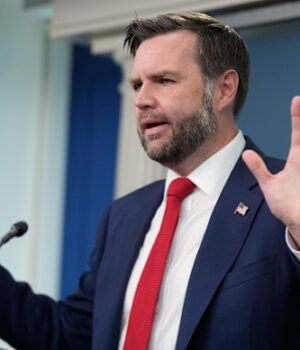
Seattle: US Vice President JD Vance has excoriated Israeli criticism of the American-led peace deal with Iran, saying President Donald Trump is the only world leader who is still sympathetic to Israel, and critics need to “wake up” to the country’s friendless reality.
The comments represent an extraordinary rebuke of widespread Israeli sentiment from a sitting vice president, and come amid broader strains between the close allies as Trump brings the Iran war to an end.
Briefing journalists at the White House, Vance was asked about reports that Israeli Prime Minister Benjamin Netanyahu was shocked and privately fuming about the memorandum of understanding the US signed with Iran – to which Israel was not a party.
Vance – who takes a more isolationist approach to foreign policy, including the US’ relationship with Israel – said the characterisation of Netanyahu as angry was “not reflective of the conversations that I’ve had with him”.
But he noted remarks by several right-wing Israeli cabinet ministers, such as Ben Gvir and Bezalel Smotrich, who have attacked the deal as “bad for Israel and the entire free world”.
Gvir said Israel was not a subordinate of Washington and was not bound by Trump’s agreement, and vowed the country would not withdraw troops from Lebanon. Netanyahu has also pledged troops will remain.
“My message to them would be two-fold,” Vance said of the Israeli critics. “Number one, Donald J. Trump is the only head of state in the entire world who is sympathetic to the nation of Israel at this moment in time, and he happens to be the head of state of the world’s superpower.
“If I was in the cabinet of the Israeli government, I might not be attacking the only powerful ally that I have anywhere left in the entire world. Bibi [Netanyahu], to his credit, has not gone down this path.
“The other thing that I would say is that over the last three months, two thirds of the defensive weapons that have protected your homeland have been built by American hands and paid for by American tax dollars.
“The problem for Israel is not Donald J. Trump, and anybody in Israel who thinks their biggest problem is the President of the United States needs to wake up and smell the reality of the situation that country is in.”
Vance then left the podium and did not answer further shouted questions. Earlier, he told The New York Times he was bemused by the “weird panic” and “freak out” happening in Israel regarding the deal, arguing it was not grounded in the facts.
The MoU with Iran, which Trump signed at Versailles on Wednesday night (French time) after a meeting of G7 world leaders, ends the military conflict “on all fronts” and establishes a 60-day negotiating period for a final deal.
It explicitly includes Lebanon, where Israel continued to launch air strikes on Thursday, killing three people according to a Lebanese news agency.
The agreement ends the US naval blockade of Iranian ports and reopens the Strait of Hormuz for 60 days. It also immediately lifts US oil sanctions on Iran, and contemplates large-scale sanctions relief – as well as hundreds of billions of investment and reconstruction funds – if Iran complies with its obligations under a final deal.
Gulf countries have broadly welcomed the deal, with Qatar calling it an “important step towards consolidating sustainable peace and promoting economic growth regionally and internationally”.
Vance referenced Arab support as he defended the deal at the White House, saying they believed it would be “an amazingly transformative thing for the region”, unlike the 2015 Iran nuclear deal signed by Barack Obama.
The vice president reiterated that American tax dollars would not go to Iran “under any circumstances”, even as part of a $US300 billion ($425 billion) reconstruction fund the US has agreed to help facilitate under the MoU.
“They don’t get anything unless they change their behaviour,” Vance said. “You really have a win-win situation for the United States … we have all the cards.”
Asked about Israel’s ongoing attacks in Lebanon and whether they could torpedo the entire deal, Vance said he did not want to discuss hypotheticals, but Trump’s expectation was that everyone, including Israel, would work together to make the deal a reality.
Trump has also cajoled Netanyahu over Lebanon, counselling the Israeli leader that “you don’t have to knock down buildings in Beirut” to combat Hezbollah, and that Israel should “behave better”. He has also suggested Syria should take on Hezbollah instead of Israel.
The US and Israel launched the Iran war together on February 28, and aimed to fulfil Netanyahu’s long-held ambition of destroying the Iranian regime. But the regime survived, and the resulting peace process has exposed divisions between the two allies, with Trump admitting to calling Netanyahu “f—king crazy” on a call.
Meanwhile, Iran’s supreme leader, Mojtaba Khamenei, issued a new statement saying he had granted Iranian President Masoud Pezeshkian his blessing to sign the agreement despite his own opposition to it on principle.
Trump made the deal “out of desperation”, Khamenei said. He endorsed face-to-face negotiations with the US but added: “It is self-evident that the in-person negotiations in the future will not mean acceptance of the enemy’s position.”
with Reuters, AP
Get a note directly from our foreign correspondents on what’s making headlines around the world. Sign up for our weekly What in the World newsletter.
 Michael Koziol is the North America correspondent for The Age and Sydney Morning Herald. He is a former Sydney editor, Sun-Herald deputy editor and a federal political reporter in Canberra.Connect via X or email.