

SOURCE :- THE AGE NEWS
American power is not what it used to be. American hubris, on the other hand, is stronger than ever.
The hubris last peaked in 2003 when president George W. Bush stood on an aircraft carrier in front of a banner that declared “mission accomplished” in the war with Iraq. It took seven long years before US troops could withdraw from that fiasco.
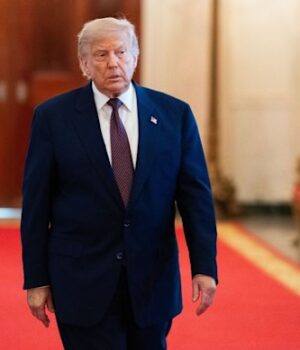
Now we have seen Bush eclipsed. Donald Trump showed even greater hubris this week with his declaration of victory in the war with Iran.
And that is a problem for American allies – including Australia.
“We stopped nuclear holocaust,” the president claimed of his deal at one point when speaking at the G7 summit in France. He argued he had brought peace to the Middle East, opened the oil trade and averted economic catastrophe.
In fact, his peace deal releases billions of dollars to the rulers in Tehran, eases military pressure on the regime and delivers no guarantee of lasting security.
Trump is on the defensive when many of his MAGA supporters believe the outcome is too good for Tehran. He tries to project strength with his tough talk about bombing Iran if it does not behave, but the terms of the deal show weakness.
Allies are adjusting to this across Europe. NATO leaders refused to support Trump and Israeli Prime Minister Benjamin Netanyahu when they launched the war on February 28, and some paid a price. In Germany, for instance, Trump took steps to withdraw US troops.
The leaders decided they had to risk the penalties rather than join a war with no strategic imperative. At this point, given what we know about the peace terms, the European leaders have been proven right. The war has delivered no net gain for America or its allies.
Over more than three months of war, the world’s greatest superpower could not achieve what Trump sought. The greatest US military assault in decades, combined with Israeli missiles and airstrikes, could not dislodge the Iranian regime. It could not force Tehran to hand over its enriched uranium or give up its ballistic missiles.
Worse, all this American power could not open the Strait of Hormuz when Iran, with its leaders assassinated and its major military bases bombed, used small naval units to attack oil tankers. Trump threatened to seize Kharg Island, blow up desalination plants and destroy Iranian civilisation, but his social media posts did nothing to change the strategic reality.
It is true that the US inflicted pain on Tehran by blockading its oil exports and restricting its oil revenue. Perhaps, over time, this might have been enough to change the outcome, but Trump could not wait long enough for that to happen. On Wednesday, speaking at the G7 summit, he revealed the reason.
It is too late for Trump to heed the biggest lesson. If you do not have what it takes to win a war, do not start one.
“We run out of reserves at about four weeks,” Trump said. He was referring to oil reserves, and he was admitting that the world economy would be in even greater trouble if the war had dragged on. “You know, there are reserves all over the world, and we would really run out, and there’ll be a time when you wouldn’t be able to get it,” he said.
It was a damning admission. First, Trump started the war. Next, he showed he had no plan to keep oil supplies flowing. Then he was proven impotent when Iran closed the strait.
This is the pivotal humiliation for America under Trump. Whatever happens next in the talks over the peace terms, the war will be remembered for the US failure to win the military contest against a smaller power over the Strait of Hormuz.
Allies have to respond to this lesson – not just because Trump lectures them about spending more on defence, but because Trump shows them that the US is an unreliable ally. (The world will watch the US midterm elections in November to see if this is a temporary phase or a lasting change).
The Pentagon ordered so many missile strikes on Iran that it will take at least three years to replenish supplies. One early analysis found the US and Israel fired 11,294 munitions in the first 16 days of the war at a cost of approximately $US26 billion ($37 billion).
A study at the end of May concluded the US was exposed by this shortage of Tomahawk, Patriot and THAAD missiles. “The depleted inventories have created a window of vulnerability for a potential Western Pacific conflict,” said analysts at the Centre for Strategic and International Studies. They did not need to mention China and Taiwan.
The consequences can be severe for those who rely on the US.
Switzerland signed a deal in 2022 to buy Patriot missile defence systems, and it expected to take delivery by 2028. It has been said that the wars in Ukraine and Iran will push this back by five to seven years. When Denmark chose a new missile defence system in April, it rejected the Patriots in favour of a European equivalent.
The industrial capacity of the US defence sector is under pressure – and Australia sees the consequences in the AUKUS pact. Two big US shipyards, one run by General Dynamics and the other by Huntington Ingalls Industries, are struggling to increase the rate of production of Virginia-class submarines. This increases the risk of delays in the sale of three second-hand vessels to Australia over the next decade.
Over time, the rational response among allies is to reduce the reliance on the US. Australia, for instance, is beginning to make its own missiles under licence rather than depend on US exports. Across Europe, leaders are putting more funds into sovereign defence industries and talking of expanding their armed forces – and even putting conscription on the agenda.
Trump talks about his peace deal as if he has demonstrated his power with his war with Iran. He has, in fact, proven the limits of his power. China and Russia can see this, and so can American allies. If the result is a weakness in American military capacity in Asia over the next few years, Australia has to confront the consequences.
It is too late, unfortunately, for Trump to heed the biggest lesson. If you do not have what it takes to win a war, do not start one.
Read more on the Iran deal:
Get a note directly from our foreign correspondents on what’s making headlines around the world. Sign up for our weekly What in the World newsletter.
 David Crowe is Europe correspondent for The Sydney Morning Herald and The Age.Connect via X or email.

