

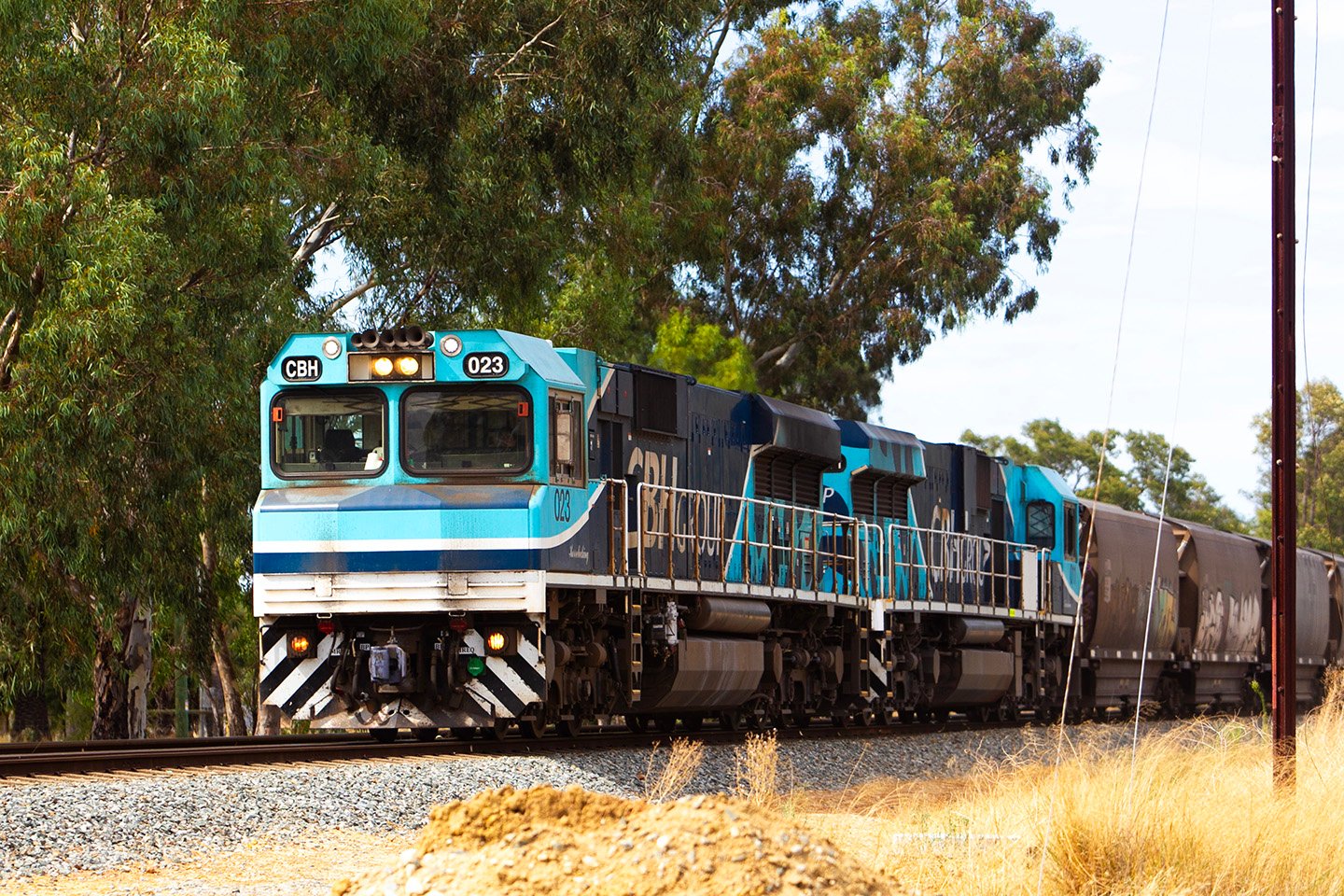
Source : BUSINESS NEWS
The country’s biggest grain handler has failed in its bid to overturn a court decision relating to a $22 million payment claim over its rapid rail project.
Co-operative Bulk Handling, trading as CBH Group, took Martinus Rail to court over a payment claim relating to the grain handler’s rapid rail and outloading project in Broomehill.
The Supreme Court of Western Australia found CBH was liable for a $22.6 million debt to Martinus Rail, after failing to dispute the contractor’s invoice within the legislated deadline of 15 business days.
CBH appealed the decision to the WA Court of Appeal, but its application was dismissed on Friday.
In the Court of Appeal’s judgment, the judicial bench upheld the primary judge’s findings that CBH made its counter-payment claim too late and was therefore liable for Martinus Rail’s invoice.
CBH and Martinus Rail signed a contract over work at the rail sliding project in the Great Southern, valued at $36.7 million, in early 2023.
A Martinus employee sent an email with a payment claim for $22.6 million to a CBH representative, on Saturday, August 31, 2024, according to the judgment.
The email was sent at 4.35pm and was not opened by CBH until Monday morning.
CBH sent a counteroffer of $5.4 million, in an email on September 24, 2024.
Under the Security of Payment Act, the principal to a contract can dispute a payment claim within 15 days of the claim being made.
Martinus Rail claimed the 15-day period started on the Monday CBH opened its email and read the $22.6 million invoice, until September 20.
However, CBH argued the clock started the next business day after the email was received, being Tuesday, and ending on the day a counter-payment claim was made on September 24.
The Court of Appeal found there was no legal difficulty interpreting the relevant legislation, which states when a document is placed in a recipient’s control.
“This is not necessarily at the point when the document is actually accessed by a recipient,” the judges said in their judgment.
“The second limb of this regulation makes plain that once the document is within the control of a person to whom it is delivered, and that person knows of the document, it is taken to have been received by the person, whether or not the person physically accepts the document.”
CBH’s Broomehill development was the first of its extension projects to feature a fixed rail loading design that included four 1,100 tonne silos, a 1,500-tonne per hour elevator to load trains, and a 500-tonne per hour auger pit.
The rail siding works cover more than 2 kilometres of track next to the mainline to accommodate the loading of a 60-wagon train.


