

source : the age
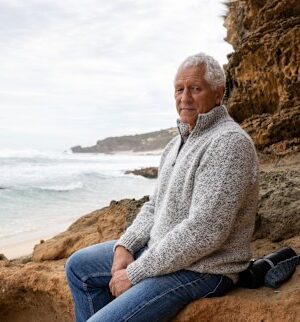
For the past 20 years, Kent Stannard has tracked the movement and behaviours of white sharks along the Victorian coastline.
He has learnt they are fearsome predators, but do not particularly like being watched themselves.
A spate of serious and deadly shark attacks in Australian waters over the past year have devastated affected communities and renewed debate about management strategies.
The last recorded fatal shark attack occurred in Victoria decades ago. But experts say anybody who spends substantial periods in the open water has almost certainly come within close distance of these lethal hunters, even if they are blissfully unaware.
Stannard, a marine consultant who has worked with government agencies, universities and communities, says anyone who sees a shark in the water should avoid thrashing about.
“Most people’s instinct is to panic, which creates disturbance,” he says. “And disturbance tends to be what activates these animals.”
He advises calmly paddling back to shore. If surfers encounter a shark, Stannard recommends grouping together and then slowly making their way to the sand.
“Keep your eyes on the animal at all times,” he says. “They seem to know when they’re being observed, and they tend to be a little more wary at that point.”
Stannard says monitoring sharks with electronic tags and drones, so water users can be warned of nearby predators, is the most effective method for preventing attacks. He observes white shark movements via a network of receivers placed in Victorian waters that detect tagged animals nearby.
Tagging smaller white sharks typically involves catching them on a baited hook with the barb removed. Researchers then draw the shark beside a boat and tie them down briefly so they can make a small incision and insert a tracking device.
Adults are implanted with tags using a spear-like device. Researchers then release the sharks and monitor their movements.
Stannard says there have been increased reports of white sharks – also known informally as great white sharks – from Portland to Warrnambool in the past six months as well as East Gippsland.
Figures supplied by the Victorian Fisheries Authority showed there were 25 reported shark sightings in Victoria from June 2025 to May 2026 – the same number as the previous 12 months.
Stannard says no tagged white sharks have been detected inside Port Phillip Bay, but they have been found relatively close to shore near Seal Rocks (off Phillip Island), as well as Corner Inlet (near Wilsons Promontory) and Gippsland’s Ninety Mile Beach.
However, he says other shark species, including bronze whalers, sevengills, banjos and Port Jackson varieties are known to use the bays.
Stannard says food sources in Bass Strait are plentiful for white sharks, which has minimised the likelihood of harmful interactions with humans.
Conversely, increased human populations and improved wetsuit technology means more people can stay in the water for longer periods, which increases the likelihood of people seeing a shark.
Spearfishing, too, can attract sharks, particularly when divers are carrying fish they have caught.
The last recorded shark fatality in Victoria occurred in the late 1980s. There was another fatality in 1956 when lifesaver John Wishart was killed at Portsea.
But in NSW, South Australia and Western Australia, there have been a series of recent attacks. This month, a four-metre shark attacked a woman at Coogee Beach, leaving her with massive wounds to her arms and leg.
In January, a shark mauled Nico Antic, 12, to death at a Sydney Harbour beach, and there were several attacks in NSW the previous summer.
There have also been shark attacks at Rottnest Island and several in South Australia over the past year.
Dr Rebecca Olive, a senior research fellow at RMIT University, says shark attacks are traumatic for victims, their families and communities.
Olive, who studies interactions between humans and sharks, says attacks hit us at a deeply emotional level because, while we are apex predators on land, sharks rule the oceans.
“They remind us we’re part of a food chain in a way that isn’t usual in our everyday lives in Australia,” she says.
She says bull sharks, white sharks and tiger sharks are among the main species that come into contact with humans.
Through her research, Olive has seen drone footage of sharks coming within centimetres of people who were unaware they were in the predators’ presence.
Counterintuitively, Olive found the footage reassuring.
“The most common image is a shark curiously checking out your feet because they don’t want to be in your eye line, and then going away.”
She says news stories and movies about shark attacks are memorable, but such acts of aggression remain relatively rare.
Learning about the marine environment before entering it can also help to minimise the chance of a shark encounter.
Olive suggests taking note of places where shark attacks have occurred and even when fish are migrating.
“In Byron Bay when the mullet are running, it’s probably not a great time,” she says. “Your chances of encountering a shark are probably higher.”
Likewise, a beached whale is likely to attract sharks. Surfing and swimming after heavy rain in nutrient rich water can also be dangerous – particularly near river mouths, which provide habitat for bull sharks.
In 2017, Surfing Victoria introduced its Surfers Rescue Program that teaches surfers and beach users how to respond to medical emergencies, including shark bites.
Surfing Victoria chief executive Adam Robertson says the program is free and can be completed online. He says surfers operate in an uncontrollable environment, and urges them to beware of the risks and do what they could to mitigate them.
Stannard urges beachgoers to stop and watch the conditions for a moment before jumping in. Are there large schools of fish? Are there strange patches in the water that appear to be bubbling or swirling? Are birds diving?
“It’s always good if you arrive at a beach just to take stock of what’s going on,” Stannard says.
Because once you get into the water, there is every chance something out there is watching you too.
Start the day with a summary of the day’s most important and interesting stories, analysis and insights. Sign up for our Morning Edition newsletter.
 Benjamin Preiss is The Age’s regional editor. He was previously state rounds reporter and has also covered education for The Age.Connect via X or email.

