

Source : THE AGE NEWS
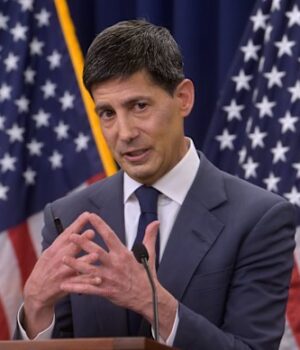
Kevin Warsh’s first major initiative as new chair of the US Federal Reserve Board was drawn from a familiar playbook. He’s the “new broom”, setting up taskforces to examine all the Fed’s ways of doing things as an avenue to impose his own convictions and agenda on the central bank.
Except that the Fed is no ordinary corporate organisation, where the new leader can dictate strategy and outcomes.
It’s an institution structurally consensus-driven, so Warsh needs to get the other six Fed governors and 11 voting members of the Federal Open Market Committee (FOMC), which sets US monetary policy, onside if he is to implement a regime-changing agenda at the central bank.
Thus, the arguments and conclusions of his taskforces will need to be persuasive and sway a Fed wary of Warsh because he was appointed by Donald Trump with a clear expectation that he would deliver the lower interest rates the US president has endlessly called for. His push for change comes up against a Fed that has shown a growing streak of independence in the face of Trump’s attacks on its former chairman, Jerome Powell, and another governor, Lisa Cook.
Warsh will need to convince his new colleagues, and the Fed’s wider audience of economists and investors, that significant change is necessary.
The Fed’s recent history, like that of its peers around the world, does have a major blemish – its failure to recognise that the post-pandemic supply chain shocks would have something other than a “transitory” impact on inflation. But it had been managing a steady reduction in the inflation rate while maintaining near full employment and solid economic growth until Trump went on a massive government spending binge with borrowed money, declared a war on global trade and attacked Iran, which closed a key passage for the world’s energy supplies.
Ultimately, whoever is chair and whatever the policies, the Fed will always be reacting to what the economy and financial system are presenting to it.
Left alone, the “old” Fed would, as last week’s potentially final “dot plot” chart suggested, raise US rates in response to inflation that has been climbing this year as the combined effects of the US government’s borrowing binge, Trump’s tariffs and the big spike in oil, petrol, diesel and fertiliser prices have taken hold within the wider economy.
Changes to the way the Fed thinks and acts might be justified on the basis that the US economy is changing as a result of Trump’s policies and, more particularly, the potential transformation caused by artificial intelligence. But radically altering the way a central bank operates doesn’t change the underlying and relatively straightforward nature of its mandate.
It’s there to keep the inflation rate and expectations of future inflation under control, while maximising employment and economic growth.
Warsh’s taskforces are reviewing the Fed’s communications policies, its balance sheet management, the data sources it relies on and the impact that AI-driven productivity gains might have on its policymaking.
There will also be a review of the Fed’s inflation framework, which now targets an inflation rate of 2 per cent over the longer run (measured primarily against the Personal Consumption Expenditure price index) and prioritises price stability.
The communications taskforce has received considerable attention, given that Warsh has made it clear that under his reign, the Fed will communicate less. The first policy statement under its new chair last week was notable for its brevity and lack of any forward guidance.
Since the 2008 financial crisis, which forced all the world’s major central banks to cut their policy rates to close to zero and deploy unconventional measures to force longer-term rates down to avoid a deflationary spiral, the world’s central bankers have become a lot more communicative.
They’ve adopted transparent decision-making – a “no surprises” approach so that markets can understand how the central banks will respond to incoming economic data.
Warsh argues that forward guidance and the commitment to transparency encourage the Fed to hang on to its forecasts, and can exacerbate policy errors. He also believes that markets should be helping to guide the Fed, rather than the Fed guiding the markets.
“Financial market prices are probably the most important source of information to guide central bankers,” he said last week. “But when all the financial markets are doing is reflecting back what we’ve said, then we’re taking the most important source of information, and we’re being blind to it.”
While that’s an interesting viewpoint, withdrawing any guidance would inevitably lead to more volatility in financial markets, which would have to try to second-guess how the Fed might respond to economic data. Market participants’ expectations might be out of kilter with the Fed’s.
The other issue with Warsh’s approach is that the other Fed governors and FOMC members are free to share their views on monetary policy, and do so frequently. He might be able to control what the Fed itself puts out, but he can’t prevent individual members from broadcasting their opinions.
Potentially of greater consequence than what the Fed says, or doesn’t say, is that Warsh wants a smaller balance sheet for the US central bank.
The Fed’s assets and liabilities exploded in response to the 2008 crisis, ballooning from less than $US1 trillion to about $US4.5 trillion as the bank bought Treasury bonds and mortgages to keep interest rates low.
By late 2017, after the Fed allowed maturing bonds and mortgages to run off without reinvesting the proceeds, its balance sheet had shrunk to about $US3.8 trillion, before its response to the pandemic created a new bout of quantitative easing (QE) that caused its assets to peak at almost $US9 trillion.
The Fed’s balance sheet has since shrunk again, to $US6.7 trillion ($9.6 trillion), but its size stalled last year after there were signs of increasing and quite severe liquidity stress in US money markets.
Warsh believes a small balance sheet will lead to higher economic growth and lower inflation.
He thinks the financial system has been pumped up by QE, which he argues has created a market conviction that the Fed will always bail investors out, has triggered inflation without boosting growth and encouraged the US government to spend more than it should because it has been able to borrow more cheaply.
The Fed’s experience, however, suggests that further reducing the size of the balance sheet, however desirable – and there are some good arguments as to why it would be desirable – doesn’t come without risk.
The taskforce reviewing the Fed’s data sources will no doubt be pushed in the “trimmed mean” inflation direction that Warsh favours.
The problem with the trimmed mean is that, when there are significant changes occurring within the economy – such as the torrent of AI-related investment that is flowing into the costs of semiconductors, energy, construction, commodities and IT talent more generally – those are the very inputs to inflation that are trimmed out.
Similarly, while Warsh has argued that AI will lead to a big increase in US productivity and be deflationary rather than inflationary because of its effects on demand for labour, if the investment in AI and its impacts on costs rise at a faster rate than the economy’s productivity gains, it could have a material impact on inflation and inflation expectations long before the productivity gains or the impact on jobs become material.
The Fed can change the way it communicates and adjust the size of its balance sheet, the data it deems important, the way it factors the development of AI into its longer-term thinking or the framework for the way it targets inflation.
Ultimately, however, whoever is chair and whatever the policies, the Fed will always be reacting to what the economy and financial system are presenting to it.
So, the most that Warsh could really hope for from his taskforces would be an ability to react a little quicker, while avoiding risks that the changes themselves send the inflation rate higher or cause unnecessary volatility and stress within financial markets and the financial system.
The Business Briefing newsletter delivers major stories, exclusive coverage and expert opinion. Sign up to get it every weekday morning.


