
Source : Perth Now news
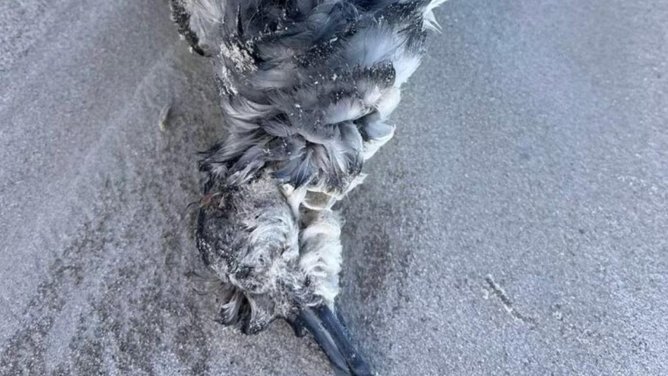
Two dead sub-Antarctic seabirds that washed up along the South Australian coastline are being tested for H5 avian virus.
Fowlers Bay tourism operator Rod Keogh found the birds and immediately made a report to authorities.
“I am super vigilant on the beach to see if there is a bird. It might not be anything but this is super important,” he said.
“Especially if it is a pelagic bird, it is something we have to do.
“If another animal turned around and ate it, that’s how spread starts.”
Mr Keogh said Nuyts Archipelago and the Norwich Reef were about 37km off the coastline and were home to the largest population of Australian sea lions.
He reported the birds to the South Australian Department of Primary Industries and Regions and had a call back from a local ranger within 40 minutes.
The birds were collected and taken for sampling that night.
“It is super important that we need to report this because it is our first line of defence,” he said.

Fowlers Bay is a remote town on the South Australian coast, about 1283km east of Esperance in Western Australia, where two seabirds tested positive to the deadly H5 bird flu.
A sub-Antarctic Skua was rescued from a beach and taken to the Esperance Wildlife Hospital and Sanctuary, showing signs of bird flu last week.
A sick southern giant petrel also found in Esperance has been confirmed positive for H5 avian influenza by Department of Primary Industries and Regional Development Diagnostic Laboratory Services.

It was the first time the deadly virus was detected on Australia’s mainland after it was found in several wildlife species on a sub-Antarctic Australian territory, prompting warnings from authorities that Australia must prepare for potential outbreaks.
In February, the disease was found in animals living on Heard Island, an extremely remote territory located more than 4000km southwest of Perth and 1700km north of Antarctica.
Avian influenza primarily affect birds but can infect mammals too, posing a threat to marine mammals and livestock industries.

Premier Peter Malinauskas told media it was still unknown if birds that migrated to South Australia carried the H5 avian virus.
“This is something we’ve known is a risk and we’ve been able to account and plan for,” he said.
A Department of Primary Industries and Regions spokesman said while there were no confirmed cases of H5 bird flu in SA, the government would examine any reports of sick or dead birds and other wildlife.
“Sample testing occurs at PIRSA’s testing lab at Glenside. As with every other Australian state and territory, all samples that provide an initial indication of H5 bird flu are sent to CSIRO for confirmatory testing,” a spokesman said.
“We are able to respond to reports of sick or dead birds and other wildlife anywhere in the state, and have bolstered surveillance operations that we have been undertaking over recent years.”

PIRSA are conducting surveillance in many areas along the west and far west coasts, Coorong, Fleurieu, Kangaroo Island, Limestone Coast, Far North and offshore islands.
Conservation and National Park sites — including Seal Bay Conservation Park, Coorong National Park, Adelaide International Bird Sanctuary and the Adelaide International Dolphin Sanctuary — are also being monitored.
“We will notify the public in the event of a positive detection of H5 bird flu in SA,” a spokesman said.