

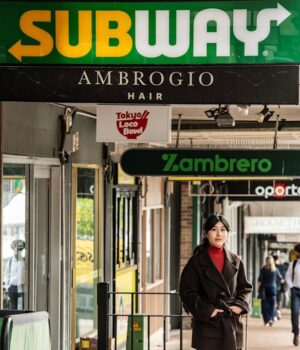
source : the age
The population hubs springing up across Sydney have been touted as suburbs of the future, heralded for their walkability, public transport and increased housing supply.
Yet research from the University of Sydney has found a key public health determinant – food – has not been considered by urban planners, an oversight which could cost the healthcare system billions.
The NSW government’s Transport Oriented Development (TOD) program was designed to keep pace with our booming population by rezoning in target suburbs with a metro or rail station, with increased height and density measures creating capacity for nearly 60,000 new homes over 15 years.
However, according to a study published on Wednesday in Cities and Health, almost one in three existing food outlets across these localities were deemed “unhealthy” (32.3 per cent) while more than half were “less healthy” (52.8 per cent). Overall, 85 per cent of the 1151 food options evaluated were not healthy.
“We’re creatures of habit and convenience, so we tend to visit the food shops that are closest to us,” study co-author and accredited practising dietitian Dr Sisi Jia said.
“Yes, individuals have a choice, but it’s the systems and the environments that are shaping our choices,” she said, adding that lower car ownership in these suburbs made close access to healthy food options even more important.
“When you’re walking down the street and there are 10 fast food chains, and that’s what you’re seeing day to day, those are the strong drivers shaping your choices.”
A report from the Australian Institute of Health and Welfare (AIHW) released on Wednesday highlighted the growing rates of overweight and obesity in Australia.
The national data found about two in three adults (67 per cent) and one in four children (27 per cent) were overweight or obese in Australia in 2022-24. Abdominal obesity – measured by waist circumference – had almost doubled among Australian adults over time, from 24.8 per cent in 1995 to 48.1 per cent in 2022–24, and risen 7 per cent since the last report in 2017-18.
In 2024, overweight and obesity overtook tobacco as the leading risk factor contributing to ill health and death in Australia. It was also the leading risk factor contributing to health spending in 2023-24, costing governments, individuals and health insurers a total of $10.8 billion.
In their study, University of Sydney researchers analysed food options in the eight suburbs targeted for accelerated development: Bankstown, Bays West, Bella Vista, Crows Nest, Homebush, Hornsby, Kellyville and Macquarie Park. Classifications were based on an Australian-developed “healthiness” rating system, with independent restaurants and cafes classified as “less healthy”.
Crows Nest had the highest density of unhealthy options, but also offered consumers other choices, such as healthy outlets or supermarkets. Kellyville and Bella Vista had the highest percentages of unhealthy and less healthy options, at 93.8 per cent and 91.1 per cent respectively.
Jia said it was very challenging for people living in what researchers call “poor food environments” to make nutritious choices, which is why her team urged policymakers to consider systemic change: “This environment inherently is not fit for health.”
Planning and Public Spaces Minister Paul Scully said in a statement the NSW government “cannot direct which businesses choose to operate in commercial spaces within private developments. Decisions about tenancies are made by private landowners.”
The report pointed to initiatives interstate and overseas aimed at increasing access to healthy food options. For example, parts of Ireland adopted “no fry zones” which prevent burgers and chips being sold near schools.
The authors also suggested financial incentives, such as grants or a land tax reduction for healthy outlets, which could help increase the number of nutritious options in target areas.
Scully said the government will “consider the findings of this research and continue to work across government on planning and public health outcomes that support thriving, liveable communities for the people of NSW”, with $520 million reserved for investment in community infrastructure such as bike lanes and parks.
University of NSW urban planning and public health expert Dr Christopher Standen said previous government attempts to regulate food choices had not resulted in significant success, but pointed to comparable government planning controls around liquor licences.
Standen said the study’s results were not surprising, comparing the concentrations of junk food near transport hubs to the Red Rooster line separating Sydney’s affluent suburbs with lower socioeconomic areas.
He said development in these accelerated suburbs could change food options for the better: “That’s going to bring in more residents, a bit of gentrification maybe, so we might see the variety of food outfits naturally increase anyway.”
Start the day with a summary of the day’s most important and interesting stories, analysis and insights. Sign up for our Morning Edition newsletter.