

Source :- PERTH NOW NEWS
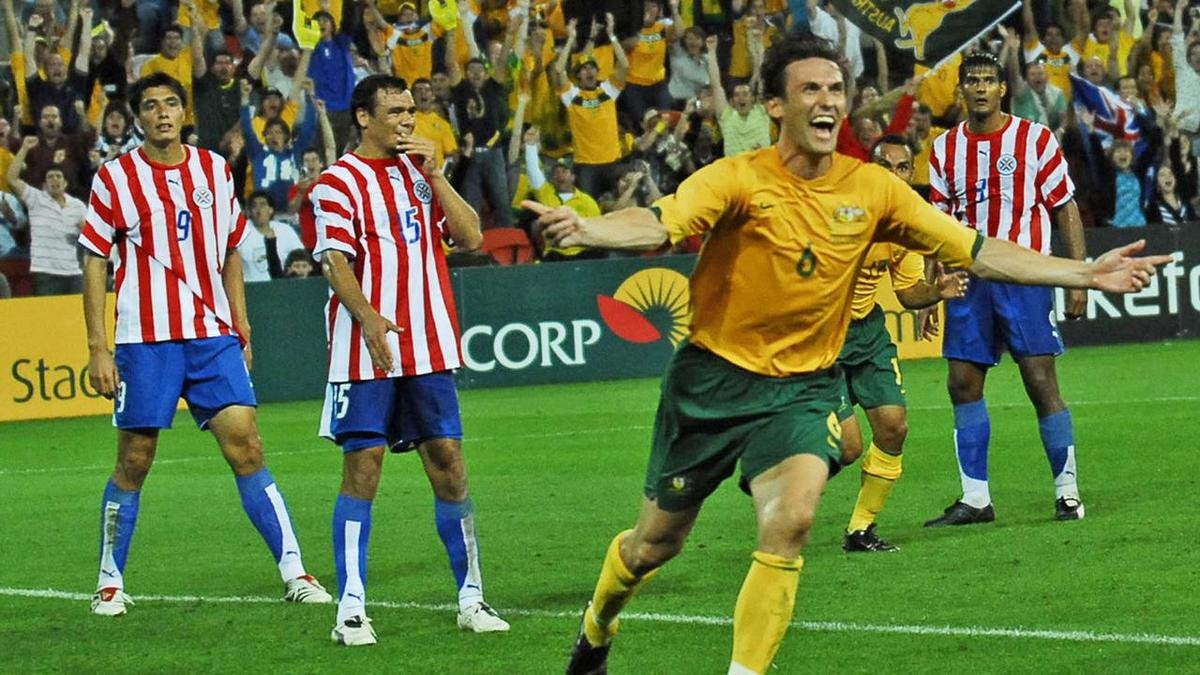
When Australia and Paraguay kick off their cut-throat World Cup clash, time will stop for the residents of a small town several hours’ drive from Asuncion.
Colonia Cosme, a tiny Paraguayan town full of Queensland-style houses, represents a strange, fascinating link between the two countries going back more than 130 years.
In 1893, journalist William Lane convinced more than 200 people to take a ship from Sydney to South America, with dreams of creating a socialist utopia.
Land had been offered up to settlers by the Paraguayan government, with the country desperately short of young men after wars with its neighbours decimated the population.
One of those young men, William Joseph Wood, went to Paraguay – and found a home.
More than a century later, his great-grandson Christian Wood found his way back – and is now the Honorary Consul of Paraguay in Melbourne.
“This World Cup unexpectedly just reconnected these two countries,” Wood told AAP.
“Most Australians and most Paraguayans probably are not too familiar with the history of this, but over 130 years ago, this group of Australians decided to settle in Paraguay and form this utopian socialist colony.
“Now, whether the colony was successful depends on your perspective. Clearly the ideals of the colony did not succeed.
“But overall, people still settled there. There are descendants of Australians that decided to stay.
“And one of the two colonies that were formed still exists. I wouldn’t say it’s particularly thriving, but it’s still there. There are still people living there.
“You go there, you see these Queensland houses on the streets. You see a lot of fair-skinned people walking around the population. And you find a lot of Australian last names spread all over the country.”
The initial colony Lane set up was called “Nueva Australia”, or New Australia, with Cosme the second created.
One famous member of the colonies was famous poet and writer Mary Gilmore, whose face appears on Australia’s $10 note.
Gilmore travelled to Paraguay and spent time working as a teacher, before, like many, returning to Australia.
“She did make an impact to the community when she was there, but obviously it wasn’t for her,” Wood said.
“Working the land and dealing with crops, it’s not everyone’s cup of tea.”
Somewhat unsurprisingly, the colony was beset by internal fighting, largely down to Lane’s own inflexibility.
“He realised very quickly that it was quite hard to live by ideals only on land in the middle of nowhere,” Wood said.
“It wasn’t easy for them. And also he had set up these very strict rules for the community, which most of the Australians weren’t willing to comply with.”
The inflexible rules Lane wanted to enforce with an iron fist: no drinking, no speaking Spanish, no mixing with the Paraguayan locals.
“It was really hard, so they split. A more flexible group decided they wanted to stay or couldn’t afford to come back to Australia. And they formed a separate colony called Cosme,” Wood said.
“That’s the one where my grandfather was born and grew up.”
Thanks to those who stayed behind, there are a plethora of surnames of English, Irish and Scottish origin, such as Wood, Kennedy and McCluskey.
Wood, whose grandfather married a Paraguayan woman and started a family, has spent time in Cosme over the years and still has family there.
Wood’s father lived in Australia for a few years before returning to Paraguay, where Christian and his siblings were born.
Eligible for an Australian passport by descent, Wood backpacked around the country, then finished university and worked as a lawyer in Paraguay before finding his way back to Melbourne.
“As I got off that plane and I stepped on the tarmac at the airport, I don’t know if it was something in the air, I can’t explain what it was, but I knew from that moment that this felt like home,” Wood said.
In Australia, there is only a small Paraguayan community, compared with the far larger Chilean, Colombian, Argentinian and Brazilian diaspora.
Some arrived in the 1950s and 1960s to fill labour shortages, and very much consider themselves Australian, while more recent arrivals are international students.
Wood estimates there are between 150 and 200 Paraguayans in Melbourne and 500 to 600 in Sydney – though they are making enough noise for thousands this World Cup.
“In the Paraguayan community, you put two or three together and it feels like they never left the country,” Wood said.
The Melbourne contingent will mainly watch the Australia game from the AAMI Park live site, while the consulate in Sydney has been handing out Paraguayan flags and organising watch parties.
“Should Paraguay win, there will be a lot of celebrations happening in the streets of Paraguay,” Wood said.
“Should that happen, there will be some links between the way we are celebrating here and the way we are celebrating there, so we can share that emotion together at the same time.”
But for those like Wood, with ties to both countries, a scenario where both teams progress on Thursday (Friday midday AEST) is ideal.
“This is the beauty about the World Cup,” he said.
“Now that connection between Paraguay and Australia is coming back.”