

Source : the age
A couple of weeks ago I undertook an erratic, cross-genre home entertainment spree. The first film I watched was Shaolin Soccer, the 2001 kung fu cult classic from Hong Kong. The second was Chuchotage, a kooky short film about two Hungarian translators who fall in love with the same woman at a European e-waste conference. The third was Pelicans: A Mystery of the Australian Outback, a 43-minute documentary about unpredictable inland pelican migration patterns. I watched all three for free. The first with SBS On Demand, the others on Beamafilm and Kanopy, free streaming services accessible using my public library card.
My dreams that night were a confusing blend of pelican flight formations and martial arts, but it’s all part of trying to change my streaming habits. Like a lot of people, I’m getting fed up with subscription streaming services. They cancel my favourite shows at short notice and keep hiking their prices. They spy on me, then cater to my laziest impulses, trapping me in mortifying algorithmic feedback loops and endless scroll sessions – overwhelming me with underwhelming options. Could I fight it? Yes, but I have to pay for four of them to watch my favourite shows, and I don’t have the energy to fight across so many fronts.
Spotify is a special case because its music library – and its market dominance – are so extensive. It feels like better value for money than video streaming services and yet I also feel most hostile towards it. Spotify has been widely accused of ripping off artists with its paltry payment model, polluting playlists with “ghost artists” and AI-generated music and collecting creepy amounts of personal data.
“Streaming fatigue” has been building in Australia and other markets for years. A much-hyped revival of interest in physical media has been happening in tandem. Vinyl and Blu-Ray sales are up. Mainstream artists including The Weeknd, Billie Eilish and Taylor Swift have been releasing music not just on vinyl but on CD and even cassette. Gen Zs – in keeping with the Y2K nostalgia moment – are showing off their thrifted DVD libraries and vintage hardware online and attending physical-media swap meets.
This fetish for analogue technologies is about wanting to engage more thoughtfully with art and having tangible things to collect and treasure. In the case of video streaming, it’s also about fragmentation of services and rising costs. (Piracy is rising again, led by young people in Nordic countries. This, too, feels very Y2K.) But it’s also, I think, largely about the desire to escape the sloppy, surveilled world of algorithm-driven entertainment.
Over recent weeks I’ve been reading Liz Pelly’s 2025 book, Mood Machine: The Rise of Spotify and the Costs of the Perfect Playlist. The book charts how changes in Spotify’s structure and technology have shaped listening behaviour, listener tastes and indeed music production, which is increasingly optimised for Spotify’s algorithms. Mood Machine is a furious takedown of a service obsessed with listener retention at all costs. Its hyper-personalised, data-driven “discovery” modes, Pelly argues, are homogenising music and enclosing us in cocoons of solipsism. The same might be said of video streaming services.
It’s not practical or affordable for me to start a DVD library or extensive vinyl collection. I live in quite a cramped apartment and my books take up a lot of space. But lately I’ve been more conscious of breaking out of algorithms. I’m trying to choose community radio over Spotify more often, so I can hear curated new music outside my own tastes, including more by Australian artists.
I’ve been eyeing off the DVD collection at my local library, and I’ve realised I can watch DVDs on our PlayStation. I’ve been delving more into Kanopy and Beamafilm over recent weeks, too. These platforms have curated collections, but they’re not algorithmically driven or overwhelming in scope. I’m trying to shake off regular watching patterns, aiming for something more like selective chaos, switching between free services.
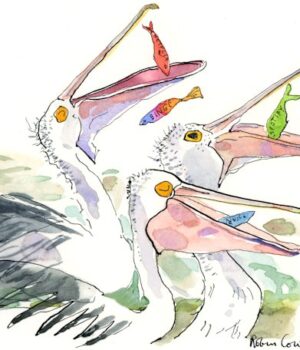
And that’s what led me to my transcontinental adventures with Shaolin Soccer (endearingly goofy) and Chuchotage (somehow both creepy and adorable). Pelicans: A Mystery of the Australian Outback was an especially off-brand choice for me. There was the obvious name association with Liz Pelly, whose Mood Machine polemic was definitely getting to me. And there was something about the documentary’s trailer, too – the bizarre pelican silhouette, those mysterious flight formations into the central desert – that captured my mood and resolve. As a consumer of art, I don’t want to be a spoon-fed data-begetting dupe. I want to be like one of those pelicans – a resourceful, bewildering, far-roaming weirdo.
Find out the next TV, streaming series and movies to add to your must-sees. Get The Watchlist delivered every Thursday.