

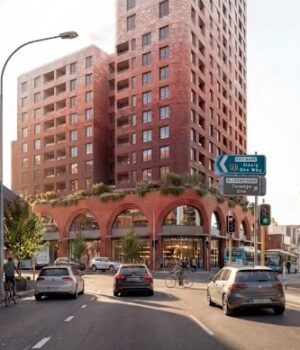
source : the age
Mosman Council is preparing for a housing showdown with the NSW government over a masterplan aimed at protecting its harbour slopes and heritage backstreets from state planning reforms and instead funnelling the bulk of its future housing density along one of the city’s busiest road corridors.
As community concern grows about development activity across the tightly protected local government area, the council has released a masterplan it wants to use to replace the government’s low and mid-rise (LMR) planning controls, arguing the policy is a “blunt one-size-fits-all model” that will create “unacceptable local impacts” on infrastructure, character and heritage.
Under the plan – which cost the council $458,000 to develop – much of Mosman’s residential heartland, including the Balmoral escarpment, Mosman Bay and heritage conservation areas, would be shielded from six-storey developments now permitted under the LMR controls.
Instead, most of Mosman’s future housing growth would be concentrated along the Military Road corridor, which would be rezoned with a largely continuous 12-storey height limit, rising to 25 storeys at key sites before stepping down to four and six storeys in surrounding streets.
The masterplan would deliver about 4700 homes and represents one of the boldest attempts by a Sydney council to reshape the NSW government’s housing agenda while still accommodating substantial population growth.
The proposal requires state approval, and early signs suggest an uphill battle. NSW Planning Minister Paul Scully said while the government would consider the council’s masterplan, it had no intention of “switching off” the statewide reforms.
“Let me be clear, the (LMR) policy is here to stay,” he said.
“The reforms have restored housing choice close to shops, transport and jobs so downsizers, families, and young people can choose the communities they want to live in – whether that be Mosman, the Inner West, Wollongong or Newcastle.”
His comments set the stage for a potential standoff between state and local government, as pressure mounts to lift housing supply amid Sydney’s worsening affordability crisis.
Mosman Mayor Ann Marie Kimber said the council was working with the Department of Planning to progress the masterplan, insisting it was not about blocking housing but directing growth to suitable locations.
“We’re trying to ensure growth happens in the right locations while protecting the character, heritage and amenity that people value most about Mosman,” Kimber said.
“The LMR is suitable for some places but it just doesn’t suit Mosman.”
There is mounting community concern over the state’s reforms, which allow apartment buildings up to six storeys tall within 800 metres of designated town centres and transport hubs.
In Mosman, that radius extends deep into established residential areas, triggering a surge in development applications, with more than 600 dwellings already proposed.
While the council’s masterplan would claw back much of that density into a redevelopment corridor along Military and Spit roads, public feedback shows a community divided over who should shoulder the burden of growth.
While 41 per cent of residents backed the council’s preferred “high and narrow” model, 44 per cent favoured a “low and wide” approach that would spread redevelopment more evenly across the local government area.
Support for concentrating growth along Military Road was strongest in low-lying and harbour-facing areas, including Balmoral and Mosman Bay, while residents closer to the corridor argued they would bear the brunt of increased traffic, noise, air pollution and overshadowing.
“All the pain of change is shared by a small number of people,” one submission to the council stated.
Long-time resident Peter Abelson, who addressed a council forum opposing the plan, said it represented a 35 per cent increase in Mosman’s housing stock and “failed Planning Rules 101”.
“Many people are intensely upset about the development chaos, process and overshadowing outcomes that threaten peaceful living,” he said.
Transport remains a major challenge. NSW government data shows Military Road carries up to 76,000 vehicles a day, and the council has acknowledged the network may struggle to accommodate forecast growth without significant investment.
Kimber rejected suggestions higher-density housing along Military Road would create poor living conditions, arguing quality urban design could transform the precinct into an attractive residential destination.
She also acknowledged the masterplan, if endorsed, would not apply retrospectively, meaning existing developments proposed under the LMR controls would not be affected.
That has alarmed some residents, including Peter Marshall, whose home borders a 10-storey development proposed under the state policy.
“The rest of the Balmoral slopes won’t be affected, but I’ll have a 10-storey building in front of me that will wipe out my views of North Head,” he said.
“For people like me, it’s too little, too late.”
The masterplan will be considered by councillors on Tuesday, with a final decision expected in August. If adopted, it will be submitted to the Planning Department for assessment.
The Morning Edition newsletter is our guide to the day’s most important and interesting stories, analysis and insights. Sign up here.
 David Barwell is an urban affairs reporter for The Sydney Morning HeraldConnect via email.