

source : the age
Primary students at two heritage-listed government schools avoid using the ageing bathrooms, while parents grow increasingly frustrated with the process by which campuses secure funding for basic facility upgrades.
In May, a parliamentary inquiry into public school funding found the state government has a “significant challenge” in balancing the maintenance and upgrade of older government schools with the need to deliver new schools to accommodate population growth.
The inquiry found that schools with heritage-listed buildings – particularly in inner-city and established suburban areas – were increasing the complexity and cost of maintenance and repairs.
“These kinds of repairs to heritage-listed schools are a significant expense for the Victorian government, particularly because many schools of a similar age are requiring major works at the same time,” the authors of the inquiry wrote.
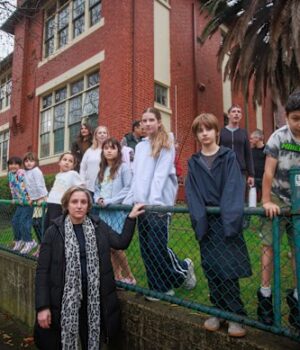
Caulfield Primary School has unsuccessfully applied to upgrade its toilet block, which has broken tiles, cracked lino, no warm water and a sewage system that occasionally leaks from an overflow at one corner of the school.
“I had heard that kids were refusing to use the bathrooms,” said school council treasurer Libby Herman, who organised a working bee for parents to clean the bathrooms after misuse, suspecting their poor condition caused urine to enter the substructure.
“I don’t think you should have to apply for a grant that is a competitive process to have something that is a basic necessity, such as a bathroom.”
A spokesperson for the Department of Education said the school had submitted a new application for up to $600,000 for the toilet upgrade, but the outcome of that application wouldn’t be known until the end of this year. “We’ll continue to engage and support Caulfield Primary School as they advocate for their school community,” they said.
The school has received more than $1.85 million for projects since 2016-17, but just $456,000 of this was allocated for planned maintenance. Herman says the school requires work to its cracked facade and believes the funding allocation for planned maintenance is completely inadequate.
“The windows are a good example of this. If they had the regular painting and maintenance required, they wouldn’t have ended up in such a state of disrepair now,” Herman said.
The issues come as the number of schools listed as in “poor” condition by the Victorian School Building Authority (VSBA) increased from 182 in 2022-23 to 221 campuses in 2024-25. However, some school councils with sites considered “worn” have questioned the rating system, saying it doesn’t reflect the degraded condition of specific facilities, such as bathrooms.
St Kilda Park Primary, which has an overall “worn” rating, also raised issues with its bathrooms, which date from the 1970s. The school has missed out on funding in a previous application. However, the school’s heritage-listed roof was recently restored – including sourcing specific slate from Canada – and the building connected to the toilets received a new floor and kitchen.
“But that means as a whole, the school has a higher rating than it did before, even though the toilets are just languishing,” said school council president Elisa Webb.
“It’s not about saying we deserve this investment more than other schools … [but] there are kids who do not use the toilets because they are too scary. Kids use them as a cut-through all the time to get from one side of the school to another. They’re just grim.”
In prioritising which schools require immediate works, the Education Department says it uses VSBA’s condition scores as a point-in-time assessment every five years, but also weighs up other assessments, enrolment and demographic projections, and existing plans for projects.
The Victorian government has built 121 new schools across Victoria since 2015, mostly in Melbourne’s outer growth corridors, which account for more than half of the new schools built nationwide in that time. About $9 billion – nearly half of the $20.1 billion spent on school infrastructure – has gone into these projects.
“Labor is making sure every child, no matter their postcode, can rely on a world-class public education,” a state government spokesperson said.
“But we aren’t just building new schools – we have delivered over 2400 upgrades to existing schools, with the annual maintenance and compliance budget for schools growing nearly six-fold under Labor.”
Meanwhile, the Victorian Auditor-General’s Office found in June that some government schools could be scoring upgrades on the back of community advocacy or having an “active” local member of parliament, rather than on the urgency and need for repairs and renovation.
Swan Hill College in the state’s north-west advocated for a new toilet block for much of last year, including through a video where students revealed broken toilets and towel dispensers.
Paul Bethune, who has a child at Swan Hill College and was involved in the campaign, said the school had since received some funding from the department for portaloos while school management worked towards plans to upgrade the toilet facilities.
“There are no other options, it’s just about making noise. There’s no established path that has a guarantee of success,” he said. “This is a fundamental right. A lot of kids weren’t going to the toilets because they were completely unusable.”
Start the day with a summary of the day’s most important and interesting stories, analysis and insights. Sign up for our Morning Edition newsletter.
 Jackson Graham is an education reporter at The Age. He was previously an explainer reporter.Connect via email.

