

Source : the age
Bird flu is easy to get – the etymology, I mean. Look at the name and join the dots. It’s a virus that infects birds, including the giant petrels near Victor Harbour, or ground zero as Knights Beach Wildlife Sanctuary has come to be called.
The bug’s arrival here is a worry for local chook farmers, for all of us. So, too, the global rise of viruses. No news cycle can revolve without talk of crook ducks or quarantined cruise ships. Even now, epidemiologists are sifting social media feeds among World Cup fans to flag any mention of coughs or chills. Of course, that’s after ignoring Insta posts about finals fever or English striker Marcus Rashford.
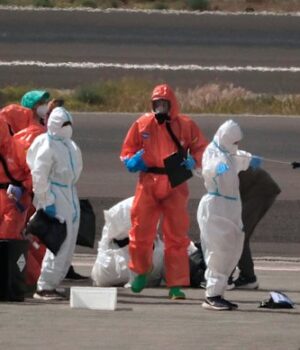
But back to that cruise ship. In April, the MV Hondius was obliged to lie low in Tenerife after a fatal outbreak of hantavirus, a far trickier disease to derive. What’s a hanta, you ask? The stem is short for Hangtangang, a South Korean river. The name breaks down into three parts: Han (big), Tan (rapids), plus Gang (river), giving you the Big-Rapids-River where Seoul physician Ho Wang Lee sourced the virus in 1978, the strain linked to a seedy vole in the region.
Ailments like hantavirus, Ebola virus, Beijing flu, are called toponymic diseases, their labels rooted in the atlas. Ross River fever is another gang member, the illness ascribed to mozzies near that Queensland river in 1959. Not that the associated aches and pains are unique to the Townsville precinct but rather the postcode is the research’s initial hotspot.
Confusing, you may argue. Unfair, too. Like decent Spaniards being demonised for Spanish flu during WWI, when as many as 50 million people succumbed to H1N1 subtype of the influenza A virus, to give the strain its technical name. The flu – first publicised by neutral Spanish virologists during global conflict – is Haemagglutinin-1 Neuraminidase-1 Influenza A virus, but try telling that to Joe Bloggs. Toponym handles, like their diseases, are catchier.
This compels health bodies, such as the International Committee on Taxonomy of Viruses (ICTV), to rebadge German measles as rubella, say, or the skin-eating Bairnsdale ulcer (alias the Buruli ulcer, after a Ugandan district) as Mycobacterium ulcerans. A mouthful, sure, but faithful. Yet guess which name is likely to go viral.
See the problem emerging? Beyond the misleading geography there’s the victim-shaming that turns the giant petrel into a scapegoat, or Uganda’s Zika River (square one of the Zika virus) into a red herring. Africa overall cops a mauling across such viruses as Ebola (Democratic Republic of the Congo), Lassa (Nigeria) or the nightmarish Guinea worm.
At least the nasty Varroa mite, another recent headline-grabber and the bane of the world’s bee farmers, honours Marcus Terentius Varros, a Roman apiarist from two millennia ago. Here the eponym salutes a man who loved bees as much as close observation of nature.
To end on a trigger warning, COVID-19 also answers to coronavirus SARS-Cov2. Say what you like about the pandemic, its labels were accurate compared with the snipe of Wuhan flu, as the ailment was almost known. Though history says we humans are as susceptible to noxious pathogens as we are misnomers, cultural chauvinism, bird-shaming and xenophobia.
twitter.com/dontattempt
Get tips, tricks and word games from our crosswords guru, plus links to our online puzzles and quizzes, delivered to your inbox every Saturday. Sign up for our Puzzled with David Astle newsletter.
 David Astle is the crossword compiler and Wordplay columnist for The Sydney Morning Herald and The Age. He is a broadcaster on ABC Radio Melbourne.