

Source : BUSINESS NEWS
THE south coast is shaping up as a critical region for national efforts to build fuel and fertiliser sovereignty.
Esperance zone plantations, canola and stubble are being eyed off by investors for domestic fuel manufacturing potential.
Renewable.bio is responsible for one of the region’s largest prospective projects, the Aurora Australis biofuels facility.
It’s among six proposed agricultural processing facilities aimed at building domestic fuel refining capacity in Western Australia.
The company has unveiled a seventh – the Australis Renewable Carbon Facility – which will take precedence over its other Esperance project owing to the fuel sovereignty issues that have emerged this year.
Valued at more than $300 million, the ARCF would be Australia’s first regional hydro-processed esters and fatty acids facility.
The initial Shark Lake facility would be capable of converting canola into 60 million litres of diesel per year.
“Australia has a structural need for domestically produced low-carbon liquid fuels,” Renewable. bio chief executive Angelo Dabala said.
“The Esperance facility is designed to prove the model. A regionally sourced, fossil-fuel-free modular biorefinery that can be replicated across the WA and Australian agricultural belt.
“We are not building a one-off project. We are building the first node of a national supply chain.”
Renewable.bio secured the Shark Lake Industrial Park site in April with plans to make initial revenue from crude canola oil and canola meal production.
The plant would be powered by wheat straw, processed anaerobically into biogas to produce hydrogen.
Ultimately, Renewable.bio has its eyes on four sites around Australia to build up to 360 million litres per year of renewable diesel capacity.
A final investment decision on the Esperance project is due late next year.
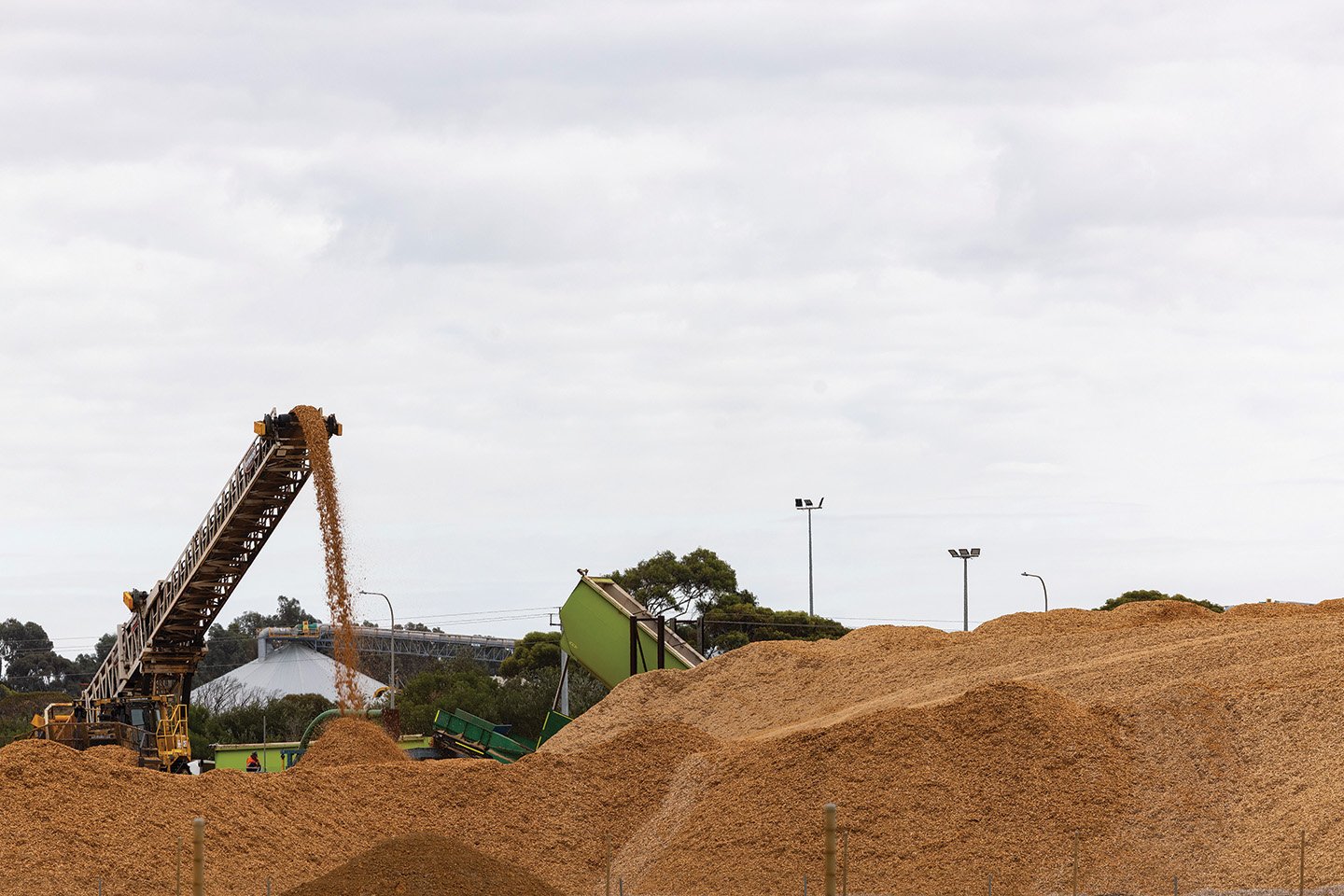
Renewable.bio manages about 5,000 hectares of plantations, biomass from which are currently exported out of the Port of Esperance.
Domestic biofuel proponents got a head of steam last year when the federal government committed $1.1 billion to incentivising investment in the industry.
The WA government is also developing its own biofuels strategy.
This year’s fuel dramas owing to the war in the Middle East have brought the need for domestic refining capacity into sharper focus.
It has not gone unnoticed that large amounts of WA’s canola is currently shipped to Europe to be processed into biofuel.
Australia exported about 6mt of canola last year which could replace about 2 billion of the 30 billion litres of fuel imported into the nation.
About 4.4mt of that canola came from WA, close to 1mt of which was from the Esperance zone.


