

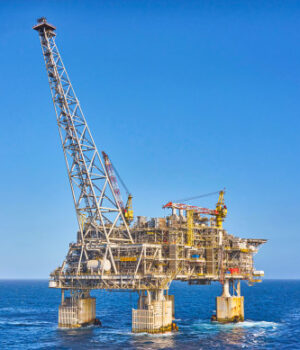
Source : the age
Australia’s biggest gas producers are poised to cash in on an expected $18 billion revenue surge over the next year due to the fallout from the Iran war, intensifying calls for the government to levy a 25 per cent tax on their exports.
Demand and prices for liquefied natural gas (LNG), one of the nation’s most lucrative commodities, have rocketed since Iran began blocking gas tankers from exiting the Persian Gulf and fired missiles on a key Qatari LNG hub, knocking out a fifth of global supply and triggering a global energy shock.
Before the outbreak of the war on February 28, the Australian government had anticipated a sharp decline in LNG export income from producers in Queensland, Western Australia and the Northern Territory. Official forecasters had projected revenue to slip from more than $50 billion to $47 billion in the 2027 financial year, dragged down by an impending wave of new LNG projects in the US and Qatar that had threatened to drive the market into oversupply.
Instead, the latest government projections, to be released on Friday, reveal LNG revenue is now expected to climb from $59 billion in the 2026 financial year to $65 billion in 2027 – an increase of $18 billion compared to prior forecasts.
The revised forecast lands as the prospect of mega-profits in the gas industry has fuelled a political debate in Canberra. Climate groups, crossbench MPs and unions are pushing for higher taxes on multinational energy giants, arguing they should not disproportionately benefit from a global crisis that has pushed up the price of petrol, diesel and other goods for Australian consumers.
The Albanese government has previously rejected independent senator David Pocock’s popular campaign to impose a 25 per cent tax on gas export revenue.
Pocock said people of all political persuasions supported Australians “getting a fairer return from the sale of our finite resource”. He accused the government of “caving to vested interests” and vowed to redouble his efforts with ads targeting the Labor Party’s national conference in Adelaide from July 23.
“Huge wartime revenue for gas companies again underscores how, as Australians, we are missing out on a fair return from the sale of our finite resources,” he said. “Our campaign for a gas tax isn’t going away.”
Pocock went viral this year with a social media video where he got a government official to admit that tax on beer was expected to generate $2.7 billion, while the federal offshore oil and gas tax – the Petroleum Resources Rent Tax (PRRT) – would deliver $1.5 billion.
The gas sector points out that the PRRT is not the only tax it pays, and its total tax bill is much higher than that. For 2024-25, the industry contributed $21.9 billion in taxes and royalties paid to state and federal governments.
A government spokesperson said Labor was designing the first national gas-reservation policy, which would compel LNG exporters to hold back some gas for domestic use, to deliver gas at “affordable prices”.
“Revenue from LNG exports is expected to increase in the short term, due to higher prices from the conflict in the Middle East, but then fall back to more sustainable levels over the outlook period as markets recover,” the spokesperson said.
Although countries across Asia are paying top dollar to compete for spare Australian LNG cargoes to make up for lost Qatari supply, LNG prices are likely to begin falling again in coming years. Australia’s LNG earnings are expected to ease back to $41 billion by 2031, according to the report.
The surge in LNG prices since February is expected to lift the value of Australia’s thermal coal exports in the coming year, too.
Benchmark prices for high-quality coal traded at the Port of Newcastle have already risen 15 per cent from pre-conflict levels of $117 a tonne to $135 a tonne. This is the result of some countries firing up their coal-fired power stations in their electrical grids to avoid using as much gas-fired power, the department says.
Driven mainly by the Iran war boosting prices for Australia’s gas, coal and gold, the nation’s overall resources mining and energy export revenue is now expected to rise by $42 billion in the 2027 financial year, compared to prior forecasts, to reach a total of $416 billion in the 2026-27 financial year.
“Export volumes continue to remain strong, underlining Australia’s role as a reliable
and stable supplier of resources and energy to our export partners and the region,” Resources Minister Madeleine King said.
During the previous global energy shock in 2022 – caused by Russia’s invasion of Ukraine – soaring LNG prices contributed to steep increases in domestic gas prices on Australia’s eastern seaboard, which caused energy bills for homes and businesses to spike and added to inflation.
This time, domestic gas prices have remained stable, trading at levels below $10 a gigajoule, the same as before the war began. Experts say prices are being anchored this year by an influx of giant batteries and favourable weather conditions for renewable energy, suppressing demand for gas-fired power in the electricity grid, as well as greater government pressure for gas exporters to ensure the local market is fully supplied before shipping uncontracted, one-off cargoes to Asia.
The Business Briefing newsletter delivers major stories, exclusive coverage and expert opinion. Sign up to get it every weekday morning.
 Nick Toscano is a business reporter for The Age and Sydney Morning Herald.Connect via X or email.
 Mike Foley is the climate and energy correspondent for The Age and The Sydney Morning Herald.Connect via email.