
Source : Perth Now news
Another state has a suspected positive case of H5 bird flu.
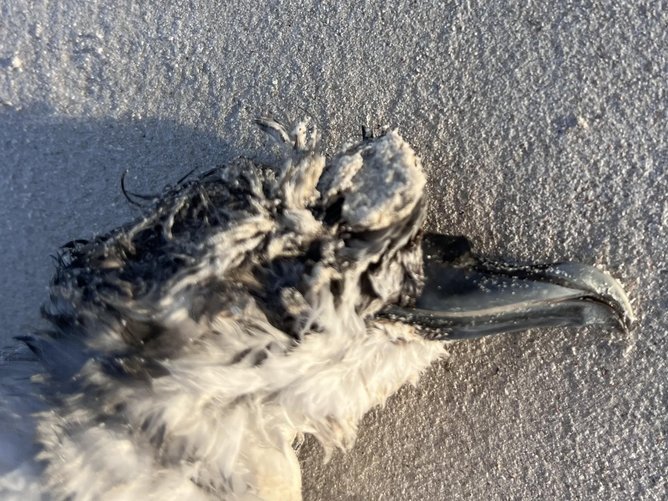
The New South Wales government announced on Friday morning that they are responding to the suspected case from a sample of a giant petrel.
The bird was found in Hawksnest, north of Newcastle.
The sample tested positive in preliminary testing and now will be sent to CSIRO for official confirmation.
This would be the sixth case of bird flu recorded in Australia and would mark the first in New South Wales.
Four have been recorded in Western Australia and one in South Australia.
Prior to this, Australia was the only continent in the world free of the highly contagious pathogen.
The H5N1 strain has decimated wildlife overseas and is linked to the recent deaths of 13,000 baby seals in Antarctica – about 75 per cent of the population – as well as millions of birds around the world.
Earlier this week, Federal Agricultural Minister Julie Collins confirmed the fifth case after a migratory bird was found dead near Esperance in WA.
“Four of these detections were from sea birds found in Western Australia, and the one sea bird that was found in South Australia,” she said on Tuesday.
“As of this afternoon, there remains no new suspected positives in state testing.”
Ms Collins also confirmed that a suspected case in Victoria had returned a negative result.
“There remains no evidence of any mass mortalities involved,” she said.
“There is no evidence currently of infection in our poultry or agriculture systems, and there remains a low risk of human health.”
Two of WA’s previously confirmed cases were found near Esperance — a wild brown skua first found sick in an isolated area of Cape Le Grand National Park on June 14, and a giant petrel found in the same area less than a fortnight later.
The State’s third case was another petrel detected at Quindalup in the South West.
Australia’s chief veterinary officer Beth Cookson said almost 100 negative tests had been reported nationally since the first brown skua case was confirmed.
On Sunday, Environment Minister Murray Watt said any spread of H5 bird flu could have serious consequences for the economy.

“It’s pleasing that at this point in time we only have four confirmed cases and they’re all migratory birds that have flown in, most likely from islands below south of Australia,” he said.
“So it’s good that it hasn’t spread more widely than that.”
But Senator Watt warned any mass outbreak could devastate both Australia’s wildlife and its $8bn poultry industry.
“That would be very, very serious and damaging economically,” Senator Watt said.
“There’s no reports at all of any poultry in a commercial setting having bird flu, and we’d like to see it stay that way.”
He sought to reassure Australians by pointing out the country had “a couple years to get ready for this compared to other countries”.
“We’ve got very good preparedness plans in place that are already rolling out,” he said.