

source : the age
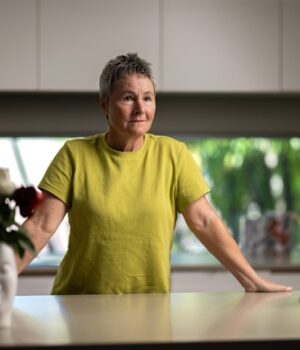
The pain was so excruciating that Dr Jeanne-Marie Van Der Westhuizen would have preferred death.
As she lay in her hospital bed, she could feel a wet patch on her sheets beneath her back. To the veteran medical doctor, it was confirmation of what she had suspected hours earlier: her epidural line had dislodged, cutting off the anaesthesia supposed to numb the pain of a gruelling marathon operation dubbed the “mother of all surgeries”.
“It was the worst pain that I have ever, ever, ever imagined,” Van Der Westhuizen said. “If there was anything around me that I could have killed myself with, I would have done it.”
But her treating doctor didn’t believe she was in pain.
“Well, it looks like you’re having a panic attack,” Van Der Westhuizen recalled her doctor telling her. “I think you need some Valium.”
This harrowing sequence of events is not a shocking outlier. Van Der Westhuizen is among thousands of Australian women who have shared “gut-wrenching” accounts of their pain being dismissed as all in their head, or just part of being a woman, with this masthead, and multiple government inquiries.
“You think we’ve made progress – and we have, in many ways – but there’s still so much work to do, and so much more that we’re still grappling against,” said Professor Sue Matthews, co-chair of one of those inquiries.
There is now wide support within the medical profession for reform to address persistent, dangerous gender bias, but disagreement on the way forward.
The federal government is reviewing a nationwide audit of curriculums at every school of medicine, nursing, psychology, and other health and allied health courses.
It could prompt a major shake-up in how future healthcare practitioners are taught about the ways sex and gender can fundamentally shape a patient’s pain, presentations and reactions.
But medical school heads have called much of the criticism of their courses ill-informed, arguing a better target would be retraining overseas-trained medicos and old-guard practitioners with outdated views.
Gender bias and women’s health experts want change on multiple fronts, including new pain guidelines, greater funding for longer GP consultations, reviewing and replacing flawed research and a hotline to access specialist advice on women’s pain.
‘It’s akin to torture’
As Van Der Westhuizen’s epidural anaesthesia wore off, she was in intensive care following massive surgery and hot internal chemotherapy for a rare appendix cancer. Several of her organs had been removed, and her abdomen was being filled daily with more chemotherapy.
She could feel some of the probing pricks from nurses testing that her anaesthesia was still working.
“I said to them: I think there’s a problem … I’m starting to feel more and more.”
The nurses assured her that her pain relief would be adequate overnight. But she woke to raging pain. When her doctor arrived two hours later, the feeling was indescribable.
“I’ve never forgotten that image of her. She was young, probably in her 30s. She had glasses on, and just the lack of empathy, of humanity, of any kind of comfort, was horrific,” said Van Der Westhuizen, whose experience in a Sydney hospital contributed to a later post-traumatic stress disorder diagnosis.
“I just had a complete loss of agency. They were pouring chemotherapy into my belly. I couldn’t get out of bed, and no one was believing me or listening to me,” she said. “I suppose it’s akin to torture.”
It took six years and multiple investigations from when Van Der Westhuizen first presented with pelvic pain for her to receive a cancer diagnosis. By then, it had spread. She wonders if the diagnosis would have taken so long if she were a man.
After witnessing medical misogyny at play on three continents during her 36-year career, Van Der Westhuizen wants medical students and young doctors to learn about unconscious gender bias by listening to patients like herself tell their stories.
“You need to be able to really get people to understand what it is, what it means. And I think stories are the most powerful way of enacting change,” she said.
Fixing the classroom?
The federal government has not yet released the findings of the audit that was completed last year of more than 8000 curriculums at 123 institutions responsible for educating every accredited healthcare and allied health practitioner. The Health Department said the report was undergoing quality assurance checks, which have taken longer than expected to complete.
But Professor Bronwyn Graham, who led the audit, said the key issue was that too often students were not being told that the course content – presented as gender-neutral – was based on evidence developed using males.
“Male subjects, male presentations, risk factors and responses”, said Graham, director of the Centre for Sex and Gender Equity in Health and Medicine. “The assumption that students take away is this is just what we do for all patients.”
As a result, women’s pain is much more likely to be dismissed or denied, while men are more likely to be believed, Graham said.

Doctor and medical philosophy researcher Lea Merone has similar concerns. Her 2024 analysis of six textbooks recommended by Australian medical schools found all implied women and men had the same symptoms for the analysed diseases.
“In an ideal world … there would be separate modules or streams for women’s disease, and men’s disease, but it needn’t really be that complicated,” Merone said.
“We could bridge this gap by, when we’re teaching about a specific disease, talking about the differences between men and women in their test results and in their presentations.”
To fix the curriculums, Australia’s gold standard clinical guidelines – which cover everything from anaesthesia to lung cancer – needed updating, Graham said. A Monash University study found 15 per cent of 80 clinical practice guidelines made no reference to sex or gender, and more than half did not consider gender in clinical practice.
Meanwhile, work was finally under way to develop pelvic pain management guidelines, redressing a glaring oversight considering chronic pelvic pain affects up to one in four Australian women.
Fixing the clinician?
Merone recalls an incident that took place when she was a junior doctor in the UK. A woman was unconscious, shaking on a hospital’s bathroom floor. She didn’t flinch when a pharyngeal tube was inserted into her nose and throat to help her breathe.
When she asked a more senior doctor what had caused the woman’s seizure, he replied, “She’s a young woman with abdominal pain. That wasn’t a real seizure. She was faking it.”
Merone was shocked. “Somebody who’s faking it, they would flinch; that’s darned uncomfortable,” she said.
Some argue it’s these anachronistic attitudes from established health professionals that should be the bigger target for change than the teachings of universities, which say they have done a lot of work to embed differences between sexes and genders in their curriculum.
“I think historically that’s a valid criticism, but I think there’s been a lot of change in this area,” said Professor Mike McGuckin, the University of Melbourne’s interim dean of medicine, dentistry and health sciences. “If you walked into one of the current courses, it would be very different to what people were experiencing 10 or 15 years ago.”
At the University of NSW, second-year medical students undertake a course on gender bias in medicine and medical research. Its teachings include how cardiovascular disease is underdiagnosed in women.
University of Sydney psychology students learn about how gender bias in research and diagnostic criteria has led to underdiagnosis of ADHD and autism in females.
McGuckin said the way to have “the most impact in a hurry” was by retraining existing health professionals, some of whom had qualified 30 or 40 years ago. He said the University of Melbourne was discussing with the Victorian government how it could contribute to this.
Professor Michelle Leech, president of Medical Deans of Australia and New Zealand, the peak body representing medical schools, said these institutions were responsible for training only about half of the doctors newly accredited to work in Australia’s public health system. To meet workforce needs, the other half were trained overseas.
“So you could spend a whole lot of money on boosting nursing and medical curricula in this country, but you’re not even getting to half the people,” she said.
Leech, who is also the head of Monash University’s medical program, argued against simply adding more lectures to busy courses, and instead made the case for more placements for medical students in general practice and other community health settings. The vast majority of students’ practical training still takes place in hospitals.
“It’s like they only see half the world,” Leech said. “If you’re just in the hospital, you just don’t see the patient’s long story.”
She also called for funding to expand “patient partner” programs, which bring people who have or have had health conditions into universities to share their experiences.
“It makes you feel something when you hear somebody’s real story. When you feel something, you remember,” Leech said.
Unpicking centuries of bias
One of those stories comes from Victorian woman Kelly (not her real name), who recalls being dismissed and misdiagnosed by half-a-dozen doctors after she suddenly started experiencing searing pain after sex.
“It was so bad I’d scream,” said the Melbourne mother and student. “Like I’d been douched with acid.”
Several GPs quickly concluded she had a urinary tract infection. One doctor suggested she had been “subconsciously tensing up” because of past sexual trauma, Kelly said.
A gynaecologist recommended she see a psychiatrist.
Kelly said it took years for her to feel safe enough to raise the issue again with a non-judgmental female GP, who diagnosed a semen allergy.
MEDICAL MISOGYNY: A CALL TO ACTION
The Age and The Sydney Morning Herald have launched an investigation into medical misogyny: ingrained, systemic sexism across Australia’s healthcare system, medical research and practice.
More than 2000 women shared their experiences as part of our crowdsourced investigative series, which prompted a national outpouring of grief and frustration as women described feeling gaslit, dismissed or being told their pain was “all in their head”.
We are calling on the federal government to boost Medicare funding for GP appointments that last more than 20 minutes to improve care for women and others with complex health conditions.
The Albanese government and the Coalition have promised to pour $8.5 billion into Medicare to make GP visits more affordable and improve bulk-billing rates, but longer 20-minute appointments will receive a smaller proportional funding increase.
Doctors have warned that the plan could further disadvantage women by continuing to incentivise shorter consultations, which don’t give GPs enough time to address menopause, pelvic pain, and other women’s health issues.
Until the late 1990s, the condition was thought to be extremely rare – with fewer than 100 formally documented cases. But the latest research suggests the disorder, which can cause anaphylaxis in severe cases, could affect an estimated 12 per cent of the women who report pain after sex.
This lack of knowledge when it comes to confounding conditions that exclusively or predominantly affect women is at the heart of a global push to fund more research aimed at demystifying them.
In a major step forward, from this year, the Australian government’s Medical Research Future Fund will only finance research that considers sex and gender variations at every stage of the process.
A more ambitious goal, requiring far greater investment, is to unpick centuries of research bias, said Professor Sue Matthews, chief executive of the Royal Women’s Hospital in Melbourne and co-chair of the Victorian Inquiry into Women’s Pain.
“Starting fresh from now is great, but what about all the drugs that we’ve prescribed for decades that are all based on [testing done on] men?” Matthews said.
Of the 10 prescription drugs banned by the US medicines regulator between 1997 and 2000 due to severe adverse effects, eight caused greater health risks in women, and a ninth belonged to a drug class known to pose a greater risk for women. Australia followed suit, banning most of these drugs in 2004.
Matthews also floated the establishment of a hotline for general practitioners and other healthcare workers to access specialist advice on women’s health and women’s pain.
At the Royal Women’s and Royal Melbourne Hospitals, a review of cardiac, neurology, nephrology and urology services is under way to identify sex and gender differences in patient treatment.
For instance, do women take longer to get an ECG when they present with cardiac pain? If so, with some education and support, can the hospitals fix this?
“It’s a really strong way to set the tone for the organisation that we expect sex and gender to be part of what you think about when you’re providing care,” Matthews said.
Start the day with a summary of the day’s most important and interesting stories, analysis and insights. Sign up for our Morning Edition newsletter.