

source : the age
Hello, I’m Alexandra Smith and I will be with you today as the ABC and SBS appear before the royal commission.
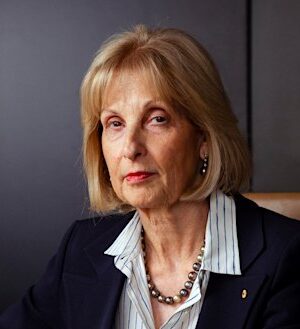
Before we hear from the public broadcasters, Australia’s Special Envoy to Combat Antisemitism Jillian Segal is giving evidence. Segal has previously told the commission that antisemitism was a “virus” that had evolved.
The ABC’s editorial director Gavin Fang will follow Segal, then ABC Ombudsman Fiona Cameron.
SBS’s director of audio and language David Thanh Man Tue Hua, its director of news and current affairs, Amanda Wicks, and SBS Ombudsman Amy Stockwell will also appear.
Antisemitism envoy Jillian Segal has told the royal commission that complaints of bias against the ABC and SBS could be better handled by an independent oversight committee.
Segal suggests an “independent group of people” examining the ABC’s reporting on Israel and Palestine would be a better structure than relying on the broadcaster’s ombudsman.
“They can give it a huge tick or they can give it guidance as to the fact that it needs to understand this particular hatred we are focused on better,” Segal says.
Counsel assisting Richard Lancaster asked Segal: “Do you accept that the ABC does seek to take care to ensure that a wide variety of relevant perspectives have been represented in its coverage?”
Segal says Australia would be better served by a more powerful media regulator, and highlighted the power of media regulator Ofcom in the UK, which enforces the nation’s broadcasting code.
Jillian Segal is detailing concerns she had with SBS’s use of the “Gaza Health Ministry” as an official source in its coverage, in respect to claims that 14,000 babies could die from malnutrition in Gaza without the delivery of urgent aid.
“My criticism is that I think they needed to draw to their viewers’ attention the fact that the Gaza Health Ministry is controlled by Hamas, which was a terror organisation attacking Israel, and a participant in the war and is on a list of terrorist organisations here in Australia, [and it] was the determinant of the numbers, that’s all,” Segal says.
“It’s just a question of accuracy and of the impression that one gives of accuracy to the community.”
Counsel assisting Richard Lancaster points to the SBS Ombudsman’s statement, in which she says, “SBS’s practice is to refer to the accurate name of the local source of the statistics, which is the Palestinian Ministry of Health in Gaza.”
“Well, I think it’s very interesting that they have a standard practice when applying to war zones because every war zone is different, and here we’re dealing with not a war zone between two nation states, but with a terrorist organisation,” Segal says.
Jillian Segal, the special envoy to combat antisemitism, says it is not good enough for the ABC to suggest it is balanced simply because it receives complaints “from both sides”.
Segal has been asked about the ABC’s submission by editorial director Gavin Fang, in which complaint numbers are revealed.
The ABC says in the six months July-December 2025, 51 per of complaints claimed the ABC’s Israel-Gaza coverage was broadly pro-Palestinian and 47 per cent claimed it was broadly pro-Israel.
“I don’t accept that an equal number of complaints means you have the story right. I don’t think it proves accuracy,” Segal says.
Segal has also taken aim at the complaints processes at the ABC, including the role of the broadcaster’s Ombudsman.
“It’s an ombudsman, but it’s internal, appointed by the board, reporting to the board, and they can mark their own homework. I mean, they are – with respect – judge, counsel, and jury,” Segal says.
She says an independent “oversight committee” would be a better option to rule on complaints.
Counsel assisting Richard Lancaster starts the day asking the special envoy to combat antisemitism, Jillian Segal about her statement on the public broadcasters.
In that statement, Segal says there is a common perception in the Jewish community that the public broadcasters are engaging in “disproportionate, misleading, factually incorrect coverage of issues relating to Israel and the conflict in the Middle East”.
She says the conflict in Gaza is over-represented relative to other global conflicts.
Segal says there are “major famines, there are other wars that we don’t hear about at all in Africa”.
The SBS statement starts with an acknowledgement of “the gravity of the matters” before the commission and stresses that SBS plays a “vital role” in strengthening social cohesion.
“SBS has invested significantly in reporting and programming that helps Australians better understand antisemitism and its impacts, with content available in more than 60 languages,” SBS’s statement says.
“Across all our platforms and services, we represent Jewish Australian stories and perspectives in a way that is respectful, accurate and inclusive.”
Examples include multilingual SBS Examines explainers on antisemitism and misinformation, documentaries exploring Jewish Australian experiences and extensive reporting on the Bondi terrorist attack and its aftermath.
It also highlights the award-winning Dateline episode “Inside Israel: A Nation at War”, and SBS Hebrew’s coverage of international and domestic news and community stories for Australian audiences in both Hebrew and English.
Ahead of their appearances today, the ABC and SBS have both released statements.
The ABC strongly rejects any suggestion that it has “contributed to antisemitism or social division”.
“A healthy democratic society depends on diverse sources of reliable information and contending opinions. The ABC acknowledges that some content can be challenging, but it does not gratuitously harm or offend, nor does it allow, condone or encourage prejudice,” ABC’s statement says.
“The ABC rejects claims that its journalism has contributed to antisemitism or social division. Its reporting has been evidence-based, fair, impartial and consistent with its charter obligations.”
Hello, I’m Alexandra Smith and I will be with you today as the ABC and SBS appear before the royal commission.
Before we hear from the public broadcasters, Australia’s Special Envoy to Combat Antisemitism Jillian Segal is giving evidence. Segal has previously told the commission that antisemitism was a “virus” that had evolved.
The ABC’s editorial director Gavin Fang will follow Segal, then ABC Ombudsman Fiona Cameron.
SBS’s director of audio and language David Thanh Man Tue Hua, its director of news and current affairs, Amanda Wicks, and SBS Ombudsman Amy Stockwell will also appear.