

Source : THE AGE NEWS
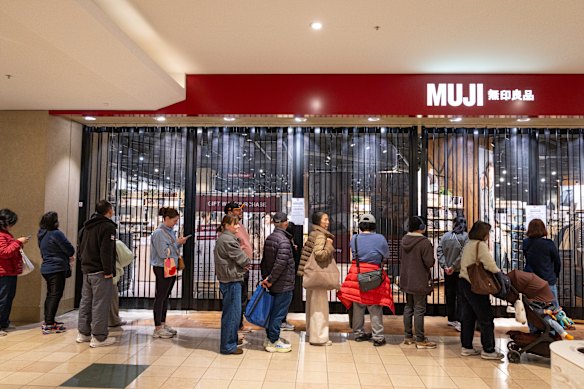
Just before noon on Thursday, a queue of nearly 100 people had gathered outside Muji, the Japanese homeware, stationery and apparel store inside Melbourne’s labyrinthine shopping centre of Chadstone. Those in line had made their way to the lower ground floor – just around the corner from discount variety store Daiso and one floor down from a sprawling Uniqlo – not for the store’s grand opening day, but for the reopening of an existing one.
This is the third evolution of Muji Chadstone, which opened its doors in 2013 and relocated seven years later to a larger space. The freshly reconfigured layout gives greater prominence to its menswear section, highlights its popular stationery range of notebooks, pens and office supplies, and entices passersby with limited-time promotions and essential supplies like hand towels, socks and toiletries.
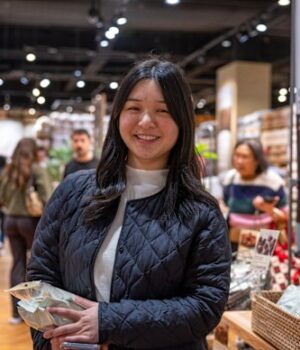
Among those waiting in line and eyeing the expanded range of Muji-branded snacks, chocolates and truffles was Emily Chao, 24. “I come to Muji all the time. I love their products,” she says.
“The socks, the pyjamas, they have really good material. I love their food too. They have a great curry. Everything’s very minimalist. Even the packaging is very simple. You know exactly what you’re buying.”
Across multiple fronts – travel, fashion, entertainment, beauty, stationery, homewares, food and snacks, booze and even coffee – Australians are turning to Brand Japan. We are stuffing our cupboards and wardrobes with more Japanese things, a journey that for many of us begins in our suitcases: more than 1 million Australians visited Japan in 2025, the first time Australian visitors had broken mark, and double pre-pandemic levels. Globally, Japan welcomed 42.6 million tourists last year and was one of the world’s favourite travel destinations.
Australians who have explored the shopping districts of Ginza and Shibuya have encountered design principles like kaizen (continuous improvement) and monozukuri (excellence in craftsmanship and manufacturing) and discovered them in products, now sold at home, by retailers such as Muji and Uniqlo: high-quality, sleek and functional, typically with an unobtrusive minimalist design.
“The Caucasian customer has more understanding of the Japanese or Asian lifestyle,” says Muji Australia managing director Michio Fukino. When asked to name some bestselling products, he presents a somewhat surprising selection: a soft gel ink pen, a set of transparent clothes hangers, and a carpet cleaning tool that sits upright. “The design is very sleek. It stands up but does not stand out in [home] interiors, and blends into your everyday life,” says Muji marketing manager Mae Mizuno Li.
As cost-of-living pressures grow, customers seem more compelled to spend on quality that lasts, Li adds. Muji is no budget brand: a set of shelves with 10 compartments will set you back $790 (the IKEA equivalent, Kallax, is $99). “Customers are making careful choices when they’re making purchase decisions. That’s what Muji has been putting lots of priority on: creating something that can be used for a longer period of time, without excess but with good quality, considered materials,” Li says.
Japanese giants are becoming destination stores on our high streets, though that wasn’t always the case. When Japan’s biggest discount variety retailer, Daiso (which pioneered the 100-yen shop), tried to open a store in Westfield, leasing agents mistook them for Muji. “It was hard even getting into a centre, to be honest,” says Daiso Australia director Mimi Hii.
Daiso eventually opened in the Melbourne suburb of Richmond in 2010 with $2.80 price tags on everything. At the time, it was the Japanese giant’s biggest opening worldwide. “There were queues for two hours,” Hii says. TV stations flocked for footage. “We had radio for a week.” Westfield changed its mind after that, and is now a chain of 32 Daiso stores. “After the huge opening, I think all the centres were like, ‘OK, now we know we need Daiso’.”
Japan’s most famous dollar store not only sells astonishingly cheap products (they let the flat price go in 2015, but most items are around $3.30), but has leant into the “treasure hunt” shopping experience and tapped into different customer groups who return for quality and innovation. Make-up artists love their cosmetic cleaners, and wedding planners visit to buy cheap vases. Teachers will pick up stickers for their students (Daiso has licensing deals with Sanrio and Disney) or organise school trips to buy materials for calligraphy lessons. If Daiso’s range of bowls, plates and cutlery feel familiar, it’s because you may have seen that tea cup or miso soup bowl at your local sushi restaurant.
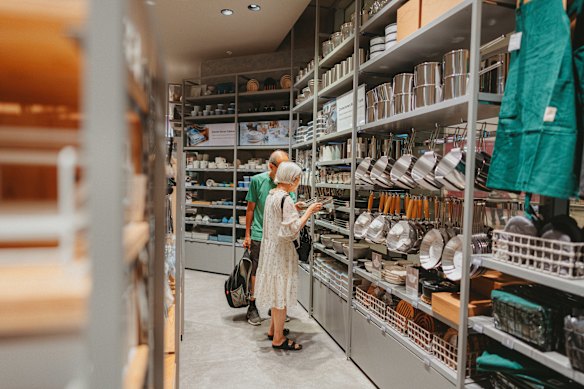
Sister brand Standard Products was introduced in December 2024 alongside some Daiso stores, focused on bringing Japanese craftsmanship to house supplies and homewares like kitchen knives and make-up brushes, designed with a minimalist aesthetic. It’s Muji but at a more affordable price point. “People not only want value,” Hii says. “They want something more than that.”
Daiso has eschewed online sales to lure people into stores and get them to leave with more than they intended. “When they come back they’ll find something else that was designed with them in mind, and they never knew they even need it,” says Hii, who sees the move as a competitive edge. “I don’t think it’s easy for Temu and Shein to do that, you know.”
Brand Japan
In itself, there’s nothing new about our inclination towards Japanese products; since the late 1970s, Japan’s superior engineering and manufacturing turned its consumer electronics (Sony’s Walkman, Nintendo’s Game Boy, Panasonic) and automotive companies (Toyota, Honda, Mazda, Nissan) into household names across the globe.
The dominance of Japanese brands was being observed with mounting anxiety by the West, particularly in the US, where Detroit’s automotive industry was severely bruised by the rising number of car imports from Japan in the early 1980s, and where Japan’s GDP represented nearly 70 per cent of its economy. (These fears manifested in Hollywood, such as in the Tokyo-inspired cyberpunk backdrop of the seminal 1982 film Blade Runner, or the fictional Japanese multinational Nakatomi Corporation in Die Hard.)

After Japan’s real estate and stock market bubble imploded in the early 1990s, the Asian country’s spheres of influence shifted from hardware manufacturing and economic might to youth culture and soft power. By the early 2000s, kids around the world were trading Pokemon cards, getting hooked on Dragonball Z, playing Street Fighter, and admiring Harajuku street fashion. A decade later, the Japanese government created a new administrative arm – the “Cool Japan Promotion Office” – to instil affection for Japanese pop culture, food and fashion abroad.
“Japanese pop culture has been big since the ’80s and ’90s, and that inspired a lot of sci-fi films and other media products in the West,” says Dr Rimi Khan, an associate professor at RMIT University. Japan’s cultural exports are one wave in a broader tide of Asian countries – South Korea, China, and increasingly Taiwan and Thailand – now moulding global pop culture. “We are seeing those countries emerge as new cultural reference points for Western consumers,” Khan says.
Australians gravitate towards quality and value, which Japanese retailing has come to be known for, says Colliers retail advisory national director Michael Bate.
“The Australian consumer is a very smart consumer,” Bate says. “Most consumers know if they’re buying Japanese, they’re buying quality. Uniqlo is a great example of that.”
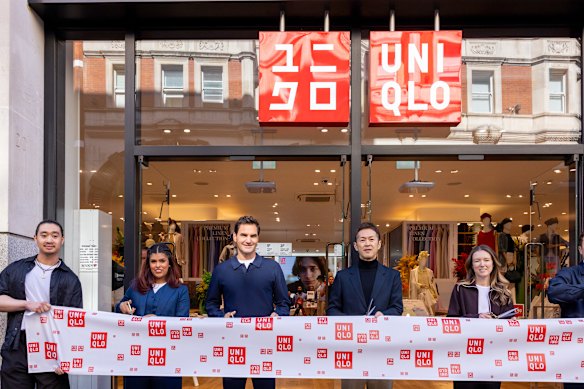
Global fashion phenomenon Uniqlo has become one of Australia’s most prolific go-to stores for affordable, functional wardrobe essentials, driven by the garment technology behind HEATTECH and AIRism. The fashion giant is fast on its way to becoming a billion-dollar retailer, turning over $817.1 million in Australia in fiscal 2025 and outstripping local retailers such as Peter Alexander. Uniqlo declined to comment.
Still more Japanese brands are taking note of our willingness to spend. Luxury, pre-owned and antique watch store Jackroad, located in Tokyo pop culture strip Nakano Broadway, and watch reseller OKURA recently hosted invite-only pop-ups in Melbourne and Sydney. Some of Japan’s largest department stores, Isetan Mitsukoshi and Takashimaya, are eyeing the Australian market with interest, according to an industry source.
Asian beauty brands and trends have moved well into the mainstream; local retailers and pharmacists are making more room for Korean and Japanese beauty brands promising glass skin. Hada Labo, Japan’s top skincare brand, launched in Adore Beauty five years ago and sold out three times in the first six months. Across hundreds of Priceline stores, Hada Labo’s shelf space has crept from one to three shelves.
“We’re really benchmarking with the heavyweights, the L’Oreals and the Olays,” says Hada Labo senior brand manager Isabelle Harrison. “We’ve been growing at 30 to 40 per cent from a value and units perspective each year we’ve been in market, and it’s been three years.”
Social media has spread the word on Asian beauty trends. Viral TikTok videos of Hada Labo’s bestseller, a $36.95 hydrating lotion, created sales spikes of more than 400 per cent.
Our appetite for Japanese cuisine is only climbing (Australian sushi has become a phenomenon in its own right). In 2024, Japanese beat Indian and Italian as the nation’s most popular cuisine. The number of Japanese food outlets has grown from 500 in 2013 to more than 2000. Matcha is as ubiquitous a fixture on cafe menus as chai.
Australians have even embraced Japanese coffee. Suntory’s Boss Coffee, stocked in millions of street vending machines and convenience stores, sells more than 20 million cans across Australia and New Zealand and has become the top grab-and-go coffee brand in both countries. Australians are the brand’s best-performing international market, won over by Boss Coffee’s Japanese flash-brew technique, where coffee beans are brewed hot then immediately chilled to preserve flavour and aroma.
Gen Z and Millennials are leading the charge: 29-year-old urban professionals are its most loyal customers, internal research shows. “Younger consumers are redefining what coffee culture looks like. They’re more open to trying new formats and are increasingly embracing iced coffee as part of their everyday routine,” says Suntory Oceania chief marketing officer Bríd Drohan-Stewart.
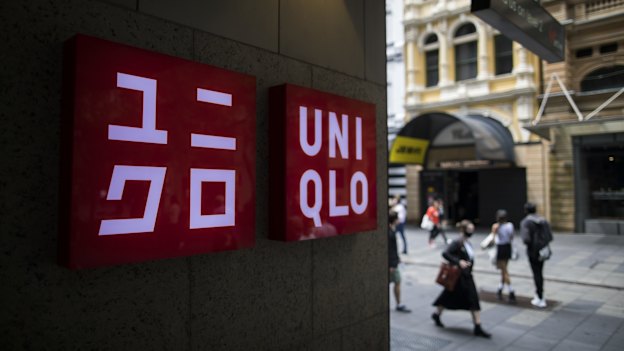
Japanese retailers are ambitious to grow their Australian footprint. Muji, which turns over about $80 million across six stores, hopes to be a $1 billion retailer one day. Uniqlo, with 40 stores, plans to open more. Daiso would like to set up in Darwin and Tasmania. Kinokuniya waited 24 years before opening its second store, in the Sydney suburb of Chatswood, and is following that with a Melbourne flagship at the end of August.
There have been potholes; Uniqlo, for all its popularity, has denied it is fast fashion and has been investigated overseas (alongside other fashion firms) over alleged links to forced Uyghur labour. Uniqlo has previously denied using cotton from China’s Xinjiang region, where there have been allegations of forced labour.
“People who consider themselves conscious shoppers would still buy from those shops, even though they’re still essentially fast fashion retailers, but they don’t quite have the stigma of fast fashion,” Khan says.
Muji was forced to close its Canberra outpost in 2023, having chosen a poor location. Daiso was fined in 2018 for thousands of products that weren’t regulation. Most products from Muji, Uniqlo and Daiso are manufactured in China, Vietnam, Bangladesh and Indonesia.
“From what I’ve seen, the Japanese quality halo is doing heavy lifting,” retail consultant Trent Rigby says. “What’s Japanese is the design language and the merchandising discipline, not the product’s origin.”
While Japanese retailers have made significant inroads in metropolitan cities, Rigby queries how well they would do in regional areas. And the weak yen, Japan’s national currency, is sending planes of Australians to Japan and also makes the performance of those Japanese retailers’ Australian outposts look great – for now.
What we’re being sold is more than just imported products. “It’s more like a philosophy,” Muji marketing manager Li says of the business. “Our manufacturing philosophy is based on the Japanese way … We want to live with just enough.”
With Tim Biggs
The Business Briefing newsletter delivers major stories, exclusive coverage and expert opinion. Sign up to get it every weekday morning.


