
Source : PERTHNOW NEWS
The walk comes first.
Through the stringybark and scrub outside Yirrkala, Ian Gurruwiwi moves quietly between the trees, eyes scanning trunks and limbs he has known all his life.
He is searching for the right tree, the right limb, the one that will become a didgeridoo or a pair of clapsticks to carry the songline of his people.
Most trees are passed without a second glance.
“You can look when you go through the bush,” Mr Gurruwiwi told AAP.
“You look at the tree … and you know. You know with your heart.”
He does not measure or tap along the bark but waits for the moment when the look and the heart line up – and the timber seems to speak to him.
“No, no, no … that one, that one there,” he said, laughing.
“As far away as possible that we got to walk.”
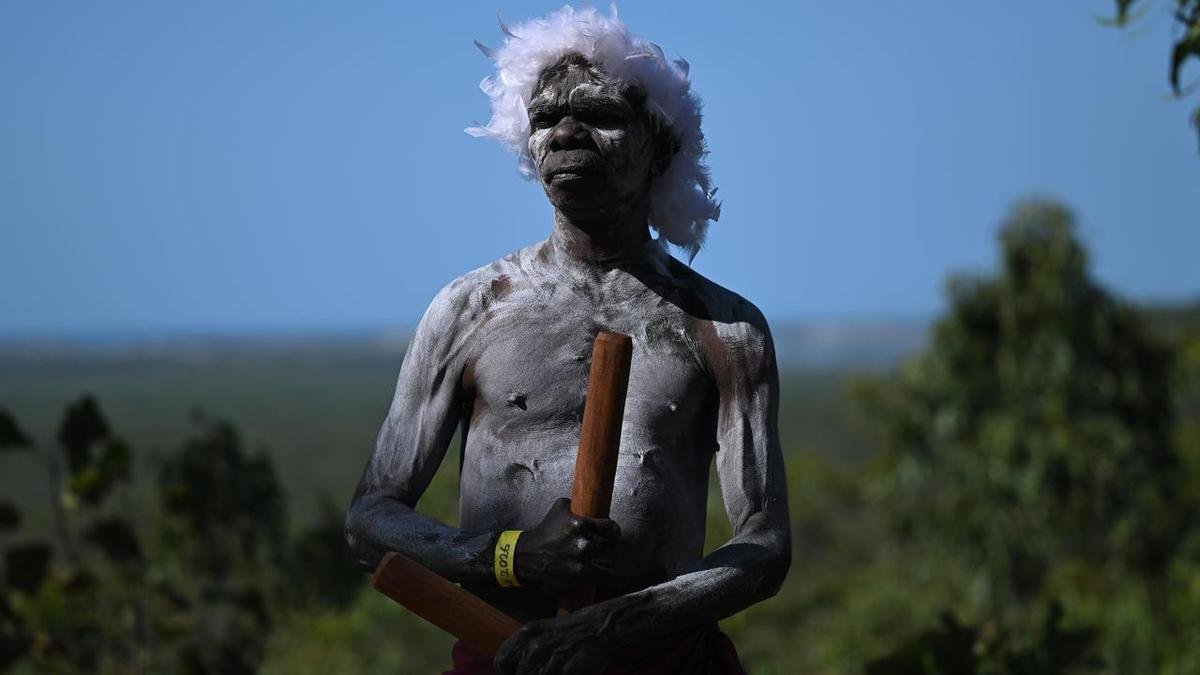
On Sunday, the 55-year-old from the Wangurri Dhurrkay clan stood before Pacific leaders using clapsticks – Bilma – to help carry the Morning Star songline welcome into the new day.
The didgeridoo is his totem, but the sharp, steady knock of wood on wood held the heartbeat of the ceremony.
Raised from the age of eight by his aunt after his mother left him, Mr Gurruwiwi has lived his whole life in Yirrkala.
He summed it up simply: “Born in Yirrkala, school in Yirrkala.”
Yirrkala is a small Yolngu community in the East Arnhem Region of the Northern Territory, about 18 kilometres southeast of the mining town of Nhulunbuy on the Gove Peninsula.
It grew around a former Methodist mission established in 1935, later becoming known nationally for the Yirrkala bark petitions.
In 1963, those petitions were sent by Yolngu residents to the national parliament, demanding consultation over land taken for mining and marking a turning point in the struggle for Indigenous land rights and native title.
Today, the town has a population of just a few hundred people, most of them Aboriginal, with Yolngu culture shaping daily life.
In that setting, Mr Gurruwiwi works as a singer, dancer, painter and instrument maker, calling himself “a good artist” with quiet pride.
Out bush, men and women from the clan spread across Country, each knowing what to look for as they seek timber for didgeridoos, clapsticks and ceremonial tools.
Once Mr Gurruwiwi has found the right tree, the rough limb is cut, hollowed, shaped and ground, then sanded smooth over about two weeks.
Red and yellow ochres are brushed on in patterns that trace clan, story and songline.
“Every didgeridoo, it’s got a different, different story,” Mr Gurruwiwi said.
“Like my story. The didgeridoo comes from us, from that clan.”
He has been coming to the Garma gathering since 2001, weaving through the crowd as people greet him by name and face.
Some of his instruments travel far beyond Yirrkala; he sells them when he can – the right pair of Bilma can be sold for $30.
But the heart of Mr Gurruwiwi’s work remains where it starts, on those long walks through the bush until one tree, one limb, quietly tells him it is ready to sing.