

SOURCE :- THE AGE NEWS
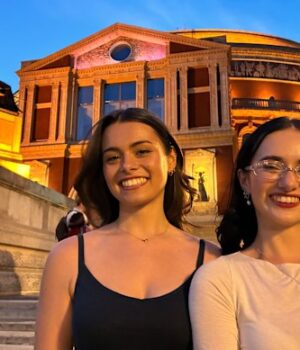
London: There’s a buzz in the warm evening air as thousands of people stream onto the streets near Hyde Park and talk happily about the concert they’ve just seen at a London landmark. We are outside the Royal Albert Hall a little after 9pm, a few minutes after sunset, and the cloudless sky is cornflower blue. I weave through the crowd to find some choir members who have just finished performing.
This is the BBC Proms, one of the world’s great music festivals, and tonight’s concert was just one of 86 that will attract thousands this summer. “When the Proms season comes, life changes; a kind of light comes into your diary,” the BBC’s David Attenborough once said. I can see why his remark is quoted so often: it captures the audience’s sheer enthusiasm for weeks of great music.
Over the past weeks and months, I’ve been spending time on some of the unhappy aspects of British life. I’ve met the marginalised people of Luton, the frustrated voters of Wigan and the angry protesters of London who want to stop migration. It was time to enjoy some of the things that can make London life so wonderful.
I’ve just emerged from a concert where the Sydney Philharmonia Choirs joined the City of Birmingham Symphony Orchestra and its Chorus in a performance of Harmonium by John Adams. This was another Australian coup –the Melbourne Symphony Orchestra performed here last year – reflecting how orchestras and choirs from around the world want to be at the Proms.
By the time the audience sings at the Last Night of the Proms on September 12, this year’s festival will probably have reached an audience of 300,000 in person, in addition to several million viewers online and, on the famed last night, a television audience of 3.7 million. This British tradition is still going strong.
The first choir member I find is Joel Wilkinson, 24, a music teacher from Sydney. He’s on a high after the performance because he has seen the Proms online but has never made it to England. “To get to be in that room and actually perform is … a pretty surreal experience,” he says.
Teresa Benton, 61, is a software developer who joined the Sydney choir only last year after moving from Melbourne. Raised in Glen Waverley, she sang for 36 years with the Melbourne Symphony Orchestra Chorus and its predecessor, the Melbourne Chorale. “To be in the Royal Albert Hall is just something so special,” she tells me. It took months of preparation and practice.
Sisters Emily and Lily Harris say the work was intense. “We had about a month of rehearsals before the flight over, and quite intensive rehearsals,” says Emily, a student at the Sydney Conservatorium of Music. In Birmingham, before they got to the Proms, they rehearsed once or twice daily. “It was a lot – almost six hours sometimes,” says Lily, a digital video director.
Will they get to enjoy London in summer? Not much. The choir has more performances coming up, so there is little time to relax. “I think we’ve got two brunches,” jokes Lily. But the sisters can claim a rare family achievement: their grandmother, Sue, sang at the Proms as a member of the Sydney Philharmonia Choirs; their father, Mark, performed there with the Australian Youth Orchestra. Who else in Australia can claim three generations at the Proms?
As athletes are representing Australia at the Commonwealth Games, it seems appropriate for musicians to be doing the same at the Proms. Brett Weymark, the artistic director of the Sydney Philharmonia Choirs, says it’s a fair comparison because the music festival attracts performers from around the world.
“It’s incredibly special that we’re here this time because it has been the better part of 16 years since we were last here,” he says. And he calls the work tonight, Harmonium, one of the most exacting pieces a chorus can perform. “This is Olympic-level choral singing,” he says. “What the athletes are doing in Glasgow, we’re doing here.”
Political life in Britain is riven with anxiety about the nation’s economic and social problems, and it is not hard to see the divide between rich and poor. Life in London is easy for those with a club in St James’s and a house in the country, but it can be crushingly hard for the working poor who get by on a minimum wage of £12.71 per hour. (That’s about $24, which is $2 less than the Australian minimum wage.) Going out can be a luxury.
It does not have to be too expensive at the Proms, however. Every morning, people can buy £8 tickets online for the arena and gallery at the Royal Albert Hall. This is standing room only for the “Prommers” – the dedicated audience members who stamp their feet when happy and yell out “Heave” and “Ho” whenever a piano is wheeled on stage. More of that British tradition.
Call me old-fashioned, or simply lazy, but I chose a comfortable seat instead, and I got even more comfortable after a G&T. The Prommers, in their shorts and joggers, or their summer frocks, seemed to be having more fun than the couple in the royal box. (No, not members of the royal family – just people with connections.)
Even in these hard times, then, it is still possible to enjoy something that is quintessentially British, on a beautiful summer night, for the cost of a bus fare and an £8 ticket. You can’t see a Premier League match for that, nor a day of Test cricket at Lord’s. No wonder everyone sings Land of Hope and Glory on the last night of the Proms.
Get a note directly from our foreign correspondents on what’s making headlines around the world. Sign up for our weekly What in the World newsletter.
 David Crowe is Europe correspondent for The Sydney Morning Herald and The Age.Connect via X or email.

