

source : the age
The watchdog overseeing the safety and efficacy of hundreds of thousands of medical devices has drastically fewer staff than it predicted it would need to cope with an expected surge in reports of problems in hospitals.
An investigation into the Therapeutic Goods Administration, which monitors adverse event reports from 1.4 million medical devices in use around Australia, shows the federal government refused to approve additional funding to cope with the increase in reports despite concerns the regulator was already understaffed.
A document obtained under Freedom of Information shows that in 2024, the TGA’s team monitoring the tens of thousands of “adverse event” alerts it receives every year was missing half its budgeted staff and was struggling to fill the roles.
On top of that, the 2024 document warns the TGA had expected up to a tenfold increase in alerts when a mandatory reporting regime for hospitals started in March this year.
Managing the seven most time-consuming steps of dealing with those reports could take up to 150 extra staff members, the internal documents estimate.
Without improvements to the agency’s IT systems, the extra cost to screen the reports could run up to $15.8 million a year.
At the time the document was written, the team in charge of the reports was “operating about 50 per cent allocated FTE [full-time staff equivalents], indicating that recruitment alone could be a significant challenge to the organisation”.
Part of the reason for the staffing burden was explained in another document – a presentation from 2025 – exposing significant issues with the TGA’s information technology and data-handling systems.
The revelations about the TGA’s resourcing issues come as this masthead’s Medical Malfuctions investigation has revealed major loopholes in Australia’s approvals system that allows devices with little to no clinical evidence to be sold to patients.
Once approved for sale, medical devices with flaws are meant to be caught by the TGA’s “post-market” system, which monitors reports of side effects to spot problematic devices.
The documents released under freedom of information show this safety net, which gathers so-called “adverse events”, is strained.
The 2025 TGA presentation on the regulator’s adverse event surveillance team found “missing information and underreporting lead to difficulties with using adverse event data, and limit its reliability”.
“The use of adverse event data to answer questions and inform teams’ work is limited due to its accessibility, usability and presentation,” it says.
And crucially, “systems lack the functionality to alert teams of trends and risk factors to inform targeted work”.
The documents also detail issues with IT systems including the use of several different legacy databases to process reports, each report requiring a large number of steps to input; and that systems do not talk to each other.
They also report staff saying the system goes down once a week; processing a single report takes at least 85 minutes; and the software lacks the ability to alert investigators to trends in injuries or deaths.
Of 37,540 adverse event reports received between 2019 and 2023, the TGA investigated just 4.2 per cent.
“The TGA usually does not do much investigation at all. They include it in the database. It is logged just in case it becomes very frequent,” said a person with direct knowledge of the process, speaking anonymously to avoid reprisal.
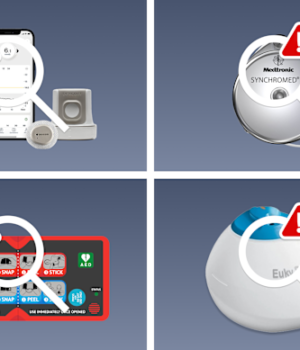
This masthead’s Medical Malfunctions investigation used artificial intelligence to scrape thousands of these adverse event reports to detail issues with a number of devices including a portable defibrillator, glucose monitors and spinal pain pumps.
The investigation also discovered the TGA’s public Database of Adverse Event Notifications was missing dozens of deaths reported before October 2019, forcing the regulator to publish a warning about a “technical issue” with the database.
In response to questions, the TGA confirmed it had made a budget request for additional funding to handle the influx from hospital reports. That was rejected by the government, but the agency said it did now have 30 staff members in its monitoring team.
Tracey Duffy, first assistant secretary of the TGA’s medical devices and product quality division, said the reports did not reflect the agency’s current conditions.
Duffy said the TGA had significantly increased staff levels since the 2024 report was authored but conceded some of its systems required investment.
“At the TGA, we’re dealing with quite a few old IT systems. We’re in a journey of transformation and modernisation when it comes to our IT systems,” she told this masthead.
“They are limited in the sense of being able to do things in the most effective way. It takes more time, more resources, more training. It is taking additional staff to be able to do those processes.”
That’s left the agency reliant on funding from the Department of Health to install a temporary software solution.
“We have sufficient funding that allows us to put in place a workable system,” said Duffy.
She said the level of investigation of adverse events was “appropriate given the risk we have in place”.
Health Minister Mark Butler said the TGA was allocated departmental funding for its adverse event system to cope with the increased load from hospital reporting.
It comes as this masthead’s investigation into medical devices has triggered calls for the establishment of clinical registries for pain devices – to prove if they truly are safe and effective.
Last month, this masthead reported on Medtronic’s SynchroMed II pain pump, which remains registered for sale despite a lack of high-quality data showing it is effective at treating pain. The pump is associated with significant complication rates, including a rare risk of paralysis.
That prompted calls from both the Australian Pain Society and the Faculty of Pain Medicine for the establishment of registries for pain devices like the SynchroMed II, to allowing outcomes to be tracked over time, including how well they work and side effects.
“The Australian Pain Society supports a national registry for implantable pain devices,” Pain Society president Bernadette Smith said.
“Reliable, transparent data on safety, effectiveness and patient outcomes is essential to inform decision-making and ensure people living with pain receive care guided by the best available evidence.”
The only existing pain register, known as EPPOC, tracks outcomes for patients at the nation’s specialist pain services. It faces closure after funding from the NSW state government expired.
“It would seem to reflect a lack of interest from funding bodies in whether or not pain treatments actually work,” said Dr Chris Hayes, director of the Hunter Integrated Pain Service in Newcastle, and former dean of Australia’s Faculty of Pain Medicine.
Get the day’s breaking news, entertainment ideas and a long read to enjoy. Sign up to receive our Evening Edition newsletter.
 Liam Mannix is an investigative journalist at The Age. Before that, he was national science reporter for The Age and the Sydney Morning Herald.
Contact him via email or Signal (encrypted) liammannix.18
Connect via X, Facebook or email. Henrietta Cook is a senior reporter covering health for The Age. Henrietta joined The Age in 2012 and has previously covered state politics, education and consumer affairs. Email her via henrietta.cook@theage.com.au or henrietta.cook@protonmail.comConnect via X, Facebook or email.

