

SOURCE :- THE AGE NEWS
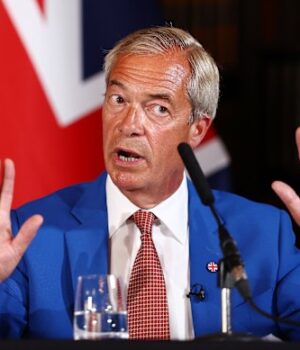
London: British warships would turn back asylum seekers in the English Channel under plans unveiled by Reform UK leader Nigel Farage to embrace Australia’s tough border policy to stop the boats.
Farage vowed to launch the largest military operation of its kind to deter thousands of asylum seekers from boarding inflatable boats on French beaches to seek new lives in Britain, citing the Australian approach as a template.
The plan came at a time of heightened argument about border policies after more than 50,000 people rushed from Morocco into the Spanish territory of Ceuta, leading to at least 72 deaths.
But the Reform plan sparked immediate objections from UK critics who said it would provoke France by using Royal Marines to force asylum seekers back to the beaches where they started.
Farage insisted the French would accept Britain’s right to protect its borders if he became prime minister at the next election, declaring the British public wanted tougher measures even if that meant diplomatic and military tensions.
“The country will get behind the message that we have a Royal Navy, it’s there to protect this country from invasion, and that now is what it should be used for,” he said.
Reform issued a border policy document that devoted several pages to the Australian regime imposed when Tony Abbott led the Liberal Party into government in 2013, including turning back boats.
The Reform plan explicitly cited the command structure for Operation Sovereign Borders under the Labor government in Australia, with Home Affairs Minister Tony Burke overseeing multiple agencies to deter arrivals.
While the next UK national elections are not due for another three years, Farage appears likely to shape British debate on border control given Reform UK has a strong position in the opinion polls.
The Labour government has revived its fortunes by installing former Manchester mayor Andy Burnham as prime minister, with a YouGov survey last week showing Labour had lifted its support to 22 per cent, matching Reform for the first time in 16 months.
Burnham sought to assure voters on Sunday that he could manage tough borders, visiting operations in Dover where border control officials take asylum seekers after intercepting the small inflatable boats in the channel.
“The public don’t like the idea that the border looks like it’s not controlled. We need to bring back that control. But, also, we need to offer support for people who genuinely need it,” the prime minister said.
Farage, however, demanded tougher measures in a plan he called Operation Fortress, replicating the formal Australian policy that anyone who arrived by boat would not be settled in the country.
Reform said the policy would make Britain’s border impenetrable.
The Reform plan set out Australian measures such as turning back boats where it is safe to do so, setting up a single command, using military vessels to stop boats and issuing temporary protection visas that do not offer permanent protection or allow family reunion.
“Under Operation Sovereign Borders, boats were turned around and people were left to complete the final leg of the return journey alone and unescorted,” the Reform policy said.
“Under Operation Fortress, everyone will be rescued and safely returned to their point of departure. What the Australian precedent proved, however, is that the certainty of interception and the guarantee of return is the most successful deterrent possible.”
Conservative Party home affairs spokesman Chris Philp dismissed the Reform plan on the grounds it was not credible.
“They can’t answer the question [about] how they would disembark immigrants back in France if the French don’t agree,” he said.
Home Secretary Shabana Mahmood defended an existing deal with France to discourage asylum seekers by sending some back across the channel, although she acknowledged this was “trickier” than the approach being taken in Spain in the border crisis at Ceuta.
Mahmood and her department said the National Crime Agency had doubled the number of officers who were tackling people smugglers, saying there were now 800 on this task. As well, almost 1000 law enforcement, intelligence and military officers were on the French coast to stop small boats.
“More than 1900 traffickers and gang leaders who helped to facilitate Channel crossings have been arrested in the last year alone, 74 per cent more than the previous year,” the Home Office said in a statement.
Spain mobilised its armed forces to send thousands of asylum seekers back to Morocco after they swam and walked across a rocky coastline to reach the enclave of Ceuta.
In its latest estimate, the Spanish government said about 69,500 migrants had returned to Morocco over four days, up from its earlier estimate that 50,000 had arrived.
Officials said that 72 had died on the Spanish side of the border, while 11 died on the Moroccan side.
Spanish newspaper El País said many asylum seekers remained in Ceuta and this included 862 minors, a number that has quadrupled in the past two weeks.
Get a note directly from our foreign correspondents on what’s making headlines around the world. Sign up for our weekly What in the World newsletter.
 David Crowe is Europe correspondent for The Sydney Morning Herald and The Age.Connect via X or email.