Source : Perth Now news
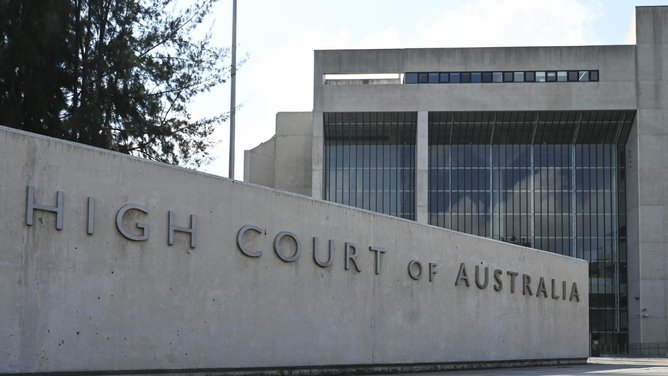
Australia’s highest court has ruled a wife’s secret recording of her husband admitting he raped her was admissible evidence to convict him of sexual assault.
The man tried to keep the secret recording excluded from evidence and took his fight all the way to the High Court of Australia
The prosecution had alleged the man had sex with his wife without her consent or knowledge while she was asleep at their Adelaide home.
The last assault occurred while the couple were separated, but were still living together in the same house.
The man denied most of the charges against him, except one which he said his wife was awake and consented.
His wife secretly recorded a conversation with her husband on her mobile phone without his knowledge, in which he admitted to sexually assaulting her while she was asleep.
A District Court judge presiding over a trial ruled the recording was not unlawful because it was necessary for the protection of the woman’s lawful interests, specifically to protect herself from being raped by her husband.
The woman had told a court she had woken up to find her husband having sex with her, and suspected her husband sexually assaulted her on other occasions when she woke up bleeding and in pain.
Another time she woke after taking medication to find her husband pinning her arms down and penetrating her, then continued to have sex with her when she told him to “get off.”
After they separated the woman made a secret recording where she pressed her husband to reveal what he had done to her.
He replied, “I sexually assaulted you” then stated later, “I started having sex with you when you were asleep and then I stopped”.
His wife asked if he used protection and he said, “No” and said she was “not really” responsive during the incidents.
The man told a court he made those statements to make his wife feel less angry.

The trial judge found the listening device was used in a way which was reasonably necessary to protect a lawful interest of the wife, and the recording was not unlawful.
“Namely she had the right to protect herself from further crimes of rape by the accused in the form of not resuming her relationship with him,” she said.
The man appealed his convictions and the Court of Appeal was not unanimous about the recording being lawful evidence, but concluded that “the balance fell in favour of receiving the evidence” and it was dismissed.
He took the matter to the High Court but the case was dismissed, with the court ruling the recording was lawful and admissible evidence.
The court considered whether the covert recording was reasonably necessary to protect the wife’s lawful interest in not being raped by having regard to the circumstances she faced at the time.
“Those circumstances rendered (her) extremely vulnerable,” the court said.

The court said the woman had various significant health issues, was responsible for two small children and a limited support network.
While the couple were separated they lived in the same home, which exposed her to reluctantly resuming a relationship with her husband or him remaining in the home for some time.
“Both scenarios exposed her to the real risk of being raped again,” the court said.
“It was readily understandable and, more relevantly, reasonably necessary (i.e. appropriate) that the (woman) would record the (her husband’s) admission as a powerful audio reminder of the peril she faced if she remained in the same home as (him), or resumed a relationship with him.
“Just as visual imagery can be ‘peculiarly communicative’, an audio recording of such stark admissions was a far more powerful reminder than a handwritten note to herself.”
The man is serving a nine years and six months jail term, with a non-parole period of five years.
Domestic Violence helplines