

source : the age
Local councils would be permitted to ditch planning rules introduced by the Minns government which allow for six-storey apartment buildings near 171 town centres and transport hubs across NSW if they came up with alternate plans, under a new policy to be announced by Liberal leader Kellie Sloane.
The announcement comes as new polling shows infrastructure is the make-or-break issue determining what Sydneysiders think of higher-density housing, with public support dropping by half if residents believe density will worsen congestion or heap pressure onto services.
While 49 per cent of Sydneysiders support more townhouses and apartments in their local area, compared with 34 per cent who oppose them, support rises to 79 per cent when increased density is accompanied by investment in public transport. But this is conditional – approval falls to 43 per cent if residents believe more homes will negatively impact roads and transport, a survey of 2535 people by policy advocacy group AMPLIFY shows.
Opt out power
Sloane will use a housing conference in Rosehill on Friday to announce that a Coalition government would give councils the power to scrap the controversial low- and mid-rise (LMR) reforms introduced by Labor, which would deliver 112,000 homes over five years.
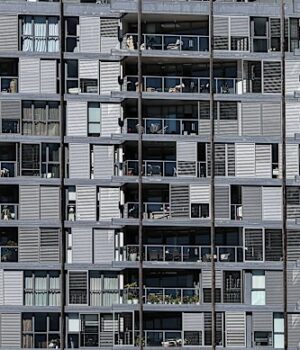
The policy, a key plank of the Minns government’s efforts to meet the ambitious National Housing Accord targets, permits dual occupancies, terraces, townhouses, and apartment buildings up to six storeys within an 800-metre radius of 171 town centres and transport hubs.
It has proven controversial with some councils. Mosman Council has sought to exclude areas such as the Balmoral escarpment and Mosman Bay from what it labelled a “blunt one-size-fits-all model” by funnelling the bulk of its new housing density along the busy Military Road corridor.
However, unlike other planning changes introduced by Labor, such as the Transport Oriented Development zones, the LMR changes do not permit councils to override the policy. Sloane on Friday will announce the Coalition would change that if elected in March, saying the LMR had created “an adversarial planning system”.
“We need to build more homes but we also need to recognise that good planning isn’t about applying the same template to every community,” Sloane said.
“The Minns government has created an adversarial planning system where councils are effectively told to accept a rigid planning template or resist the state government.”
Under the policy, housing targets would remain the same but councils would be allowed to create their own master plans if they could demonstrate they would deliver the same number of homes as the LMR. If no alternate plan were approved, the existing settings would apply.
Infrastructure is key
As the NSW government forges ahead with plans to boost housing supply in established and well-connected parts of Sydney, the new Amplify research on housing attitudes stresses the strongest lever to unlock support for housing is longer-term investment in heavy rail and metro lines.
“In most places, that is going to mean just more regular services on our trains and buses. In some areas that are not well served at the moment, I think that does mean new [metro and train] lines. As our cities continue to grow, that will be the case,” AMPLIFY’s chief policy and research officer Dr Rory Gallagher said. “But that does take time, and I think people recognise that.”
The government has repeatedly hosed down expectations that more metro rail lines will be built in Sydney in coming years despite public appetite for more projects, citing their huge expense on the state budget.
NSW is under pressure as it faces a large shortfall in its five-year housing target, tracking about 40 per cent behind the rate required to meet the Minns government’s commitments under the National Housing Accord.
These challenges are compounded as councils attempt to meet housing targets without control of the budgets or delivery of state infrastructure such as roads, schools, hospitals and transport.
If government departments stayed “at arms length”, local communities were being asked to accept development in exchange for infrastructure benefits “no one at the table has the authority or budget to guarantee”, AMPLIFY’s report warned.
It echoes what many councils across Sydney have warned for years. Since Burwood Council used its planning controls almost 15 years ago to concentrate growth around the train station, the suburb has evolved into a major employment, transport and residential hub. But traffic has been an enduring issue on the single road snaking through the main commercial hub, and major arterial corridors nearby such as Parramatta Road.
“Density done badly is congestion without connection, apartments without amenity and growth without belonging,” Burwood Mayor John Faker said.
Density done well, he said, prioritised designing streets for people, building parks and public spaces, and ensuring growth contributed to community life “rather than simply consuming it”.


