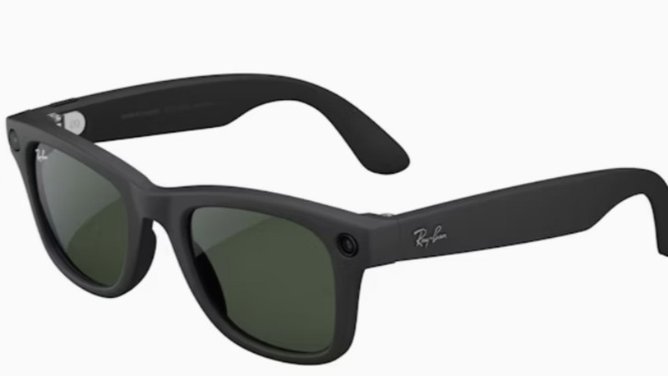
Source : Perth Now news
Discreet, camera-enabled smart glasses such as Meta’s Ray-Bans and Kmart’s Anko glasses may require new laws amid fears they could be used to “exploit or surveil vulnerable groups”, Australia’s privacy tsar has warned.
In a blog post, Australian Privacy Commissioner Carly Kind said the proliferation of smart glasses – including similar products likely to be released by Google and Apple by 2027 – would “fundamentally alter our experience of interpersonal interactions, in both private and public spaces”, and undermine Australians’ ability to make privacy choice without knowing “we could be filmed, recorded or photographed at any time.”.
“It would also require consideration of whether we need new laws,” Ms Kind said.
“Australia’s Privacy Act only applies to businesses and government agencies, not to individuals, and it only applies when those entities collect personal information.
“In circumstances where a tech company is receiving and storing personal information collected by surveillance wearables, they’ll have to make sure they’re complying with privacy law.
“And there are real questions as to whether they will be able to do so.
“How will they notify individuals that their images or voice has been recorded? If they’re making facial recognition features available, how will they ensure that they have the consent of the people whose faces the tech is analysing?”
Later, in a statement, Attorney-General Michelle Rowland said she had written to Ms Kind over potential privacy implications of the glasses, and asked that the matter be given priority.
“Privacy is an essential part of all our lives; it allows us to be who we are with dignity and without fear,” Ms Rowland said.
“Unlike other forms of technology, smart glasses may be used more discreetly, making it harder to know when you are being recorded.
“The OAIC (Office of the Australian Information Commissioner) regularly monitors the effects of new technologies on privacy – and the government has every faith that they will identify any new privacy risks and mitigation measures.
“The government is continuing to work on the next phase of privacy reforms to ensure our privacy laws are fit for purpose in the digital age.”
‘Harmful ways’
For the most part, the privacy implications of the emerging technology would be “few, and mild”, Ms Kind said.
“Our images and opinions would take up space in a data centre somewhere but would be unlikely to be used or analysed in any way that materially affects us,” she said.
The Privacy Commissioner questioned whether there might even be benefits from the use of surveillance wearables in certain sectors, such as the uptake of body-cams.
“But, there will be exceptions to benign usage – where smart glasses users are able to use the tech in harmful ways to exploit or surveil vulnerable groups, such as children or victims of domestic violence, or for other untoward ends, such as corporate espionage, data theft, extortion or bribery,” she said.
“Beyond safety concerns, there is also the impact on community values and the public interest in privacy. In aggregate, the effects of mainstreamed surveillance wearables would be the emergence of new privacy risks, new safety concerns, and new societal norms.”
Currently, the federal government is probing the second tranche of its privacy reforms, “which are likely to include expanding the scope of application of privacy law in ways that create additional hurdles for the developers of surveillance wearables,” Ms Kind said
“Under the proposed reforms, for example, entities will need to be able to demonstrate that their collection and use of personal information, including to train AI models, is both fair and reasonable.”

“Higher standards around consent, more protections on geolocation data and an expanded definition of personal information are also likely to strengthen my hand as Australia’s privacy regulator in scrutinising these tools.”
The Privacy Act, however, stops short of personal information collected by individuals, meaning locally-stored data may fall outside of the Act.
Recent tort law and the forthcoming Digital Duty of Care may go some way to addressing that gap in certain circumstances – however, Ms Kind said the regulator was nonetheless probing whether intervention in the sector was needed.
“We have engaged with one entity on at least two occasions this year to further understand the technical specifications of surveillance wearables on offer,” she said.
“As long as public trust in technology companies remains extremely low, the bar for establishing a social licence for rolling out new tech will be high.”
Meta advises users of the Ray-Ban smart glasses, which retail for as little as $400, to “respect people’s preferences” and stop recording if anyone expresses that “they would rather opt out”, and to not cover an LED light intended to show the device is recording.
“Obey the law. Don’t use your glasses to engage in harmful activities such as harassment, infringing on privacy rights or capturing sensitive information such as pin codes,” Meta said on its website.