source : the age
The first inland case of H5N1 bird flu in Australia has been detected in western NSW at the junction of the Murray and Darling rivers, in a sign the virus will spread rapidly across the continent.
The NSW government announced two more cases of H5N1 bird flu on Saturday, one in Narooma on the South Coast and one near Wentworth in the far west, bringing the total number of confirmed detections across Australia to 215. Previous cases have been coastal.
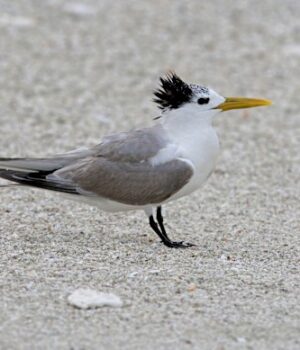
The positive samples in both Narooma and Wentworth were from dead greater crested terns, that had been reported by members of the public to the Emergency Animal Disease Hotline. It is the first time an Australian native bird has tested positive for H5N1 bird flu in NSW.
The highly contagious strain of avian influenza has devastated wildlife on every other continent, and arrived in Australia in June via seabirds blown off course from the sub-Antarctic flyway.
The “doom list” put out by the federal government earlier this week found one in five native bird and mammal species was at high, very high or extreme risk.
The NSW government said surveillance work would continue at the sites to ensure early detection of any further cases.
“These positive cases are not unexpected,” NSW Environment Minister Penny Sharpe said. “We have been preparing for a situation like this, and we remain well equipped to respond to manage further impacts.
“We are using the best available data and tools to target actions for our most at-risk wildlife species and important natural places.”
In total, four birds in NSW have returned a positive result for H5N1 bird flu, with the first two being migratory petrel birds found near Port Stephens in early July.
Jack Gough, chief executive of the Invasive Species Council, said this was the first inland case, and the speed at which the bird flu was spreading to new species and new locations was alarming.
“We now have it turning up for the first time in the Murray Darling Basin at Wentworth,” Gough said. “That should be ringing alarm bells for governments because it suggests it could soon be spreading among inland bird colonies ahead of spring breeding season.”
Gough said birds in the Murray-Darling basin were already declining because of feral animals, insufficient water to critical wetlands and the loss of habitat.
Although there have been no detections of bird flu in commercial poultry flocks in Australia, the state Minister for Agriculture, Regional and Western NSW Tara Moriarty said the industry was prepared.
“We are continuing to work with our industry partners, including key agricultural and wildlife stakeholders, ensuring the community have up-to-date information about our surveillance and response to detections of H5 bird flu,” Moriarty said.
While humans can catch H5N1 from animals, there has been no recorded human-to-human transmission.
The official advice for people who see sick or dead birds and other animals is: don’t touch, record their location, take photos and video if possible, and call the Emergency Animal Disease Hotline on 1800 675 888.
Get to the heart of what’s happening with climate change and the environment. Sign up for our fortnightly Environment newsletter.
 Ellie Busby is a Parramatta reporter at The Sydney Morning Herald.Connect via X or email.
 Caitlin Fitzsimmons is the environment and climate reporter for The Sydney Morning Herald. She was previously the social affairs reporter and the Money editor.Connect via email.