Source : Perth Now news
Two soldiers who died on the same date decades apart in different corners of the globe have finally been identified.
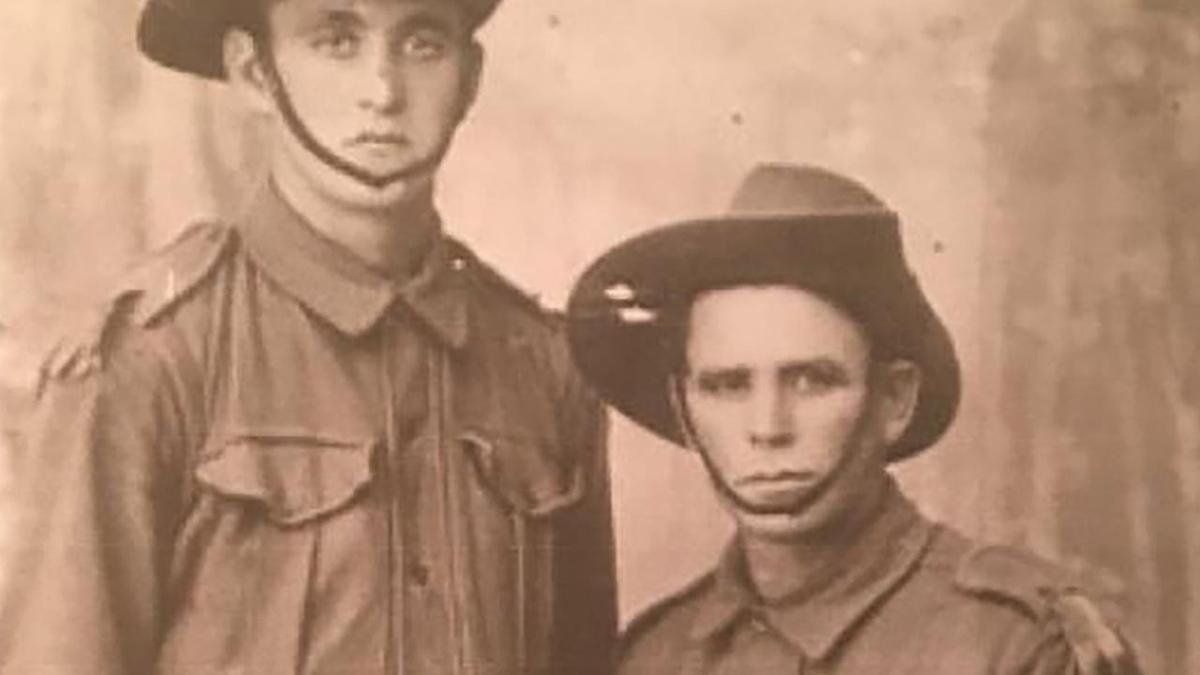
Private Archibald ”Blue” Hanley, 30th Battalion, Australian Imperial Force, and Lieutenant Hercules William Crawford, 39th Battalion, Citizens Military Forces, both died on August 8, and spent decades in graves identified only as unknown Australian soldiers.
Following extensive investigations, the Australian Army has confirmed the identities of both men.
Private Hanley was killed during the Battle of Amiens near Villers-Bretonneux, France, in 1918, and buried in Villers-Bretonneux Military Cemetery.
Lieutenant Crawford was wounded and went missing near Pirivi on the Kokoda Track in 1942. He was buried in Bomana War Cemetery in Papua New Guinea.
The identifications were made by the army’s Unrecovered War Casualties team after investigations conducted in conjunction with the Commonwealth War Graves Commission and the Office of Australian War Graves.
Headstones bearing their names, ranks and unit details will be installed in consultation with their families.
Chief of Army Lieutenant General Susan Coyle AM said that the nation could now ensure the soldiers’ service and sacrifice were properly commemorated.
”These identifications provide long-awaited answers for their families and ensure both men will be remembered not as unknown soldiers, but by name, rank and unit,” she said.
Australian forces suffered 6000 casualties during the Battle of Amiens – seen as a crucial victory for the Allied forces over the Germans – which started on August 8 and lasted for four days.
They joined more than 60,000 Australians who died during the First World War.
The Kokoda Track Campaign, which was part of the Pacific theatre of the Second World War, claimed more than 600 Australian lives over a seven-month period. A further 1000 soldiers were wounded during the campaign.
The Minister for Veterans’ Affairs, the Hon Matt Keogh MP, said that the identification of the two men reflected Australia’s enduring commitment to account for its wartime missing.
“Today we honour two Australian soldiers who made the ultimate sacrifice in service of our nation and, at long last, can be remembered by name rather than as unknown soldiers,” he said.
“When we say ‘Lest We Forget’ at the end of the Ode, we re-commit to remembering them in perpetuity.”