source : the age
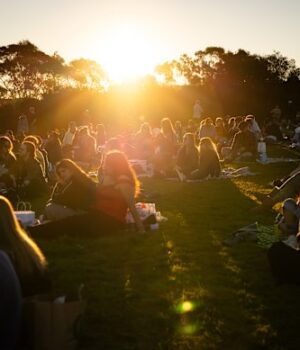
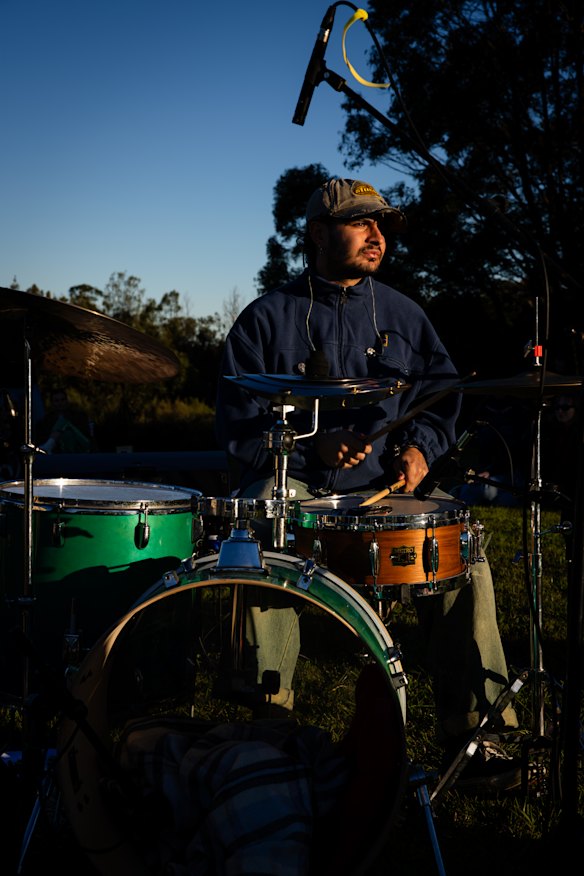
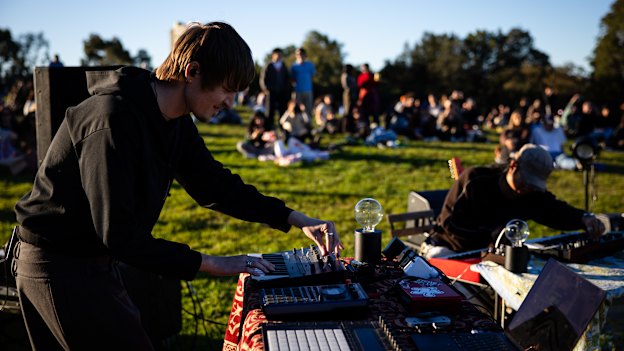
On a cool Saturday afternoon, young Sydneysiders gently groove to an electronic jazz band performing on a makeshift stage of red Persian rugs in the middle of a grassy inner-west park.
As the winter sunset’s golden haze descends over the free public gig, it washes over the very faces that have become the subject of discussion among dozens of MPs, hospitality and nightlife stakeholders on Macquarie Street.
Over three hearings in May and June, an inquiry assessed the health of the state’s live music scene post-lockout laws, post-COVID and following the NSW government’s vibrancy reforms. Almost three years ago, those reforms aimed to reverse a decade’s worth of damage caused by the shutdown of the city’s nightlife in the wake of alcohol-fuelled violence in 2014.
The brainchild of Music and Nighttime Economy Minister John Graham, the $150 million reforms have been rolled out in three tranches. Many have involved removing red tape, such as stripping councils’ noise complaint powers, overhauling planning departments to allow designated nightlife areas to operate later, and incentivising businesses to host live music.
Budgeted at $54.4 million a year, the reforms have been popular – between March 2023 and 2025, there was a 320 per cent increase in venues accessing live music incentives, NSW government data shows. The most recent data from 2023 found that live music generated about $5.5 billion in economic output and added $2.7 billion in value to the NSW economy.
However, the incentives, which allow venues and hotels to secure an extra two hours of trade and a liquor licensing discount in return for putting on live acts, have led to claims of musicians playing covers in the corner of “pokies pubs”.
And the reforms did not account for broader phenomena, such as the one taking place in Alexandria’s Sydney Park, in which cost-of-living pressures push gigs into the public domain, and generational gender, technological and political upheavals impact how young revellers party.
“People are quite hungry to be in spaces that are different and things that are new and exciting,” says John Troughton (also known as Heartholder), the 28-year-old saxophonist and organiser of the Sydney Park gig.
Younger people are also drinking less, says Adrian Farrugia, a researcher at La Trobe University’s Australian Research Centre in Sex, Health and Society. This trend has led to experimental and “third space” venues such as nighttime library events, as so-called traditional venues continue to close.
“The notion of being young – and that being a time of living in the moment and being unruly and being a bit risky – that seems to have changed,” Farrugia says. “People are worried about the future.”
There’s another problem emerging from the Minns government reforms too. One that policymakers, revellers, industry lobbies, promoters, event organisers and venue owners are nervous to speak up about – the licensing police.
The ‘well-entrenched’ policing culture
NSW Greens MP Cate Faehrmann believes that the attitude of licensing police is a problem for both venues and revellers.
“We’ve got this one part of government that’s throwing money at venues and precincts, and encouraging people to go out and enjoy themselves,” Faehrmann says. “While the culture of the police is that anybody who goes out to enjoy themselves at night is fair game.”
In June this year, police officers with drug detection dogs attended several Oxford Street nightlife venues – including popular LGBTQ nightclub Universal in Surry Hills – targeting drug supply and antisocial behaviour. The incidents prompted Sydney MP Alex Greenwich and Sydney Lord Mayor Clover Moore to ask the police watchdog to investigate allegations of aggression and heavy-handedness.
During the first live music inquiry hearing, in May, Acting Assistant Commissioner Paul Dunstan provided evidence for NSW Police. In it, he said the force was committed to supporting nightlife, but conceded that work was still needed to reshape attitudes inside a “well-entrenched licensing policing community”.
“Most of them have been involved in the game for a very long time,” Dunstan told the inquiry. “We need to change some hearts and minds there to be more supportive. But I think, like any organisation, the tone is set from the top.”
Dunstan revealed that less than a month into his role as police commissioner, Mal Lanyon affirmed his commitment to the vibrancy reforms at a forum established by 24-Hour Economy Commissioner Michael Rodrigues.
But despite Rodrigues and his office meeting “the licensing police to try and speak and educate the police on where we’re heading”, according to Dunstan, the message has yet to trickle down through the organisation.
“It’s a lot of communication through a hierarchical organisation,” Dunstan says.
Faehrmann believes the licensing police’s approach has tarnished Sydney’s nightlife reputation and there’s a fear of openly criticising them.
“A number of businesses and venue owners who speak to me will not go public because of fear of retaliation in terms of the police targeting their business,” she says.
Graham is aware of the issues raised by Faehrmann and the Oxford Street incident. “I was concerned to hear about these reports,” he says.
“In Kings Cross we had a culture which got out of control [leading up to the lockout laws]. It was one culture in one place and one offering, often with one age group, and unsurprisingly, it didn’t work. Police were on the front line of that … things have definitely improved. We’ve still got more work to do in the relationship between venues and police.”
Sydney Park gig organiser Troughton says the police presence at public events or unconventional locations has become less overbearing.
“I’ve been to some recent events, raves in abandoned warehouses and buildings in not traditional locations, like Marrickville, like inner city … the cops come through and see how well it’s run, and [they] sort of leave it alone,” Troughton says.

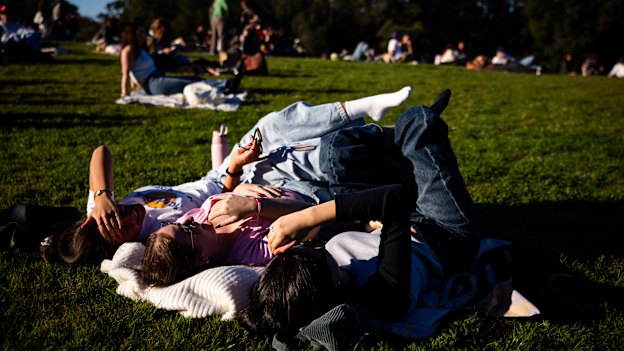
The event the Herald attended was supposed to be the previous Saturday and had more than 850 people RSVP, Troughton says, but it was rescheduled due to rain. A few hundred joined the four-hour-long postponed party – a third of whom appeared to have stumbled upon it while walking through the park with their strollers, dogs and friends, drawn in by the ambient and electronic music.
“My mailing list has about 2000 people on it,” Troughton says. “I only started doing these in about October.”
Troughton, who was inspired to organise the event after writing lots of his music in parks, fronts the cost of his public gigs. Amid the cost-of-living crisis, he says he can barely afford to stage a free show on public land without a permit (accepting the risk that the council or police could shut it down) – let alone hire a venue and associated costs.
“I think to get an actual permit and to go about that is so expensive – it’s quite prohibitive to run anything,” he says. “We’re trying to do this on a low budget, and it’s just me basically doing all the organisation alongside, like, one or two other people. It’s quite time-intensive as well.
“They’re free events as well, so that’s also another thing that makes it difficult. But I don’t want to charge for them; I just feel like it’s not the point of what we’re doing in open spaces and public spaces.
“People have enjoyed it, and I’ve loved putting them on. It’s stressful, and it’s a lot of work, but every time it’s been so worth it, and it’s been really exciting to see the idea start to resonate a bit with people that are outside of, like, my immediate scene, audience and community.”
‘No time for a hangover’
Inside Surry Hills bar Low 302, Coral Renee, a 20-year-old country pop singer from Sydney’s north west, is tuning her guitar, clad in sequinned bell-bottom jeans, cowgirl boots and a wide-brimmed hat. She has organised her first all-girl country singing and songwriting event, which has sold about 40 tickets – 90 per cent sold-out.

“I think in Sydney country music, it’s not as popular for kind of obvious reasons,” she says. “But country music being a small community does bring in a certain group of fans.” It’s a Friday night, and Renee’s event is just one of the themed parties unfolding across the city’s legacy venues. In Darlinghurst, community station fbi.radio is taking over Club 77’s reopening and Oxford Art Factory is throwing a “House Party”.
The trend among young people to seek out spaces with something new to offer is increasingly evident to venue operators. Within three weeks, Newtown’s King Street has gained a popular new study and socialising venue, O3 Space, while losing legacy rock music venue Moshpit. The latter’s owner said the decision to close the nine-year-old bar was due to declining revenue and soaring costs. It comes after Mary’s Underground in May announced it was handing back the keys after seven years of trading.
The reason young people are swapping traditional live music venues for new spaces is “simple”, says 24-year-old Bindi Mutiara, a broadcaster and youth vice-president at fbi.radio.

“Young people rejecting a lot of the venues and infrastructure that has already been built is also them being very much hungry for connection by living in a world that is so disconnected,” Mutiara says.
Living in a time when everything feels “programmed”, from social media feeds to artificial intelligence, young revellers, she believes, are seeking venues or spaces that provide them autonomy.
“You had people running through [Sydney Park] that didn’t even know of [Troughton’s] event, parking themselves for, let’s say, 15 minutes and then leaving right to go on about that day,” she says. “That’s autonomy. That’s freedom”
Survival means that venues must adapt not just to what pulls young people through the door, but also their habits. Farrugia, the La Trobe University researcher, says young Australians’ drinking habits are following the global trend of younger people consuming “dramatically” less alcohol.

“Young people are living more individually oriented lives … studying, maybe working a part-time job, a side hustle as well,” he says. “They’re thinking about professional achievement much earlier than in the past, and something like heavy drinking or going out late doesn’t really fit the schedule when you’re imagining your life in this kind of future projection.
“There’s no time for a hangover.”
Dating apps have also partially killed the need to go to a bar or club with the intent to hit on someone – or be hit on – Farrugia says.
“The first date would be the classic moment where social lubricant is needed,” he says.
Farrugia believes the rise of GLP-1 weight-loss drugs and fitness culture has also led young people to drink less – and Graham agrees; he is now looking at how he can mould nightlife policy around wellness culture.
“I would love to see us having the best of both worlds: the wellness culture, some of the morning culture that Sydney’s got – that spirit picked up by venues, but also have a strong nightlife,” Graham says.
The vibrancy reforms, which Graham says are aimed at reducing venue and consumer costs, have “reversed a lot of damage”, but traditional venues are lagging. So, what would he do if he were opening a venue tomorrow?
“The more flexible the venue is, the better it’s working,” Graham says. “If you’re a venue operator, the old business model is breaking down … the good operators – they’re selling merch, they’re providing great food, a great experience, and a range of different music or nightlife experiences.”
Public gigs, such as the one in Sydney Park, are events Graham welcomes.
“We want people together in community, whether that’s in a venue, at a festival, in a park,” he says.
“So much of that was really very heavily regulated and often not possible before, and we’re working with councils and communities to relax the rules.”