source : the age
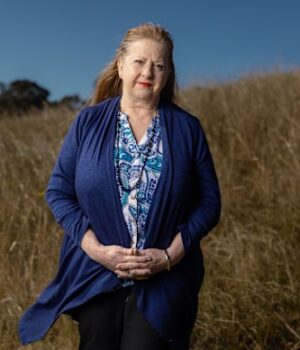
There’s gravel from Redeemer Baptist School’s property burrowed deep inside Elizabeth Bradbury’s knee.
The 62-year-old only has to touch the gnarled skin to be transported back to the 1970s and ’80s, when at 15, screaming for her mum during a planned visit, as she was pulled away by male members of Redeemer Baptist Church.
“I got dragged by my hair because I fought them off,” she said. When she stumbled, she fell into the gravel driveway.
In 1976, when Bradbury was 11, she was placed into the care of elders at Redeemer Baptist Church by the Youth and Community Services officers with the consent of her mother, who surrendered her care to Redeemer.
By the time Bradbury left in 1981, aged 16 and in the middle of her HSC year, the department of youth and community services banned Redeemer Baptist Community from caring for children in need of substitute care.
But Redeemer did not stop caring for children. Instead, the church became a school, operating at first as an unregistered community school, before being accredited by the Department of Education in 1983.
On Monday, the school will be at the centre of a NSW Parliamentary inquiry, after a slew of “disturbing” allegations unveiled by this masthead and 60 Minutes into the academically acclaimed private school.
The school in North Parramatta is accused of subjecting its students to extreme control, dictating their underwear colour and university choices, and not paying its teachers wages.
The school, which has an extensive property portfolio, had raked in tens of millions in government funding in the past decade – all while its teachers go unpaid, relying on a small stipend and, for some, Centrelink benefits.
Since the school began, at least 50 children have lived in the homes of church elders Jonathan Cannon and Russell Bailey.
But Bradbury wants the world to know that these allegations are not new. She says Redeemer’s alleged control of children started long before its current leaders, Cannon and Bailey were in power.
The church was founded by Noel Cannon, Jonathan’s father and a former science head at The King’s School, who was an esteemed figure within the Castle Hill and Parramatta community. When he died in 2012, his life was described in parliament as one of “uncompromising love”.
Bradbury remembers a much darker picture. Despite her mother giving up her care, both wanted to continue contact. She said she was only allowed to see her mother once or twice a year. Placed inside the Baileys home – alongside a teenage Russell Bailey, now the school’s headmaster – she described a life of strict surveillance and control.
She was not allowed to use tampons. The wife of a senior church elder once checked under her skirt to make sure.
“I was standing on something, and she ran her hands up and down my legs. She realised I was shaving my legs,” she said. She was reprimanded.“When I got my period, [she] basically said if you use tampons, you’re no longer a virgin,” Bradbury said.
At the time, Bradbury recalls, there were a number of foster children living inside Redeemer. One of them was a girl who had schizophrenia. Bradbury remembers watching elders hold the girl down while they performed what she described as an exorcism. “She was resisting, fighting them off, and they just held her down while they prayed for her,” Bradbury recalled. “She was psychotic, and I watched that. I witnessed that.“
Any defiance was dealt with by Noel Cannon. At the time, church members attended nearby Castle Hill High School, allowing them to make friends outside the Redeemer community. Bradbury recalls wanting to leave the church in her senior years. Letters, written during that time and kept by Bradbury, show her pleading with an old friend to help her escape.
Labelled “rebellious” because she wanted to return to her mother and study nursing, Bradbury was taken upstairs to Noel’s office.
As Bradbury lay crying on the floor, Noel loomed over her. “He pulled me up by my hair and I ended up with my head between his legs, and I said to him, ‘You don’t want to do this’,” she said. He let her go, she said.
When Bradbury heard Cannon being praised in parliament, she vomited. “I had my head between that man’s legs,” she said.
Sam Gibson has his own memories inside Noel Cannon’s office. Adopted into the church in 1974, Gibson spent much of his childhood terrified of Noel Cannon. For years, he was moved between homes, living with different families, among overseas students and “stragglers”.
He estimates he was caned by Noel Cannon upwards of 50 times. Cannon’s son, a then teenage Jonathan Cannon, would often be in the room, watching on.
“If I did something wrong or looked at Jon Cannon the wrong way … I was marched up to his dad and his dad put me over the pew, giving me three of the best,” he said.
When Gibson was sexually assaulted by another member of the church as a child, Noel Cannon confronted Gibson.
“He came up to me and said, ‘You’ve got a dirty little secret don’t you? You are going to sit over there until you tell me what it is’,” Gibson said.
When Gibson left in 1992, Noel Cannon issued a threat: “Sam, if you ever mention anything of what has happened in here or goes on in here, I’ll come down on you like a ton of bricks,” Gibson recalled.
Gibson said Redeemer was “not a place of love, of care. It’s a place of control, fear, humiliation”.
Bradbury was horrified to learn the church that “destroyed” her has taken in more than 50 more children since the school began.
“This is no different to what happened back then … these people are still succumbing to this thing,” Bradbury said.
Bradbury wants the school to sell everything it owns to pay back people she said it has harmed.
“I’m not alone anymore, and there’s people there that need to get out too. They need to be finished,” he said.
Redeemer did not respond to the Herald’s questions. In a previous statement, the school said: “Just because our practices are unfamiliar, it does not mean they are unlawful, coercive or abusive, and we reject the attempt to portray us as anything other than a law-abiding community with strong Christian faith and practices”.
The NSW inquiry, which Redeemer representatives will not attend, will examine “any use by the school of coercive control in relation to students, families, guardians, employees and volunteers”.
The inquiry has received more than 100 submissions, many from current volunteer teachers.
“The flavour of Christianity that was taught was fire and brimstone on acid and as students we were left in zero doubt about where they stood on key issues, particularly on matters such as equal rights for all, and marriage equality as cases in point,” wrote ex-student Danny Nowlan in one submission.
“We were told in no uncertain terms if we were to date fellow school students we would be suspended/expelled”.
It is not the first time the school has found itself in the halls of parliament. In 2007, Greens MP John Kaye called for an inquiry into the school after accusing the school of an “extraordinary tax sham and welfare fraud” that has cost the federal government more than $1 million, state parliament heard.
The chair of Monday’s inquiry, Greens MP Abigail Boyd, said: “This is a school that is supposedly overseen by NSW authorities and has benefited from public funds. Serious allegations and concerns were raised decades ago and never resolved by public officials. The community deserves answers, and that’s what our inquiry will seek to provide.”
 Emily Kowal is a Walkley award-winning education reporter for The Sydney Morning Herald.Connect via email.