Source : Perth Now news
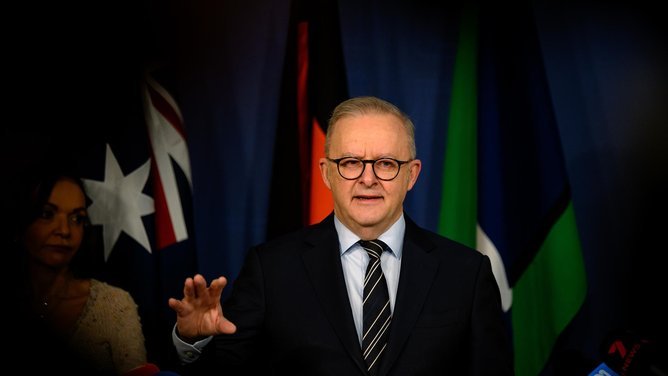
Fuel, trade and China are among the top ticket items Anthony Albanese will broach when he sits down with the communist leader of Vietnam next week.
Vietnamese President To Lam and his delegation of more than a dozen ministers landed in Sydney on Sunday night to a red-carpet welcome.
Mr Lam was appointed president in April in addition to his role as Vietnamese Communist Party general secretary.
He last visited Australia as public security minister in 2016 – a role in which he spearheaded an anti-corruption crackdown that purged thousands of officials, including two presidents.
Since becoming general secretary in 2024 he has ushered in an overhaul of the public sector, cutting eight ministry-level bodies, merging 63 provinces down to 34, and slashing more than 100,000 jobs by abolishing district-level government.
His rise has spurred concern from analysts and academics, who fear Vietnam has been saddled with an untouchable supreme leader backed by a powerful security apparatus.
But the country has become a precious source of trade and energy security for Australia at a time when global supply chains are strained.
The value of two-way trade has doubled since 2020 and was worth $30bn in 2025, making Vietnam one of Australia’s fastest-growing trading partners.
It is a top buyer for Australian coal, iron ore and aluminium, as well as a major source of international students.
More recently, Australia has leaned heavily on Vietnam for fuel.
After engagements in Sydney on Monday, Mr Lam is set to visit Canberra where he is scheduled to meet Governor-General Sam Mostyn and the Prime Minister.
“I look forward to welcoming General Secretary and President To Lam to Australia and discussing how we can strengthen co-operation between our two nations,” Mr Albanese said in a statement this week.
“The Vietnam-Australia relationship is grounded in deep strategic trust, mutual interests, and a shared ambition for the future of our region.
“Our two nations share deep cultural ties and around 350,000 Australians have Vietnamese heritage.”
On the foreign policy front, Mr Lam has shared similar views to Canberra.
Against a backdrop of longstanding territorial disputes with China, he warned in May of a world “confronted with multiple risks and uncertainty” and called on countries to “safeguard peace”.
“More connected, yet more vulnerable. More technologically sophisticated, yet more exposed to misuse. More deeply interdependent, yet increasingly susceptible to pressure and coercion,” he told the Shangri-La Dialogue at the time.
“While all nations continue to speak of peace, stability and co-operation, the strategic environment is marked by a growing lack of trust, fragmentation and unchecked competition.”