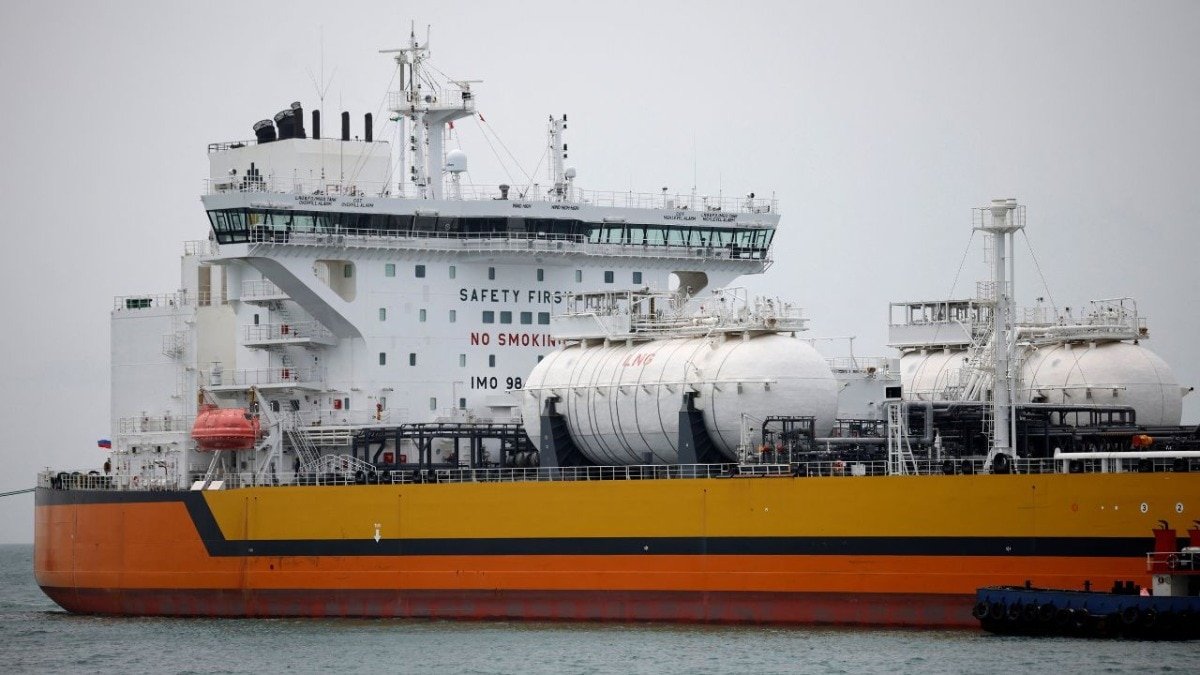
Source : INDIA TODAY NEWS
India’s imports of Russian crude oil hit a record for the second consecutive month in July. Indian buyers imported Russian crude worth 5.5 billion euros in July, up 2.1 per cent from June, according to the Centre for Research on Energy and Clean Air (CREA).
Crude accounted for 87 per cent of India’s total Russian fossil fuel purchases during the month. The 2.1 per cent increase refers to import volumes, rather than the value of the shipments. India’s Russian crude imports reached a record 2.8 million barrels per day in July, accounting for about 55.5 per cent of the country’s total crude imports of just over 5 million bpd.
advertisement
The surge came despite growing pressure from Washington. The US Senate has cleared a bill that could allow President Donald Trump to impose tariffs of up to 100 per cent on countries among the top five importers of Russian oil and gas, putting India’s continued purchases under renewed scrutiny.
RUSSIA‘S GROWING SHARE IN INDIA’S OIL MIX
India’s dependence on Russian crude has grown sharply since Russia’s full-scale invasion of Ukraine in February 2022. Western sanctions and the departure of European buyers left Moscow offering discounts to Asian refiners. Russia supplied less than 100,000 bpd to India in 2021, accounting for about 2.5 per cent of its crude imports, according to the US Energy Information Administration.
The volume rose to about 740,000 barrels per day (bpd) in 2022 and nearly 1.8 million bpd in 2023, making Russia India’s largest crude supplier that year with around 39 per cent of imports. India imported roughly 1.8 million bpd of Russian crude on average in 2024. July’s figure of 2.8 million bpd marks a significant increase from that level.
“India was the second-largest buyer of Russian fossil fuels in July 2026, importing a total of 6.4 billion euros worth of Russian hydrocarbons. Crude oil constituted 87 per cent of India’s purchases, totalling 5.5 billion euros. Coal (512 million euros) and oil products (341 million euro) constituted the remainder of their monthly Russian imports,” CREA said.
SMALLER PORTS DRIVE RECORD IMPORTS
The July increase was driven mainly by higher receipts at several smaller terminals rather than India’s two largest Russian crude destinations. Imports through HMEL Mundra rose 58 per cent from June, while volumes received at Indian Oil’s Vadinar SMPL terminal increased 35 per cent. Imports through Mumbai rose 37 per cent.
Shipments through Jamnagar, one of the world’s largest refining complexes, were unchanged from June. Imports through Paradip fell 22 per cent. The increase at other ports more than offset the decline at Paradip, pushing India’s overall Russian crude intake to a new monthly record.
India has become the second-largest buyer of Russian crude since the start of the Ukraine war, accounting for 37 per cent of Russia’s crude exports covered by CREA’s analysis. China accounted for 50 per cent.
RUSSIAN OIL REVENUES REMAIN UNDER PRESSURE
India’s purchases rise despite continued pressure on Russia’s fossil fuel export revenues. Russian crude export revenues were broadly flat in July at 392 million euros a day. A 21 per cent monthly fall in pipeline crude earnings was offset by a 7 per cent rise in seaborne crude revenue.
The average price of Russia’s Urals crude fell 3 per cent in July to $60.22 a barrel, according to CREA. It remained above the $44.10-a-barrel G7 and EU price cap that took effect in February 2026.
At the same time, Russian oil product loadings fell 23 per cent in July to 4.7 million tonnes, their lowest level on record and less than half the 9.6 million tonnes loaded in July 2025.
INDIA ALSO REFINES RUSSIAN CRUDE FOR GLOBAL MARKETS
India’s role in Russia’s oil trade extends beyond direct crude purchases. Indian refineries that process Russian crude remain significant exporters of refined petroleum products to countries that have sanctioned Moscow.
CREA said refineries in India, Turkiye, Brunei and Georgia that use Russian crude exported oil products worth 633 million euros to sanctioning countries in July. Of that, 214 million euros went to the European Union, 184 million euros to Australia and 234 million euros to the United States.
CREA estimated that 284 million euros of those exports were refined from Russian crude.
Five cargoes from Indian refineries using Russian crude were unloaded at EU ports in July, despite the bloc’s ban on imports of oil products made from Russian crude that took effect on January 21. Jamnagar was also a source of refined-product shipments to the United States. Russian crude accounted for about 35 per cent of the refinery’s feedstock in the three months through July, according to CREA.
However, India’s dependence on Russian crude faces a fresh challenge from Washington. The US Senate has cleared a bill that could expose major buyers of Russian oil, including India and China, to steep tariffs. The Lindsey O. Graham Sanctioning Russia and Iran Act of 2026 was approved by an 86-11 vote. The measure allows President Donald Trump to impose tariffs of up to 100 per cent on goods from countries that rank among the top five importers of Russian oil and gas. The bill still needs approval from the US House of Representatives. The House is scheduled to reconvene on August 31.
– Ends
With inputs from PTI
SOURCE :- TIMES OF INDIA