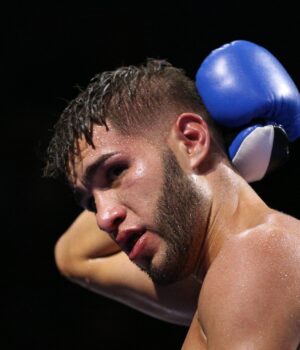
Source : ABC NEWS
Prichard Colón, a former boxer who was left with severe brain damage after a fight more than a decade ago, has died aged 33.
His father, Richard Colón, confirmed his son’s death in a Facebook post on Thursday.
The post did not detail the Puerto Rican boxer’s cause of death.
World Boxing Organization (WBO) president Gustavo Olivieri posted a tribute to Colón on social media.
“Today, the WBO solemnly joins his family and all those who had the privilege of knowing, supporting, and loving him in mourning his passing,” Mr Olivieri said.
What happened to Prichard Colón?
Colón was injured in a boxing match against Terrel Williams in Virginia in the US in October 2015.
Born in Florida, US, Colón kicked off his boxing career in Puerto Rico, where he won five amateur titles.
He was considered a “rising star” in the lead-up to the nationally televised match, ESPN reports.
Here’s how a report from Reuters described the match at the time:
“An online video of the fight showed Williams, a 31-year-old fighter from Los Angeles, punching Colón in the back of the head in the seventh round, a shot that appeared to stun Colón, who was briefly examined in his corner.
“Williams was penalised for the illegal punch.
“Colón was then knocked down twice in the ninth round.
“He was disqualified after the ninth round.
“His corner mistakenly took off his gloves, thinking it was the final round and that the fight was complete.”
After the match, Colón needed assistance to walk to his dressing room after the match.
He said he felt dizzy, vomited and then “passed out”, according to a report from the Washington Post.
Colón was rushed to hospital where he underwent surgery to relieve pressure on his brain, spending seven months in a coma.
He was 23 years old.

Prichard Colon, left, and Terrel Williams during the fight. (Getty Images via AFP: Patrick Smith)
In 2016, the Virginia Department of Professional and Occupational Regulation determined there was no wrongdoing on the part of organisers of the fight, the Washington Post reported.
“No one action [or failure to act] can be identified that is so apparent or egregious to justify holding accountable any one person,” the regulator said in a statement.
Signs of hope
In 2017, nearly two years after the fight, Colón was still in what doctors described as a persistent vegetative state, according to an article from ESPN.
He needed around-the-clock care.
At the time, his parents told the US broadcaster they hoped Colón would regain some brain function despite the challenges he faced.
“I do believe in miracles,” his father said.
By 2019, Colón had made significant progress, according to another article by the Washington Post.
After months of therapy, he was able to communicate using facial gestures, verbal sounds and a computer that tracked his eye movements.
He could pedal on a recumbent bike, and his competitive spirit was driving him to take steps with assistance in a friendly rivalry with a fellow patient.
“He gets tired and impatient like anyone, and some of his days are better than others,” Washington Post reporter Kent Babb wrote.
“What’s clear is that he’s made it this far, beyond where anyone thought he would, because of good coaching.”
‘Extraordinary fighting spirit’
News of the former boxer’s death triggered an outpouring of grief in the boxing world.
“Prichard’s life was defined by courage, perseverance, and an extraordinary fighting spirit,” Mr Olivieri said.
“His story transcended the ring and deeply touched the boxing community, which stood by him throughout the years with respect, admiration, and hope.”
The WBO paid tribute to Colón’s “resilience” as well as “the unwavering love of his family”.
Tributes to Prichard Colón were posted to social media after news of his death broke. (Facebook: World Boxing Organization-WBO)
ABC with Reuters