Source : Perth Now news
Prime ministers are increasingly shouldering the lion’s share of opposition attacks and inquiries in Question Time, with one Australian leader fielding more than the rest.
A new study shows the ever-increasing centralisation of leaders in political life by surveying interactions in parliament’s central theatre.
More than 21,000 Question Time questions from the opposition were tracked from 1981 to 2025, taking in the tenures of 10 prime ministers.
The study found prime ministers were asked just 26 per cent of questions back in the early 1980s, but have fielded roughly half of all opposition queries in the past decade.
“It’s part of an overall pattern over time of politics becoming more personalised or centralised around party leaders,” the study’s author, Australian Catholic University political scientist Daniel Casey, told AAP.
“Question Time is increasingly becoming a heavyweight title fight … while ministers are being let off the hook.”
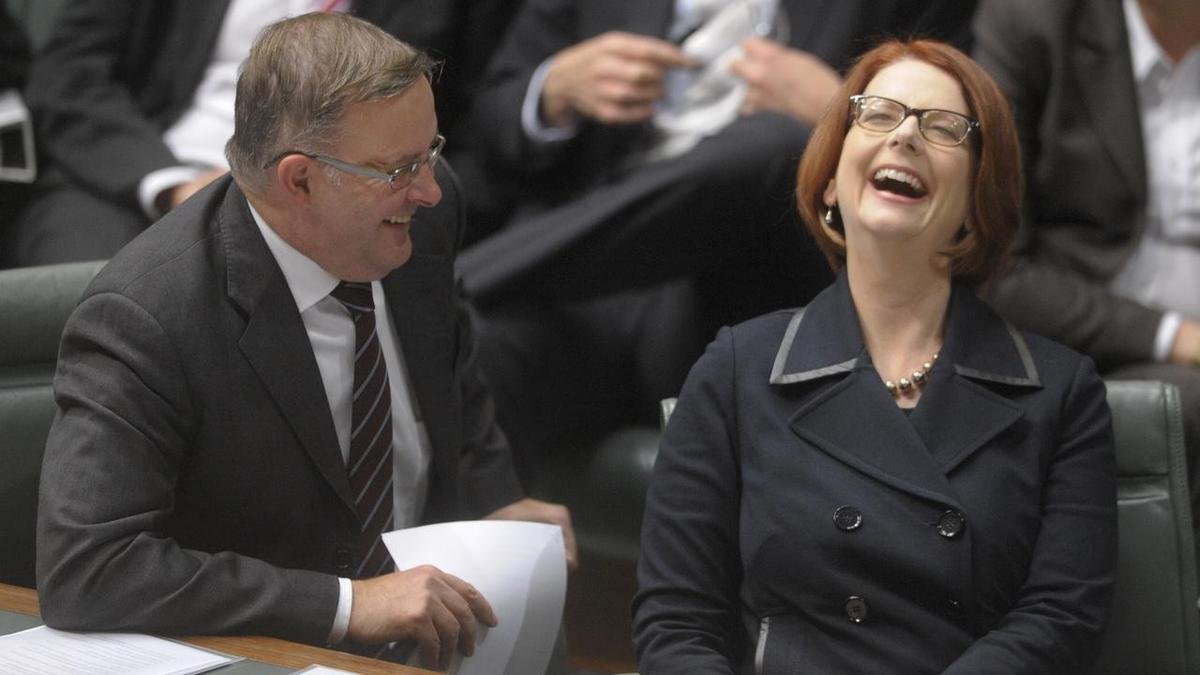
Top of the pops – receiving 62 per cent of all questions from the then Tony-Abbott-led opposition – was Julia Gillard.
Dr Casey said a wealth of research showed female leaders were subjected to higher levels of attack than their male counterparts.
The Gillard-Abbott parliamentary dynamic manifested most memorably in October 2012, when the Labor leader let rip with an excoriating dressing-down of her Liberal counterpart, widely known as the misogyny speech.
However, Dr Casey said it was not always Mr Abbott on the attack.
“During the Gillard prime ministership, not only was she significantly targeted, but also the opposition really changed their approach,” he said.
“It was the period with the lowest (level of the) leader of the opposition asking questions, and instead they used their deputy leader, Julie Bishop … the opposition really went out of their way to get their women to ask questions.”
Beyond Ms Gillard’s targeting, Dr Casey said oppositions that spent most of their sparing Question Time opportunities on the leader might be missing a trick.
Pitching more questions to other ministers could shed light on under-examined matters.
“Policy is what matters, and by focusing purely on the prime minister, we move away from a debate around policy,” he said.
The study found Labor opposition leaders – most notably Kevin Rudd, with almost half of his party’s allotment in 2007 – asked more questions than coalition opposition leaders, who bottomed out with Peter Dutton asking just 15 per cent.