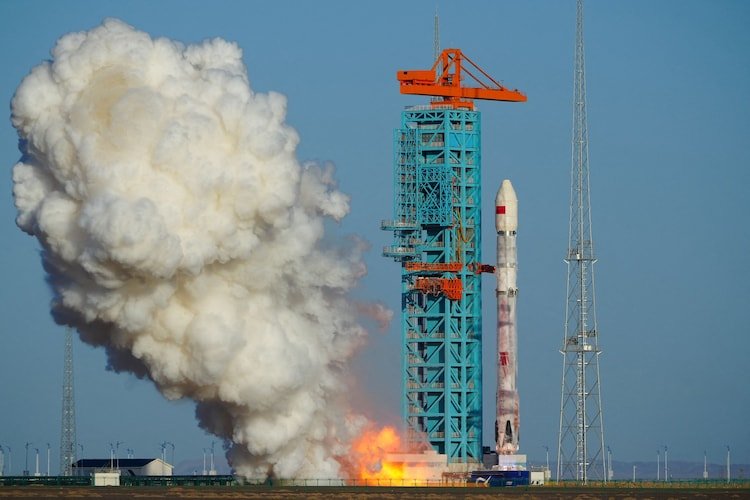
Source : INDIA TODAY NEWS
China has moved another step closer to the reusable-rocket era after private company LandSpace successfully landed the first stage of its Zhuque-3 rocket following an orbital launch on August 18.
The achievement came on the rocket’s second attempt and makes LandSpace the first Chinese private company to successfully recover an orbital-class booster on land using landing legs.
advertisement
The 66.1-metre-tall rocket also successfully placed the Honghu-03 satellite into orbit.
The milestone puts China alongside a growing group of countries and companies pursuing a technology that could soon make space launches cheaper and more frequent.
WHY IS ZHUQUE-3’S LANDING IMPORTANT?
After sending its upper stage towards orbit, Zhuque-3’s first stage separated and returned to Earth.
Meanwhile, the rocket travelled about 390 km to a landing site in Gansu province, where it touched down upright using deployable landing legs.
LandSpace had attempted the same feat during Zhuque-3’s first flight in December 2025, but an abnormal combustion event prevented the booster from making a controlled landing.
LandSpace said that Zhuque-3’s first stage is designed for up to 20 uses, with the company aiming to fly the recovered booster again within six months.
The idea behind reusability, not just in China but across the world, is rather obvious.
Instead of throwing away the most expensive parts of a rocket after every launch, companies want to recover, refurbish and fly them again. And that is precisely what seems to be happening.
India is also pursuing reusable rocket technology, but has yet to demonstrate an orbital-class booster landing.
Isro is developing vertical take-off, vertical landing (VTVL) technology and in March this year issued a tender for 10 sets of landing-leg hardware for its ADMIRE test vehicle, signalling progress towards hardware-level testing.
India’s private sector is not far behind either.
Agnikul Cosmos announced Mission-02 in July 2026, planning to attempt recovery of an orbital-class rocket booster and demonstrate technologies for future reusable launches.
WHO STARTED THE REUSABLE ROCKET RACE?
The benchmark for successfully creating and using reusable rockets remains with SpaceX.
The US company, owned by Elon Musk, achieved its first successful Falcon 9 booster landing in 2015 after earlier failures.
Since then, it has turned booster recovery into a routine part of its launch business.
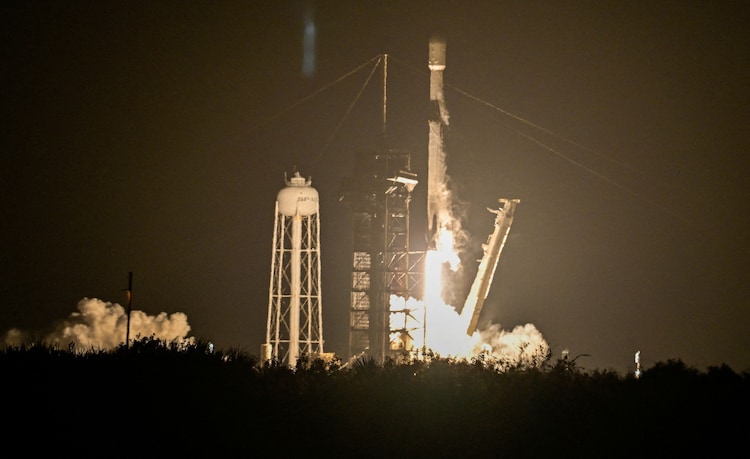
Individual Falcon 9 first stages have now flown dozens of times, demonstrating how reusability can support a high launch rate.
Blue Origin has also demonstrated reusable orbital-class technology with its New Glenn rocket, while other companies, including Rocket Lab are developing different approaches to recovering rocket hardware.
The larger goal of these programmes is to make access to space cheaper, faster and more sustainable by flying expensive rocket hardware more than once.
– Ends
SOURCE :- TIMES OF INDIA