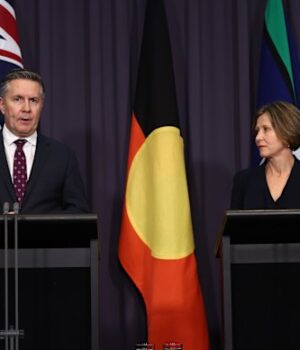
Source : the age
Federal and state governments must urgently start work on setting up new disability systems for older children, teenagers and adults with lower needs after the parliament on Wednesday passed laws that will remove 240,000 people from the National Disability Insurance Scheme.
Health and Disability Minister Mark Butler said a scheme akin to a “Thriving Teens” program would need to get off the ground within the next 16 months to make sure older children who no longer qualified for the scheme aren’t left in the lurch when eligibility changes start in 2028.
Labor sealed an agreement with the Coalition on Tuesday to pass its contentious NDIS overhaul, which should recoup $37 billion for the federal budget in the next four years, and $150 billion in a decade. The bill passed the Senate with a tranche of amendments on Tuesday night, and returned to the House on Wednesday afternoon.
People with Disability Australia, the peak body, described it as a devastating day for Australia’s disability community.
“People with disability in their thousands provided evidence of what these changes would mean for our lives. We warned about the harm, the injuries, the lost opportunities and lives. Parliament chose to proceed anyway,” said acting chief executive Megan Spindler-Smith.
Butler said federal officials were already designing new NDIS eligibility assessments that will come into effect in January 2028, but there was plenty of work to be done by then so that new systems will be ready to cater to people who no longer qualified for the $50 billion scheme under stricter criteria.
State governments, except for Queensland, have implementation plans ready and to start rolling out the Thriving Kids scheme for children under nine with development delays and autism from October this year, with its complete rollout due by the start of 2028.
Even though it will have taken Thriving Kids four years to have gotten off the ground – counting the time between the first state agreement in December 2023 and its official full launch date – Butler said the government was sticking to its timelines for having all other systems prepared.
“We need to have those other systems ready to start on the 1st of January 2028 as well,” Butler said on Tuesday. “Now the bill passes, really that’s the next piece of work we need to move to very quickly. Very shortly we’ll be in a position to start those discussions formally with states.”
Butler said the government expected to learn a lot from the Thriving Kids process, which would allow it to more quickly design support schemes for older children.
“When I speak to high school principals, they often say we need ‘Thriving Teens’, we need this program for children older than nine,” he said.
“But I don’t gild the lily here. That is a lot of work for all governments … we’ve got a lot of work to do between now and the end of 2027.”
Spindler-Smith was sceptical of the timeframe. “Those supports do not exist today and will take time to build, and states and territories have categorically said they will not be like-for-like supports,” she said.
“We need to know what will actually be there, when they’ll be up and running and how they will replace the 94 million hours of paid care that are being taken away.”
Late amendments tighten up fraud, appeals for high-needs participants
The laws that will pass the parliament this week enable a wide range of changes designed to restrict eligibility to the NDIS for those with permanent and profound impairments while improving provider registrations, integrity and anti-fraud measures in the scheme.
But the government will also rely on mass cuts to people’s social and community participation budgets to drive down costs quickly. From October, people whose plans are being renewed will have those budget allocations cut by 50 per cent on average, recouping billions for federal coffers.
This was one of the most controversial decisions because it does not discriminate based on participant need. After huge backlash from the disability community, Labor introduced amendments on Tuesday that will allow high-needs participants requiring 24-hour care to appeal the budget cuts.
Other amendments clarify eligibility rules to say that people who are already on the scheme before January 2028 will not need to meet a new test that requires future participants to show they have undertaken other publicly funded treatments to address their impairment before entering the NDIS.
Butler said a technical advisory group was working on that new eligibility test, which will dramatically curtail who accesses the scheme by determining that people have “substantially reduced functional capacity”.
“We want to do that by the end of this year so that people are very clear what that eligibility system will look like well ahead of its introduction on January 1, 2028,” he said.
There were 63 amendments added to the legislation on Tuesday after weeks of negotiation and a Senate inquiry over the winter break.
But while most of the disability community and the human rights commission had urged the government to pause its changes, Labor will forge ahead with the Coalition’s support.
NDIS Minister Jenny McAllister said negotiations with the opposition had led to further amendments on fraud.
“With the support of the Coalition, we will move amendments that deliver new criminal and civil penalties for offering or providing a kickback,” she said.
“There will be tough new aggravated integrity offences including obtaining funds by deception, providing false or misleading information, or abuse of position as a participant’s nominee, or for intentionally destroying records.”
Cut through the noise of federal politics with news, views and expert analysis. Subscribers can sign up to our weekly Inside Politics newsletter.
 Natassia Chrysanthos is Federal Political Correspondent. She has previously reported on immigration, health, social issues and the NDIS from Parliament House in Canberra.Connect via X or email.