

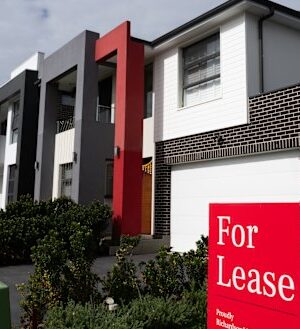
Source : the age
Rents in parts of the nation’s capital cities have soared by 80 per cent since the end of the COVID-era freeze on rents, but there are pockets of the country where landlords are getting less from their tenants than they did five years ago.
Houses have become so unaffordable for many that people are turning their attention increasingly towards either buying or renting inner city units where they also face competition from international students, figures compiled by property data company Cotality show.
The property market, including the drop in values in Sydney and Melbourne plus record-high rents, has become a political lightning rod since the May budget when Treasurer Jim Chalmers revealed changes to negative gearing and capital gains tax.
It has sparked accusations from the Coalition that Labor is destroying the economy and the wealth of people invested in the property market, with the government arguing it is giving first home buyers and future generations a chance to own a home.
The pace of growth in rents has slowed this year after they took off in the period after the end of a COVID-era freeze on rents. That freeze ended in early 2021.
Since then, the biggest increase recorded by Cotality has been in the working-class Perth suburb of Balga where they have jumped by 80 per cent or more than $320 dollars a week over the past five years. Perth’s overall inflation rate over the same period was a nation-leading 25.8 per cent.
International student-loaded areas in Sydney and Melbourne have experienced rent increases almost as large. In Zetland, Chippendale and Haymarket in inner Sydney, rents have jumped by between $367 and $452 a week.
Central Melbourne rents have lifted by 72.6 per cent with similarly large increases in Southbank (69.6 per cent) and Docklands (64.2 per cent) while in Carlton, home of Melbourne University, rents have jumped by 58.5 per cent.
All inner city areas of capital cities have seen huge increases except Canberra where a long-run building boom has added to its supply of apartments. Canberra’s largest rent increase, of 22 per cent, was recorded in its southernmost suburb of Banks.
Cotality’s head of research, Gerard Burg, said the strong growth in rents in capital city centres and nearby suburbs suggested the impact of the return of international students.
He said another factor had been the low affordability of homes. Prices exploded during the pandemic, climbing by more than 30 per cent in some markets while the international border was closed.
Burg said as standalone homes had become more expensive, potential buyers had moved either into the apartment market or been forced to continue renting.
“You get these spillover effects. We had that big increase in house prices during Covid while rents didn’t move much at all,” he said.
“But [we’re] getting to the point that houses aren’t affordable, so we’re seeing the market for units hold up better than houses. And we’re seeing rents for units higher.”
Rents have fallen in a handful of places across the country over the past five years, almost all on the south coast of NSW.
In the holiday centre of Manyana, rents have dropped by 30.2 per cent since mid-2021 or by $237.50 a week. In the nearby town of Sussex Inlet, rents have tumbled by more than 17 per cent.
Parts of the south coast such as Mollymook (minus 7 per cent) and Ulladulla (minus 0.3 per cent), areas that became huge attractions during the pandemic for people seeking to escape Sydney and Canberra, have experienced a fall in absolute rents.
Substantial falls in asking rents over half a decade, even in deeply depressed property markets, are unusual.
But there are many more urban and regional centres where rents have fallen by less than inflation, which itself is being pushed up by rent increases.
Across Melbourne’s growing western fringe, rental growth has fallen short of inflation in places such as Diggers Rest (15.8 per cent), Eynesbury (16.5 per cent) and Bonnie Brook (16.9 per cent).
In Sydney, rents in Hunters Hill (17.8 per cent), Avalon Beach (20.9 per cent) and Hornsby Heights (21.8 per cent) have also grown slower than the city’s 23.6 per cent inflation rate since mid-2021.
There have been some relatively modest rent increases in Brisbane’s south-west, such as Pullenvale (13 per cent), Fig Tree Pocket (15.6 per cent) and Silverbark Ridge (20.8 per cent).
But in the hottest rental market in the country, Perth, tenants have been unable to find any respite. The smallest increase since mid-2021 has been in Brigadoon, about 40 kilometres from the Perth CBD, with rents up by 27.2 per cent.
Cottesloe is one of the more expensive property markets in the country. Rents there have grown by 35.8 per cent over the past five years, pushing the median weekly impost to almost $1042.
Canberra is again the outlier. The smallest increases in the country have been recorded in the nation’s capital, including in well-heeled and central suburbs such as Forrest (3.5 per cent), Ainslie (5.2 per cent) and Reid (8.7 per cent).
Cut through the noise of federal politics with news, views and expert analysis. Subscribers can sign up to our weekly Inside Politics newsletter.
 Shane Wright is a senior economics correspondent for The Sydney Morning Herald and The Age.Connect via X or email.

