

Source : the age
When multi-award-winning Sydney producer Dan Goldberg first approached the subject of the 2001 Tampa crisis for an ABC documentary, he did so as a “bleeding heart, small-l liberal”. A descendant of Jewish refugees who fled Russia at the turn of the 20th century, his work includes The Hunt for the Last Nazis and Passport to Hope, about a soccer program for Australian refugee children, for which he won the 2010 UN Human Rights Award for TV. He is now in post-production for an SBS documentary on the Bondi massacre.
But as filming began on Tampa: The Turning Point, a three-part series marking 25 years since the diplomatic stand-off at sea that redefined Australia’s border protection policy, he began to see two sides to the story.
“The image of that giant, orangey-red container ship is seared into my mind,” says Goldberg, who was a journalist at The Australian Jewish News when the crisis unfolded. “At the time, I questioned the hardline reaction of the government. We all come from our own lived experience. That’s intergenerational for me.
“But now that I’ve made the series, I can see that it’s not black and white. I’ve come out of it understanding that there is a genuine clash between two rights – the right to refuge and the right to sovereign borders. The penny dropped for me. I was very vocal in the edit suites. It’s complicated. The shades of grey are difficult to wrestle. And that’s what we hope we’re presenting.”
In the miniseries, directed by Kriv Stenders for Mint Pictures, former prime minister John Howard sits alone in an office meeting room, the camera tight around his face, as he recalls his involvement in the crisis. The same starkly corporate setting is used for other politicians, including then foreign minister Alexander Downer, former Greens leader Bob Brown and former New Zealand prime minister Helen Clark.
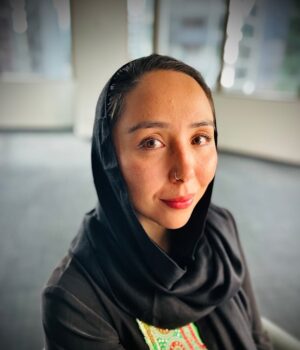
Other interviewees include the captain of the Norwegian freighter, Arne Rinnan, who refused to return the 433 rescued Hazara Afghans bound for Christmas Island to Indonesia, and asylum seekers themselves, such as Saereh Rezaee, who was eight years old at the time, and Abbas Nazari, who wrote the book After the Tampa.
Their stories might be very different, but whether they experienced the historical moment from within the halls of power, or on board that perilously overcrowded ship for eight fearful, blistering days, the Tampa has left an imprint on all their lives.
Finding similar, neutral backdrops in Canberra, Jakarta, New Zealand, Britain and Oslo proved surprisingly easy. “Kriv Stenders wanted uniformity, no matter where we were filming,” says Goldberg. “We wanted the people and their stories to be front and centre. There was a uniformity to these offices that, after COVID, are largely empty, which was the practical solution.”
Underscoring the “ticking-clock political thriller” that unfolds using only these personal accounts and archival footage, is a soundscape that heaves and groans like a drifting ship by Adam Gock of production company The D.A’s Office. “Music is often undervalued, and it has a massive role to play in elevating the experience of the audience,” says Goldberg. “The audience might not feel it. But most of the audience feels something.”
The creative team, which includes series producer Ili Bare, was conscious of placing the topic in a contemporary context.
“The Tampa happened 25 years ago, but it couldn’t be more relevant today,” says Goldberg. “We’ve taken a historical story and catapulted it into the present tense. We’ve got people [in the series] talking about the 2015 refugee crisis from the Syrian war.
“We’ve got commentators from Europe looking at the Australian [Pacific] solution and saying, ‘We saw that as a template. And now we’re basically copying it’ … There is this return to right-wing populism. But at the heart of this series is a deeply human story. We hope that the audience will feel swung like a pendulum between these two competing rights.”
Tampa: The Turning Point premieres at 8.30pm on Tuesday, September 1, on the ABC and ABC iview.
Want more TV? We’ve got you.
 Bridget McManus is a television writer and critic for Green Guide. She was deputy editor of Green Guide from 2006 to 2010 and now also writes features and interviews for Life & Style in The Saturday Age and M magazine in The Sunday Age.

