

Source : THE AGE NEWS
Australia’s push to reserve more gas for domestic customers is stirring hopes of an onshore industrial revival, as a major chemical firm weighs reactivating a production complex mothballed nearly a decade ago due to surging gas prices.
From next July, landmark regulations will compel shippers of eastern Australian liquefied natural gas to divert the equivalent of up to 20 per cent of their export volumes to local homes and businesses.
The policy aims to undo the fallout from the mid-2010s, when a boom in LNG exports from Queensland exposed local gas users to global prices and made it increasingly difficult for gas-intensive manufacturers to secure affordable supplies of the fuel.
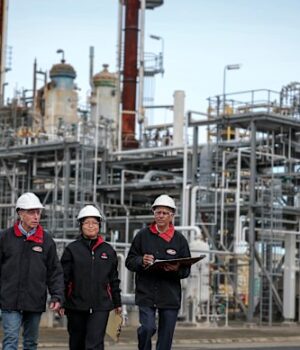
A shuttered petrochemical facility in Melbourne’s west is positioned to be among the first beneficiaries of the federal policy shift. Coogee Chemicals placed its Laverton methanol plant on care and maintenance in 2016, eliminating 38 jobs, after its gas costs soared from $3 to more than $8 a gigajoule, and it was unable to secure a long-term supply deal, making its operations unviable.
Produced primarily from natural gas, methanol is a widely used chemical that is converted into formaldehyde, a building block for resins and adhesives in engineered wood, building materials and coatings.
“For methanol, gas is the No.1 cost,” Coogee chief executive Grant Lukey said.
‘The reservation policy … could create a renaissance in the manufacturing sector.’
Coogee chief executive Grant Lukey
Gas prices rose sharply along the eastern seaboard from 2015 as three giant LNG terminals on Queensland’s Curtis Island began cooling gas down to a liquid and shipping it overseas.
The projects linked the domestic market to global LNG prices for the first time, just as Australia’s cheap legacy gas fields in the Bass Strait were also rapidly depleting. This sent costs sharply higher for households that used gas for cooking, heating and hot water, and put further pressure on manufacturers that relied on gas to fire their kilns and furnaces or as a feedstock for chemicals, plastic and fertiliser.
Coogee was among the first manufacturers to shut down a site, saying high gas prices and a scarcity of affordable long-term supply offers had pushed the facility to the wall. Others followed, including Dow Chemicals’ Altona plant in Melbourne, takeaway cup producer RemaPak’s operations in western Sydney, and fertiliser giant Incitec Pivot’s 50-year-old Gibson Island plant in Brisbane.
Now, as the Albanese government prepares to introduce its national gas reservation policy next year, Coogee Chemicals says it intends to restart the mothballed factory, so long as the scheme succeeds in boosting supply and reducing prices by forcing producers to not only offer, but actually deliver, additional gas into the market.
“If 10-year gas, below $10 a gigajoule, can be delivered, we will be restarting the facility within 18 months,” Lukey said.
“The reservation policy … could create a renaissance in the manufacturing sector.”
The federal government has resisted setting a specific gas price reduction under the reservation scheme, but it says the policy will create an oversupply in the domestic market that would place “downward pressure” on prices.
Matt Flugge, chief executive of industry body Chemicals Australia, said gas below $10 a gigajoule, delivered on long-term contracts, was critical to support an “investible future” for chemicals manufacturing. He described the potential restart of Coogee Chemicals’ methanol plant as a case study of what an effective domestic gas policy could deliver, including the return of manufacturing jobs and the rebuilding of critical manufacturing capability.
“Getting the gas reservation scheme design right will unlock new Australian chemicals manufacturing investment and value-add Australian gas to create products for Australian business and consumers,” Flugge said.
Building product maker Borg, which employs 3500 people at its manufacturing sites nationally, has had to import methanol since the mothballing of Coogee’s Laverton plant in 2016. “Having a guaranteed supply of methanol is essential to our timber production lines and supports up to 2500 direct jobs in our facilities,” a spokesperson for Woodchem, a Borg company, said.
However, the government’s push to force a significant volume of additional gas into the domestic market is setting up a fierce showdown with industry leaders and some major producers in the energy sector. Oil and gas companies say deliberately creating a market oversupply will artificially depress prices, making investment in new gas fields uneconomic and ultimately raising the risk of future supply shortages and price shocks.
In a recent analysis prepared for the gas industry, research firm Wood Mackenzie found gas accounted for less than 5 per cent of the combined operating costs of the 13 industrial facilities in eastern Australia that consume the most gas. Reducing wholesale gas prices from $12 to $10 a gigajoule would lower those plants’ combined annual operating costs by just $94 million while lifting average profit margins by 0.4 per cent, it said.
The report also found that many of Australia’s largest manufacturers had long-term gas supply contracts to 2035 and beyond, meaning any changes to wholesale gas prices would have minimal or no impact on current operations. Australian Energy Producers, which represents oil and gas companies, said the findings reinforced concerns that the government’s proposed reservation framework would undermine investment in new gas supply while delivering only marginal benefits for manufacturers.
“Cheaper gas is not the panacea for the competitiveness challenges facing Australian manufacturing,” Australian Energy Producers chief Samantha McCulloch said.
The Business Briefing newsletter delivers major stories, exclusive coverage and expert opinion. Sign up to get it every weekday morning.
 Nick Toscano is a business reporter for The Age and Sydney Morning Herald.Connect via X or email.

